Checking your car’s oil might sound basic, but trust me, i t’s one of the most important habits you can build as a car owner. I learned this the hard way. A few years ago, I ignored a small oil warning light on my dashboard. I assumed it was just a sensor glitch. A week later? My engine started knocking. That small mistake turned into an expensive repair. Since then, I check my oil regularly, and it takes less than five minutes.
Whether you drive a compact sedan, SUV, or pickup truck, learning how to check your engine oil properly can save you thousands in repairs and extend the life of your engine. Let’s break it down step-by-step in a way that’s simple, clear, and practical.
Why Checking Your Oil Is So Important
Your engine oil:
- Lubricates moving parts
- Reduces friction
- Prevents overheating
- Cleans internal engine components
- Protects against wear
If oil levels are low or dirty, your engine suffers. Over time, this can lead to:
- Engine knocking
- Overheating
- Sludge buildup
- Complete engine failure
And engine replacement? That can cost more than your car is worth.
What You Need Before Checking Your Oil
Good news: You don’t need fancy tools. Here’s what I personally keep in my trunk:
- A clean rag or paper towel
- Gloves (optional but helpful)
- Flashlight (for low-light conditions)
That’s it.
Step-by-Step: How to Check Your Oil in Your Car
Step 1: Park on a Level Surface
Always park on flat ground. If the car is tilted, the oil reading won’t be accurate. Turn the engine off.
Step 2: Let the Engine Cool (But Not Too Cold)
Wait about 5–10 minutes after turning off the engine. This allows the oil to drain back into the oil pan for an accurate reading.
Some manufacturers recommend checking when the engine is slightly warm. Check your owner’s manual if unsure.
Step 3: Open the Hood
Pull the hood release lever inside your car (usually near the driver’s footwell). Secure the hood using the prop rod if needed.
Step 4: Locate the Dipstick
Look for a brightly colored handle (usually yellow or orange). That’s your oil dipstick. It’s connected to a long metal rod that goes into the engine.
Step 5: Pull It Out and Wipe It Clean
Pull the dipstick out completely. Use your rag to wipe it clean. This first reading is NOT accurate; you’re just cleaning it.
Step 6: Reinsert and Pull Again
Push the dipstick back in fully. Then pull it out again. Now check the oil level.
How to Read the Oil Dipstick Correctly
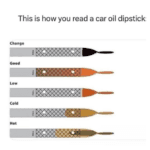
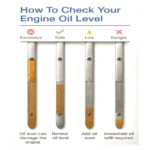
You’ll see markings at the bottom of the dipstick. These usually show:
- MIN / MAX
- L / H
- Two dots or lines
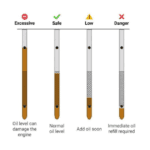
The oil level should fall between the minimum and maximum marks.
Ideal Situation:
Oil is close to the MAX line but not over it.
If It’s Below Minimum:
You need to add oil.
If It’s Over Maximum:
Too much oil can damage your engine. This may require draining.
What Your Oil Color Means
Checking the level is only half the job. Look at the oil color and texture.
| Oil Appearance | What It Means | Action Needed |
| Light amber | Fresh oil | No action |
| Dark brown | Used but normal | Monitor |
| Black and thick | Dirty oil | Change soon |
| Milky/creamy | Coolant contamination | Immediate inspection |
| Gritty texture | Metal particles | Urgent repair |
Clean oil is typically amber and transparent.
Comparison Table: Manual Dipstick vs Electronic Oil Monitoring
| Feature | Manual Dipstick | Electronic Oil Monitor |
| Accuracy | Very accurate if done properly | Usually accurate |
| Ease of use | Requires opening the hood | Done via dashboard |
| Maintenance required | None | The sensor can fail |
| Cost | Free | Built into the vehicle |
| Best for | Older vehicles | Modern vehicles |
Modern vehicles from brands like Toyota, Honda, and Ford often include electronic oil life monitoring systems. However, I still recommend manual checks when possible.
Why? Sensors can fail. The dipstick doesn’t lie.
When Should You Check Your Oil?
I personally check mine:
- Once a month
- Before long road trips
- If the dashboard oil light appears
- If the engine sounds louder than normal
A good rule: Check every 1,000 miles.
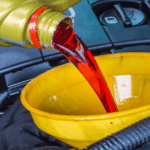
How to Add Oil If It’s Low
If your oil level is below the minimum:
- Locate the oil filler cap (usually labeled “Engine Oil”)
- Remove it
- Add oil slowly using a funnel
- Wait 1 minute
- Recheck dipstick
Never overfill. Add small amounts at a time.
How to Know Which Oil to Use
Check your owner’s manual for:
- Oil viscosity (like 5W-30 or 10W-40)
- Synthetic vs conventional oil
Common brands include:
- Castrol
- Mobil 1
- Valvoline
Using the wrong viscosity can reduce performance and damage the engine.
Buyer’s Guide: Choosing the Right Engine Oil
When buying engine oil, here’s what I look for:
1. Viscosity Grade
Match exactly what your manufacturer recommends. Example:
- 5W-30 = Good for most climates
- 10W-40 = Better for hotter regions
2. Synthetic vs Conventional
| Type | Pros | Cons |
| Conventional | Cheaper | Breaks down faster |
| Synthetic Blend | Balanced | Moderate price |
| Full Synthetic | Best protection | More expensive |
I personally use full synthetic for longer engine life.
3. API Certification
Look for the API “donut” symbol on the bottle. This ensures it meets industry standards.
4. Driving Conditions
- Heavy traffic? Go synthetic.
- Extreme heat? Higher viscosity may help.
- High mileage car? Consider high-mileage oil formulas.
Common Mistakes People Make
Let’s avoid these:
❌ Checking oil on uneven ground
❌ Not wiping the dipstick first
❌ Checking immediately after turning the engine off
❌ Overfilling oil
❌ Ignoring oil color
These simple mistakes can lead to incorrect readings.
Signs You Have Low Oil
Watch for:
- Engine knocking
- Burning smell
- Oil warning light
- Overheating
- Rough idle
If you see these, check immediately.
How Often Should You Change Oil?
General guideline:
- Conventional oil: Every 3,000–5,000 miles
- Synthetic oil: Every 7,500–10,000 miles
However, always follow your manufacturer’s recommendation.
Personal Experience: Why I Never Skip Oil Checks
After my early engine scare, I made oil checks part of my routine. Now, it takes me less than five minutes.
I keep a small rag in my glove compartment. The peace of mind? Worth it.
Long-Term Benefits of Checking Oil Regularly
- Longer engine life
- Better fuel economy
- Smoother performance
- Fewer breakdowns
- Higher resale value
It’s one of the easiest DIY maintenance habits you can build.
Read More: How To Drive A DSG Gearbox Car
FAQs: How Do I Check My Oil In My Car
1. Can I check my oil when the engine is hot?
Yes, but wait 5–10 minutes after turning it off.
2. What happens if I drive with low oil?
Severe engine damage can occur. Avoid driving until topped up.
3. Is dark oil always bad?
Not necessarily. Dark oil can still function properly. Texture matters too.
4. Can I mix different oil brands?
Yes, but it’s best to stick with the same viscosity and type.
5. What if my car doesn’t have a dipstick?
Some newer cars rely fully on electronic monitoring systems.
6. Why does my oil look milky?
This may indicate coolant mixing with oil, possibly a blown head gasket.
7. How long does checking oil take?
About 3–5 minutes.
8. Should oil be at the maximum line?
Close to maximum is ideal, but don’t exceed it.
9. What if I overfill the oil?
You may need to drain excess oil. Overfilling can cause pressure damage.
10. Can low oil affect fuel economy?
Yes. Increased friction reduces efficiency.
Final Thoughts
Checking your oil isn’t complicated.
It’s not technical.
It’s not messy.
It’s not time-consuming.
But it is one of the smartest things you can do for your car.