Checking your car’s oil is one of the simplest maintenance tasks you can learn, yet it’s also one of the most important. I still remember the first time I checked my own oil; it felt intimidating because I thought I might damage something.
In reality, the process took less than five minutes and probably saved me from serious engine trouble later on. Engine oil is basically the lifeblood of your car.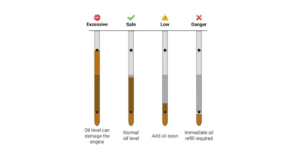 Without enough clean oil, your engine components grind together, overheat, and wear out much faster. Neglecting oil checks can eventually lead to expensive repairs or even total engine failure.
The good news is that checking oil is incredibly easy once you understand the process. In this guide, I’ll walk you through everything you need to know about checking oil in your car, including:
- Why oil checks matter
- Step-by-step instructions
- Common mistakes
- Oil color meanings
- How often to check oil
- Signs of low oil
- Buyer’s guide for oil products
- Maintenance tips
- FAQs
Whether you’re a complete beginner or just want a refresher, this article covers it all in an easy-to-understand way.
Why Checking Engine Oil Matters
Many drivers ignore their oil until the dashboard warning light comes on. Unfortunately, by that point, damage may already be happening. Oil performs several critical jobs:
- Lubricates engine parts
- Reduces friction
- Prevents overheating
- Removes contaminants
- Protects against corrosion
- Helps improve fuel efficiency
Without proper oil levels, engines wear out dramatically faster.
What Happens If Oil Gets Too Low?
Low engine oil can cause:
| Problem | Result |
| Increased friction | Faster engine wear |
| Overheating | Engine damage |
| Poor lubrication | Metal-on-metal contact |
| Sludge buildup | Reduced performance |
| Low oil pressure | Potential engine failure |
| Reduced fuel economy | Higher fuel costs |
Running an engine low on oil is one of the fastest ways to destroy it.
How Often Should You Check Oil?
Most experts recommend checking oil:
- Once a month
- Before long road trips
- After noticing unusual engine behavior
- If your car is older
- After an oil leak
Personally, I check mine every two weeks because it only takes a few minutes and gives peace of mind. Older cars often consume oil faster, especially high-mileage vehicles.
Tools You Need To Check Oil
The good news is you barely need any tools.
Basic Supplies
| Tool | Purpose |
| Clean rag or paper towel | Wipe dipstick |
| Gloves (optional) | Keep your hands clean |
| Flashlight (optional) | Better visibility |
| Funnel (if adding oil) | Prevent spills |
That’s it.
Understanding the Oil Dipstick
The dipstick is a long metal rod designed to measure engine oil level. Most dipsticks include:
- MIN mark
- MAX mark
- Safe operating range
Some have:
- Crosshatch patterns
- Holes
- Dots
- Colored markings
The oil should sit between the minimum and maximum indicators.
Step-by-Step: How To Check Oil in a Car
Let’s walk through the proper method.
Step 1: Park on Level Ground
Always check oil on a flat surface.
If the vehicle sits at an angle, the reading may be inaccurate.
Turn off the engine and engage the parking brake.
Step 2: Let the Engine Cool Slightly
You usually want the engine warm but not extremely hot.
Wait about:
- 5–10 minutes after driving
This allows oil to settle into the oil pan.
Checking immediately after shutdown may give a false low reading.
Step 3: Open the Hood
Locate the hood release lever inside the vehicle. Raise the hood and secure it with:
- Hood strut
- Support rod
Step 4: Locate the Dipstick
The oil dipstick usually has:
- Yellow handle
- Orange handle
- Clearly marked oil symbol
Check your owner’s manual if unsure.
Step 5: Pull Out the Dipstick
Carefully remove the dipstick completely. At first glance, the oil reading may look messy or unclear. That’s normal.
Step 6: Wipe the Dipstick Clean
Use a rag or paper towel to wipe off all oil. This step is important because the first pull often splashes oil around the stick.
Step 7: Reinsert the Dipstick Fully
Push the dipstick completely back into the tube. Make sure it seats fully.
Step 8: Pull It Out Again and Read the Oil Level
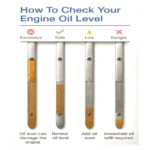
Now check where the oil sits.
Ideal Oil Level
The oil should fall:
- Between MIN and MAX
- Preferably near the MAX line
Understanding Oil Level Readings
| Oil Level | Meaning |
| Near MAX | Perfect |
| Mid-range | Safe |
| Near MIN | Add oil soon |
| Below MIN | Dangerous |
| Above MAX | Overfilled |
Overfilling can be almost as harmful as low oil.
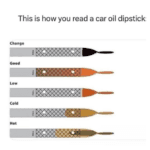
What Oil Color Means
Oil condition matters just as much as oil level.
Fresh Oil
Usually:
- Amber
- Golden brown
This indicates relatively clean oil.
Dark Brown or Black Oil
This often means:
- Normal aging
- Heat exposure
- Dirt accumulation
Dark oil alone isn’t always bad.
Milky Oil
Milky or creamy oil may indicate:
- Coolant contamination
- Head gasket problems
This requires immediate attention.
Gritty or Dirty Oil
Oil containing:
- Metal particles
- Sludge
- Dirt
…could indicate internal engine wear.
Burnt Smell
Burnt oil may suggest:
- Overheating
- Oil breakdown
- Poor maintenance
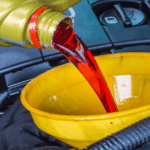
How To Add Oil If It’s Low
If the level is below MIN:
Step 1: Find the Oil Fill Cap
Usually located on top of the engine. Marked with:
- Oil can symbolize
- “Engine Oil”
Step 2: Use the Correct Oil
Always match:
- Oil viscosity
- Manufacturer specifications
Examples:
- 5W-30
- 0W-20
- 10W-40
Using the wrong oil can affect engine performance.
Step 3: Add Small Amounts
Add oil gradually.
Start with:
- Half a quart/liter at a time
Step 4: Recheck the Dipstick
Wait a minute for the oil to settle.
Then check again.
Avoid overfilling.
Common Mistakes When Checking Oil
Checking on Uneven Ground
Creates inaccurate readings.
Forgetting To Wipe the Dipstick
Makes oil level hard to read.
Checking Immediately After Driving
Oil hasn’t settled yet.
Overfilling the Engine
Too much oil can:
- Increase pressure
- Damage seals
- Cause foaming
Using the Wrong Oil Type
Incorrect viscosity affects lubrication.
Conventional vs Synthetic Oil
| Feature | Conventional Oil | Synthetic Oil |
| Cost | Lower | Higher |
| Longevity | Shorter | Longer |
| Temperature resistance | Moderate | Excellent |
| Engine protection | Basic | Superior |
| Sludge prevention | Lower | Better |
| Cold weather performance | Average | Excellent |
Synthetic oil generally provides better protection, especially for modern engines.
Signs Your Car May Be Low on Oil
Watch for these warning signs:
- Oil warning light
- Ticking noises
- Engine knocking
- Burning smell
- Poor fuel economy
- Rough engine performance
- Blue exhaust smoke
If you notice these symptoms, check the oil immediately.
Why Some Cars Burn Oil Faster
Older engines often consume oil naturally. Common causes include:
- Worn piston rings
- Valve seal wear
- High mileage
- Turbocharged engines
- Aggressive driving
Some manufacturers even consider moderate oil consumption “normal.”
How Weather Affects Engine Oil
Cold Weather
Oil thickens in winter.
This makes cold starts harder.
Hot Weather
High heat can thin oil and accelerate breakdown.
Using the correct viscosity matters more in extreme temperatures.
Digital Oil Monitoring Systems
Modern cars sometimes replace dipsticks with electronic oil sensors. These systems display oil levels through:
- Dashboard menus
- Infotainment systems
Still, physical dipsticks are often more reliable.
Oil Change vs Oil Top-Off
Many people confuse these.
Oil Top-Off
Adding small amounts when low.
Oil Change
Completely draining old oil and replacing it:
- Oil
- Oil filter
Topping off does not replace regular oil changes.
How Often Should You Change Oil?
This depends on:
- Vehicle type
- Oil type
- Driving habits
Typical intervals:
| Oil Type | Average Change Interval |
| Conventional | 3,000–5,000 miles |
| Synthetic blend | 5,000–7,500 miles |
| Full synthetic | 7,500–15,000 miles |
Always follow manufacturer recommendations.
My Personal Experience Checking Oil
Checking oil became a habit for me after an old car developed a slow oil leak. At first, I ignored it because the car still drove fine. But eventually the oil level dropped dangerously low, and the engine began making ticking sounds.
Luckily, I caught it early enough to avoid serious damage. Since then, checking oil has become one of those small maintenance routines I genuinely appreciate. It takes almost no time and can save thousands in repairs.
I also noticed that regularly checking oil helps drivers become more aware of their vehicle’s overall condition.
Buyer’s Guide: Choosing the Right Engine Oil
Choosing the correct oil matters enormously.
1. Check Manufacturer Recommendations
Always start with your owner’s manual. It specifies:
- Viscosity
- Certifications
- Oil standards
2. Understand Oil Viscosity
Examples include:
- 0W-20
- 5W-30
- 10W-40
The numbers represent oil flow characteristics at different temperatures.
3. Synthetic vs Conventional
Synthetic oil usually offers:
- Better protection
- Longer lifespan
- Improved cold starts
But it costs more.
4. High-Mileage Oils
Designed for vehicles over:
- 75,000 miles
They often contain seal conditioners to reduce leaks.
5. Climate Considerations
Cold climates often benefit from:
- Lower winter viscosity
Hot climates may require:
- Higher viscosity protection
6. Brand Reputation
Choose reputable oil brands with proper certifications. Cheap oils may lack adequate additives.
7. API and SAE Ratings
Look for:
- API certification
- SAE viscosity rating
These indicate industry standards compliance.
Oil Maintenance Tips
Check Oil Regularly
Monthly checks help catch problems early.
Change Oil Filter
Always replace the filter during oil changes.
Watch for Leaks
Look for:
- Oil spots under the car
- Burning oil smell
Don’t Ignore Warning Lights
Oil pressure warnings can indicate serious problems.
Use Correct Oil Quantity
Overfilling is harmful.
Environmental Importance of Proper Oil Maintenance
Maintaining proper oil levels:
- Improves fuel economy
- Reduces emissions
- Extends engine lifespan
- Minimizes waste
Responsible oil disposal also matters. Never dump used oil illegally.
Read More: Second Hand Ford Spares: Honest Buyer’s Guide
FAQs: How To Check Oil In Car
How often should I check my oil?
At least once a month or before long trips.
Can I check the oil when the engine is hot?
Yes, but allow a few minutes for the oil to settle first.
What happens if the oil is too low?
Low oil can cause severe engine damage.
What if I accidentally overfill the oil?
Too much oil may:
- Increase pressure
- Damage seals
- Cause engine problems
Why is my oil black?
Dark oil is often normal after use.
Is synthetic oil better?
Generally, yes, especially for modern engines.
Can low oil cause engine noise?
Absolutely. Ticking or knocking often indicates low lubrication.
Should oil be checked cold or warm?
Warm is usually best for accurate readings.
Can I mix different oil brands?
Usually, yes, if viscosity and specifications match.
Why does my car lose oil without leaks?
The engine may be burning oil internally.
What does milky oil mean?
Possible coolant contamination or head gasket failure.
Is it safe to drive with low oil?
No. Severe engine damage can occur quickly.
How long does engine oil last?
Depends on oil type and driving conditions.
Can I add oil without changing it?
Yes, but regular oil changes are still necessary.
Why is my oil level changing?
Oil consumption varies based on:
- Engine wear
- Driving habits
- Temperature
- Vehicle age
Final Thoughts
Learning how to check oil in your car is one of the most valuable basic automotive skills you can have. It’s quick, simple, and incredibly important for engine health. Regular oil checks help:
- Prevent expensive repairs
- Improve reliability
- Extend engine life
- Increase peace of mind
Once you do it a few times, the process becomes second nature. Honestly, it’s one of those tiny habits that can save you thousands of dollars over the life of your vehicle.
And considering it takes less than five minutes, there’s really no reason not to check it regularly.