Checking your car’s oil is one of the easiest and most important maintenance habits you can learn. It takes less than 10 minutes, requires almost no tools, and can save you from expensive engine damage later.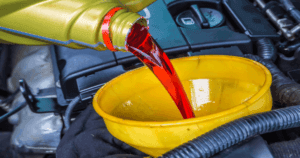 Whether you drive a compact sedan, SUV, pickup truck, or performance car, engine oil keeps everything lubricated, cool, and running smoothly. Ignoring it can lead to overheating, poor fuel economy, engine wear, and even total engine failure.
In this complete guide, you’ll learn:
- How to check oil correctly
- When to check it
- What healthy oil looks like
- Signs your car may be low on oil
- Common mistakes beginners make
- Differences between old and new cars
- Oil type recommendations
- Helpful maintenance tips
- A practical buyer’s guide
- Frequently asked questions
If you’ve ever opened the hood and felt confused by all the parts, this guide is written for you.
Why Checking Oil Matters
Engine oil is basically the lifeblood of your engine. It lubricates moving parts, reduces friction, removes heat, and prevents metal-to-metal wear.
Without enough oil, your engine can:
- Run hotter
- Lose efficiency
- Wear out faster
- Develop knocking sounds
- Seize completely
The good news? Regular oil checks help prevent almost all of these problems.
Quick Answer: How Do You Check the Oil on a Car?
Here’s the short version:
- Park on level ground
- Turn off the engine
- Wait 5–10 minutes
- Open the hood
- Locate the dipstick
- Pull it out and wipe it clean
- Reinsert the dipstick fully
- Pull it out again
- Check the oil level and color
- Add oil if needed
Simple, but doing it properly makes a big difference.
Step-by-Step Guide to Checking Car Oil
Step 1: Park on a Flat Surface
Always park on level ground before checking oil. If your car is tilted:
- The reading may be inaccurate
- Oil may collect unevenly
- You could think the engine is low when it isn’t
A garage floor or flat driveway works best.
Step 2: Turn Off the Engine
The engine should be off before checking the oil. This allows:
- Oil to settle in the oil pan
- A more accurate reading
- Safer handling under the hood
Step 3: Wait a Few Minutes
Wait about 5–10 minutes after shutting off the engine. Why? Freshly circulated oil is still moving through the engine. Waiting allows it to drain back down. Checking immediately can produce a false low reading.
Step 4: Open the Hood
Locate the hood release lever inside the cabin. It’s usually:
- Near the driver’s left knee
- Under the dashboard
Then:
- Pull the lever
- Move to the front of the car
- Release the safety latch
- Lift the hood
- Secure it with the hood prop if needed
What Does the Oil Dipstick Look Like?
The dipstick usually has:
- A bright yellow, orange, or red handle
- A loop or T-shaped grip
- An oil can symbol is on some newer vehicles
It’s normally located near the engine block.
Step 5: Pull Out the Dipstick
Carefully remove the dipstick completely. The first reading is usually inaccurate because oil splashes while driving.
Step 6: Wipe the Dipstick Clean
Use:
- A paper towel
- Shop rag
- Clean cloth
Wipe all oil off the stick. This gives you a fresh reading on the second check.
Step 7: Reinsert the Dipstick Fully
Push the dipstick all the way back into the tube. Make sure:
- It seats completely
- It isn’t partially inserted
Otherwise, the reading may be incorrect.
Step 8: Pull It Out Again
Now pull the dipstick out slowly and hold it horizontally. Look at:
- Oil level
- Oil color
- Oil consistency
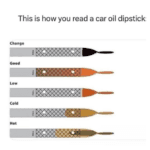
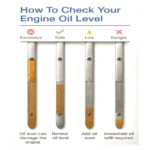
Understanding the Dipstick Markings
Most dipsticks have:
- Two holes
- Two lines
- Crosshatched area
- “MIN” and “MAX” labels
The oil should sit between the minimum and maximum marks.
Oil Level Meanings
| Oil Level | Meaning | Action Needed |
| At the MAX line | Perfect | No action |
| Between MIN and MAX | Safe | Monitor normally |
| Near MIN line | Slightly low | Add oil soon |
| Below MIN | Too low | Add oil immediately |
What Color Should Engine Oil Be?
Oil color tells you a lot about engine health.
| Oil Color | Meaning |
| Amber/golden | Fresh oil |
| Light brown | Normally used oil |
| Dark brown/black | Older oil, usually normal |
| Milky/creamy | Possible coolant contamination |
| Metallic/shiny | Potential engine wear |
Dark oil alone isn’t always bad. Modern detergents cause oil to darken naturally.
How to Add Oil if It’s Low
If your oil is below the recommended level:
- Find the oil filler cap
- Remove the cap
- Add oil slowly using a funnel
- Wait one minute
- Recheck the dipstick
Never overfill the engine. Too much oil can:
- Increase pressure
- Damage seals
- Cause foaming
- Harm the catalytic converter
How Much Oil Should You Add?
General rule:
- Add small amounts at a time
- About half a quart/liter first
- Recheck frequently
Every car is different.
How Often Should You Check Your Oil?
A good habit is:
- Once a month
- Before long road trips
- Before the summer heat
- Before winter travel
Older cars may require more frequent checks.
Signs Your Car May Be Low on Oil
Sometimes your car warns you before serious damage occurs. Common symptoms include:
- Oil warning light
- Engine knocking
- Ticking sounds
- Burning oil smell
- Poor acceleration
- Engine overheating
- Rough performance
Never ignore the oil pressure warning light.
Difference Between Oil Level Light and Oil Pressure Light
Many drivers confuse the two.
| Warning Light | Meaning | Severity |
| Oil level light | Oil may be low | Moderate |
| Oil pressure light | Dangerous pressure loss | Severe |
If the oil pressure light appears while driving:
- Pull over safely
- Turn off the engine
- Check oil immediately
Continuing to drive can destroy the engine.
Can You Check Oil While the Engine Is Hot?
Yes, but cautiously. Some manufacturers recommend checking:
- Warm engine
- Engine off for several minutes
However:
- Hot components can burn you
- Readings may vary slightly
For beginners, a cool or slightly warm engine is easiest.
Should the Car Be Running?
No. Never check the oil with the engine running. Reasons:
- Inaccurate readings
- Moving engine parts
- Safety risk
Always turn the engine off first.
What Happens if You Don’t Check Your Oil?
Skipping oil checks can lead to:
- Premature engine wear
- Sludge buildup
- Overheating
- Reduced fuel economy
- Expensive repairs
- Engine seizure
Modern engines are durable, but low oil still destroys engines quickly.
Conventional vs Synthetic Oil
Conventional Oil
Pros:
- Cheaper
- Works well in older vehicles
Cons:
- Breaks down faster
- Less heat resistance
Synthetic Oil
Pros:
- Better engine protection
- Longer lifespan
- Excellent temperature resistance
- Cleaner operation
Cons:
- More expensive
Most modern vehicles now recommend synthetic oil.
Comparison Table: Conventional vs Synthetic Oil
| Feature | Conventional Oil | Synthetic Oil |
| Price | Lower | Higher |
| Lifespan | Shorter | Longer |
| Engine Protection | Good | Excellent |
| Cold Weather Performance | Moderate | Excellent |
| High Heat Resistance | Average | Superior |
| Sludge Prevention | Moderate | Better |
| Fuel Economy Benefits | Limited | Better |
Common Mistakes When Checking Oil
1. Checking on Uneven Ground
This causes inaccurate readings.
2. Forgetting to Wipe the Dipstick
Old splashed oil can confuse the measurement.
3. Overfilling the Engine
Too much oil can be just as harmful as too little.
4. Using the Wrong Oil Type
Always follow the manufacturer’s recommendations. Examples:
- 5W-30
- 0W-20
- 10W-40
5. Ignoring Oil Color and Smell
Burnt smell or milky appearance may signal bigger issues.
New Cars vs Older Cars
New Cars
Modern vehicles often include:
- Electronic oil monitoring
- Longer oil life
- Synthetic oil requirements
Some new cars don’t even have traditional dipsticks.
Older Cars
Older vehicles may:
- Burn more oil
- Leak oil more frequently
- Need more frequent monitoring
If your car has high mileage, checking weekly may be smart.
Electronic Oil Monitoring Systems
Some modern cars use sensors instead of dipsticks. You may check the oil level through:
- Dashboard menu
- Infotainment system
- Vehicle settings
Still, many mechanics prefer physical dipsticks for accuracy.
Buyer’s Guide: What You Need for Easy Oil Checks
If you plan to maintain your own car, a few inexpensive tools help a lot.
Essential Items
| Item | Why You Need It |
| Funnel | Prevents spills |
| Microfiber towels | Cleans the dipstick easily |
| Disposable gloves | Keeps hands clean |
| Flashlight | Better visibility |
| Correct engine oil | For topping off |
| Owner’s manual | Confirms oil type |
How to Choose the Right Engine Oil
Always look for:
- Manufacturer approval
- Correct viscosity
- API certification
The owner’s manual is the best source.
Understanding Oil Grades
Example: 5W-30
- “5W” = winter/cold performance
- “30” = viscosity at operating temperature
Lower winter numbers help cold starts.
Is Thick Oil Better?
Not necessarily. Using oil that’s too thick can:
- Reduce efficiency
- Restrict flow
- Hurt fuel economy
Use exactly what the manufacturer recommends unless advised otherwise by a mechanic.
My Personal Experience Checking Oil
The first time I checked my oil, I honestly expected it to be more complicated. But after doing it once, it became one of those simple habits that saves money and stress.
What surprised me most was how quickly the oil condition can change between services. On older vehicles, especially, oil levels can slowly drop without obvious warning signs.
Now I make it a routine:
- Quick check once a month
- Before long drives
- Before summer road trips
It takes only a few minutes but gives peace of mind every time.
Best Times to Check Oil
Ideal times include:
- Morning before driving
- After the engine cools slightly
- During fuel stops on long trips
- Before seasonal travel
Consistency matters more than perfection.
Can Low Oil Cause a Check Engine Light?
Yes, sometimes. Low oil can trigger:
- Oil pressure warning
- Check engine light
- Engine protection mode
However, many other issues also trigger warning lights.
What if the Oil Looks Foamy?
Foamy oil may indicate:
- Overfilling
- Moisture contamination
- Coolant leaks
- Air mixing into the oil
This should be inspected quickly.
Can You Drive with Low Oil?
A little low? Possibly for a short distance. Very low? Dangerous. Driving with critically low oil can destroy an engine in minutes.
How Long Does an Oil Check Take?
Usually:
- 5–10 minutes total
That’s one of the best time-to-money-saving maintenance tasks you can do.
Oil Change vs Oil Top-Off
These are different.
| Service | Purpose |
| Oil top-off | Adds missing oil |
| Oil change | Replaces old oil entirely |
Adding oil does not replace regular oil changes.
Read More: Car AC Condenser VS Compressor
FAQs: How Do You Check The Oil On A Car
How often should I check my car oil?
At least once a month or before long road trips.
Can I check the oil when the engine is hot?
Yes, but wait several minutes after shutting the engine off.
What happens if oil is overfilled?
Overfilling can increase pressure, create foam, and damage engine components.
What color should healthy oil be?
Usually amber, golden, or light brown.
Can dark oil still be good?
Yes. Oil naturally darkens during normal use.
Do all cars have dipsticks?
No. Some modern vehicles use electronic oil monitoring systems.
Should oil be checked cold or warm?
Either can work, but slightly warm with the engine off is often ideal.
What if my oil smells burnt?
Burnt-smelling oil may indicate overheating or old oil needing replacement.
Is synthetic oil worth it?
For most modern vehicles, yes. It offers better protection and longevity.
Can low oil damage the engine?
Absolutely. Severe oil loss can destroy an engine quickly.
Final Thoughts
Learning how to check the oil on a car is one of the smartest beginner maintenance skills you can develop. It’s:
- Easy
- Fast
- Free
- Extremely important
Regular oil checks help your engine:
- Last longer
- Run smoother
- Avoid costly repairs
- Maintain better performance
Once you do it a couple of times, it becomes second nature. And honestly, few maintenance habits offer a bigger payoff for such little effort.