If you’ve ever seen your check engine light suddenly appear on the dashboard, there’s a good chance an oxygen sensor (O2 sensor) could be involved.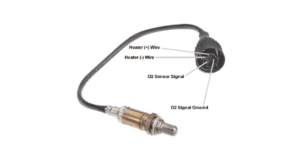 I didn’t pay much attention to O2 sensors until my own vehicle started consuming more fuel than usual. At first, I blamed traffic, fuel quality, and even my driving habits. But after a diagnostic scan, the culprit turned out to be a faulty oxygen sensor.
Replacing this relatively inexpensive component made a surprisingly big difference in fuel economy and engine performance. Although small and often overlooked, the O2 sensor is one of the most important components in your vehicle’s engine management system.
What Does an O2 Sensor Do?
The primary job of an oxygen sensor is to measure oxygen levels in exhaust gases. The sensor helps determine whether the engine is running:
- Too rich (too much fuel)
- Too lean (too much air)
The engine computer uses this data to adjust fuel injection and ignition timing. This process improves:
✔ Fuel efficiency
✔ Engine performance
✔ Emissions control
✔ Catalytic converter protection
My Personal Experience with a Bad O2 Sensor
A few years ago, my car suddenly began showing several unusual symptoms. I noticed:
- Fuel mileage is dropping significantly
- Slight hesitation during acceleration
- Occasional rough idling
- Check engine light appearing intermittently
Initially, I feared expensive engine repairs. Fortunately, after using an OBD-II scanner, the diagnostic code pointed toward a failing upstream oxygen sensor.
The replacement cost was much lower than expected, and the improvement was immediate. After installing the new sensor:
- Fuel economy improved noticeably.
- Engine response became smoother.
- The check engine light disappeared.
- Idle quality improved.
That experience made me realize how much influence this small sensor has on overall vehicle performance.
Where Is the O2 Sensor Located?
Most vehicles have multiple oxygen sensors. They are usually located:
Upstream Sensor
Positioned before the catalytic converter.
Downstream Sensor
Positioned after the catalytic converter.
Some modern vehicles may have four or more sensors, depending on engine configuration.
How Does an O2 Sensor Work?
The O2 sensor generates electrical signals based on oxygen content in the exhaust stream. The sensor continuously sends voltage readings to the ECU.
Rich Fuel Mixture:
Less oxygen in exhaust.
Lean Fuel Mixture:
More oxygen in the exhaust.
The ECU constantly adjusts fuel delivery based on these readings.
This process happens many times every second.
Types of O2 Sensors
Several different oxygen sensor technologies are used in modern vehicles.
| Sensor Type | Description | Advantages | Disadvantages |
| Zirconia Sensor | Most common sensor type | Affordable and reliable | Slower response than newer designs |
| Wideband Sensor | Provides highly accurate readings | Excellent fuel control | Higher replacement cost |
| Titania Sensor | Measures resistance changes | Durable | Less common |
| Heated O2 Sensor | Includes internal heater | Faster operation | Slightly more expensive |
Comparison Table: Good O2 Sensor vs Bad O2 Sensor
| Feature | Healthy O2 Sensor | Faulty O2 Sensor |
| Fuel Economy | Excellent | Reduced |
| Engine Performance | Smooth | Hesitation and roughness |
| Emissions | Lower | Increased |
| Check Engine Light | Usually off | Frequently on |
| Catalytic Converter Protection | Good | Risk of damage |
| Idle Quality | Stable | Rough or inconsistent |
| Fuel Mixture Control | Accurate | Incorrect |
Why O2 Sensors Are So Important
Many people underestimate the importance of oxygen sensors. However, these sensors directly influence:
Fuel Consumption
A failing sensor can significantly increase fuel usage.
Engine Performance
Incorrect fuel mixtures reduce power and drivability.
Environmental Impact
O2 sensors help minimize harmful emissions.
Catalytic Converter Lifespan
Improper fuel mixtures can damage the catalytic converter, which is far more expensive to replace.
Common Symptoms of a Bad O2 Sensor
1. Check Engine Light
This is often the first warning sign. Diagnostic codes commonly include:
- P0130
- P0135
- P0141
- P0150
2. Poor Fuel Economy
One of the most noticeable symptoms. My own fuel consumption increased dramatically before replacement.
3. Rough Idle
The engine may idle unevenly or feel unstable.
4. Hesitation During Acceleration
The vehicle may respond slowly when the accelerator is pressed.
5. Failed Emissions Test
Faulty sensors frequently cause emissions inspection failures.
6. Strong Fuel Smell
An excessively rich fuel mixture can produce noticeable gasoline odors.
How Long Does an O2 Sensor Last?
Most oxygen sensors last between:
60,000–100,000 miles
(approximately 100,000–160,000 km)
However, lifespan depends on:
- Fuel quality
- Engine condition
- Driving habits
- Oil contamination
- Cooling system problems
Causes of O2 Sensor Failure
Several issues can shorten sensor life.
Carbon buildup
Oil contamination
Coolant leaks
Poor fuel quality
Age-related wear
Internal heater failure
Regular engine maintenance can help extend sensor lifespan.
Can You Drive with a Bad O2 Sensor?
Yes, but it is not advisable. A faulty sensor may cause:
- Increased fuel costs
- Engine performance issues
- Catalytic converter damage
- Higher emissions
The longer the issue remains unresolved, the more expensive repairs may become.
O2 Sensor Replacement Cost
Typical replacement costs vary.
| Service | Estimated Cost |
| Oxygen Sensor Part | $30–$250 |
| Labor Cost | $50–$150 |
| Total Replacement | $80–$400 |
Wideband sensors and luxury vehicles may cost more.
OEM vs Aftermarket O2 Sensors
This is a question I personally faced when replacing mine.
OEM Sensors
Pros:
✔ Perfect compatibility
✔ High reliability
✔ Manufacturer quality standards
Cons:
✖ Higher price
Aftermarket Sensors
Pros:
✔ Lower cost
✔ Wide availability
Cons:
✖ Quality varies considerably
Personally, I prefer reputable OEM or premium aftermarket brands because sensor accuracy is extremely important.
Buyer’s Guide: How to Choose the Right O2 Sensor
Choosing the correct oxygen sensor is crucial.
1. Verify Vehicle Compatibility
Always confirm:
- Vehicle make
- Model
- Year
- Engine type
Even similar models may use different sensors.
2. Choose Trusted Brands
Quality matters significantly with sensors. Reliable manufacturers usually offer:
- Better accuracy
- Longer lifespan
- Improved durability
3. Decide Between OEM and Aftermarket
OEM sensors are often the safest option. High-quality aftermarket sensors can also perform very well if purchased from reputable brands.
4. Consider Sensor Type
Determine whether your vehicle requires:
- Narrowband sensor
- Wideband sensor
- Heated sensor
Installing the wrong type can create performance issues.
5. Check Connector Style
Some sensors require wiring modifications.
Whenever possible, choose direct-fit sensors.
6. Review Warranty Coverage
Longer warranties often indicate better manufacturer confidence.
Maintenance Tips for Longer O2 Sensor Life
Based on experience, several habits can help maximize sensor lifespan.
Fix Engine Problems Promptly
Oil burning and coolant leaks can damage sensors.
Use Good Quality Fuel
Poor fuel quality accelerates contamination.
Avoid Ignoring Check Engine Lights
Early diagnosis prevents larger problems.
Replace Air Filters Regularly
Cleaner combustion means cleaner sensors.
Keep the Engine Properly Tuned
Proper engine operation helps sensors last longer.
Why Replacing a Bad O2 Sensor Is Worth It
Many drivers postpone replacing oxygen sensors because the vehicle still runs. I nearly did the same. However, replacing mine resulted in:
✔ Better fuel economy
✔ Smoother driving experience
✔ Lower emissions
✔ Improved engine response
✔ Greater peace of mind
The savings in fuel alone can often offset replacement costs over time.
Read More: Club Car Carburetor Diagram
FAQs: What Is an O2 Sensor On A Car
1. What is an O2 sensor on a car?
An oxygen sensor measures oxygen levels in exhaust gases and helps the engine computer regulate the air-fuel mixture.
2. How many O2 sensors does a car have?
Most modern vehicles have between two and four sensors, depending on engine configuration.
3. Can a bad O2 sensor reduce fuel economy?
Yes. This is one of the most common symptoms.
4. Will a bad O2 sensor trigger the check engine light?
Yes. Faulty sensors frequently activate the check engine warning light.
5. Is it expensive to replace an O2 sensor?
Generally no. Replacement usually costs between $80 and $400.
6. Can I replace an O2 sensor myself?
In many vehicles, yes, provided you have:
- Proper tools
- O2 sensor socket
- Basic mechanical experience
7. Can a bad O2 sensor damage the engine?
Indirectly, yes. Incorrect fuel mixtures may eventually contribute to engine and catalytic converter issues.
8. How long do oxygen sensors last?
Typically between 60,000 and 100,000 miles, though some last even longer.
9. Can a bad O2 sensor cause rough idling?
Yes. Improper fuel mixture adjustments often result in unstable idle behavior.
10. Should I replace all O2 sensors at once?
Not necessarily. However, if multiple sensors are old and nearing the end of their lifespan, replacing them together may reduce future labor costs and improve overall system reliability.
Final Thoughts
The oxygen sensor may be small, but it has an enormous impact on how efficiently your vehicle operates. From my personal experience, a failing O2 sensor can easily be mistaken for larger engine problems. Fortunately, replacement is usually relatively affordable and can dramatically improve vehicle performance.
Regular maintenance, prompt diagnostics, and choosing quality replacement parts are the keys to keeping your vehicle running efficiently.
If your fuel economy suddenly decreases or your check engine light appears, don’t overlook the possibility of a faulty O2 sensor. This tiny component could be responsible for many of your vehicle’s issues.