If your temperature gauge suddenly climbs toward the red zone, your AC stops blowing cold air in traffic, or you hear absolutely nothing when the engine gets hot, your car’s cooling fan might not be working.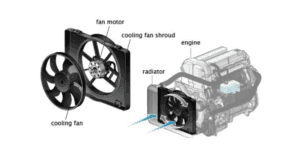 I’ve been there. Sitting at a red light, watching the temperature needle creep up, wondering if I was about to cook my engine. Turns out, the radiator cooling fan had failed,d a relatively small part that can cause very big problems.
In this complete guide, we’ll cover:
- What a car cooling fan does
- Why it might stop working
- How to diagnose it
- Repair costs
- A comparison table of common causes
- A buyer’s guide for replacement parts
- Pro tips from real-world experience
- Detailed FAQs
- And everything you need to know before heading to a mechanic
Let’s break it down step-by-step.
What Does a Car Cooling Fan Do?
Your car’s cooling fan (also called a radiator fan) pulls air through the radiator when the vehicle isn’t moving fast enough to create airflow naturally. It helps:
- Prevent engine overheating
- Maintain proper operating temperature
- Support AC performance
- Protect engine components
When driving at highway speed, airflow happens naturally. But in traffic, at idle, or parked with AC, the cooling fan is critical. If it stops working, overheating can happen quickly.
Signs Your Cooling Fan Is Not Working
Here are the most common symptoms:
1. Engine Overheating at Idle
The temperature rises when stopped, but drops when driving.
2. AC Not Blowing Cold Air in Traffic
A cooling fan also helps the AC condenser.
3. Fan Never Turns On
Even when the engine is hot.
4. Check Engine Light
Modern vehicles may log cooling system faults.
5. Loud Noise or Grinding
If the fan motor bearings are failing.
Why Is My Car Cooling Fan Not Working? (Common Causes)
Here’s a detailed comparison of the most common reasons:
| Problem | Symptoms | Repair Difficulty | Estimated Cost |
| Blown Fuse | Fan doesn’t run at all | Easy | $10–$30 |
| Bad Relay | Fan intermittent or dead | The fany | $20–$60 |
| Faulty Temperature Sensor | The fandoesn’t activate | Moderate | $80–$250 |
| Failed Fan Motor | No movement, possible noise | Moderate | $200–$600 |
| Wiring Issues | Random behavior | Moderate | $100–$400 |
| Bad Thermostat | Engine overheats, fan confused | Moderate | $150–$400 |
| ECU Issue | Rare, erratic behavior | Complex | $500+ |
Let’s go deeper into each.
1. Blown Cooling Fan Fuse
The easiest and cheapest fix. If the fuse blows:
- Fan won’t run
- No airflow
- The engine overheats in traffic
Always check fuses first.
2. Bad Cooling Fan Relay
The relay controls electrical power to the fan. When it fails:
- The fan may work sometimes
- Or not at all
Relays are inexpensive and easy to replace.
3. Faulty Coolant Temperature Sensor
The sensor tells the car when to turn the fan on. If it fails:
- The fan doesn’t activate
- Engine overheats
- Temperature readings may be incorrect
4. Failed Cooling Fan Motor
The motor physically spins the fan blades. If it burns out:
- Fan won’t move
- May produce clicking or grinding noise
This was the issue in my case.
5. Wiring Problems
Loose or corroded wiring can prevent proper power flow. Common in older vehicles.
6. Thermostat Problems
If the thermostat sticks closed:
- Coolant doesn’t circulate
- Engine overheats quickly
- Fan operation may seem inconsistent
How To DiaThe enginea Cooling Fan Problem
Here’s a simple DIY troubleshooting process:
Step 1: Check Fuses
Look in fuse box under hood.
Step 2: Inspect Relay
Swap with ian dentical relay if available.
Step 3: Let Engine Warm Up
Fan should activate once engine reaches operating temperathe engine warm upTThe fan on the AC
Most cars activthe ate cooling fan when AC is turned on.
Step 5: Check for Power at Fan Motor
The equires multimetether.
Can You Drive With a Bad Cooling Fan?
Short answer: Not safely. Driving without a working fan can cause:
- Severe overheating
- Head gasket failure
- Warped cylinder head
- Engine seizure
If overheating starts, pull over immediately.
Cooling Fan Replacement Cost
Here’s a realistic cost breakdown:
| Repair | Average Total Cost |
| Fuse Replacement | $10–$30 |
| Relay Replacement | $50–$150 |
| Temperature Sensor | $150–$350 |
| Cooling Fan Motor | $300–$700 |
| Full Fan Assembly | $400–$900 |
Luxury vehicles may cost more.
Buyer’s Guide: Choosing a Replacement Cooling Fan
If replacement is needed, here’s what to consider.
1. OEM vs Aftermarket
OEM:
- Perfect fit
- Higher price
- Reliable longevity
Aftermarket:
- More affordable
- Quality varies
I usually recommend OEM for newer vehicles.
2. Fan Assembly vs Motor Only
Motor only:
- Cheaper
- More labor
Full assembly:
- Easier installation
- More reliable
Often worth replacing entire assembly.
3. Single vs Dual Fan Setup
Some vehicles have:
- Singlethe fan
- Dual fan system
Always confirm compatibility.
4. Warranty
Look for:
- At least 12-month warranty
- Good brand reputation
Personal Experience: What Happened When Mine Failed
One summer afternoon, my temperature gauge climbed while idling. Highway driving? Perfectly normal temperature. Stopped at traffic light? Overheating.
Diagnosis:
Cooling fan motor burned out.
Replacement cost:
$420 total, including labor.
Lesson learned:
Don’t ignore overheating symptoms; they escalate fast.
How the Cooling Fan Works (Technical Breakdown)
Modern vehicles use electric cooling fans controlled by:
- Coolant temperature sensor
- Engine Control Unit (ECU)
- Fan relay
- Thermostat
When coolant temperature reaches a set threshold, the ECU activates the relay, sending power to the fan motor. Older vehicles used mechanical fans connected to the engine.
Mechanical Fan vs Electric Fan
| Feature | Mechanical Fan | Electric Fan |
| Power Source | Engine belt | Electric motor |
| Efficiency | Lower | Higher |
| Fuel Economy | Slightly worse | Better |
| Common In | Older vehicles | Modern vehicles |
| Repair Cost | Moderate | Moderate to high |
Electric fans are more efficient and common today.
Preventing Cooling Fan Problems
Here’s how to reduce risk:
- Check coolant levels regularly
- Replace the thermostat when needed
- Keep the adapter clean
- Inspect wiring annually
- Avoid overheating ethe engine
Maintenance is cheaper than repair.
Advanced Insight: Why AC Stops Working in Traffic
When cthe ooling fan fails:
- AC condenser overheats
- Refrigerant pressure increases
- The C stops blowing cold air
That’s often the first sign before engine overheating.
Read More: How To Clean Car AC Evaporator Without Removing
FAQs: Why Is My Car Cooling Fan Not Working
1. Why does my fan work only when Athe C is on?
Possible temperature sensor issue.
2. How do I know if relay is bad?
Swap with sa imilar relay for testing.
3. Can low coolant cause fan issues?
Yes. SThe sensormay not detect the proper temperature.
4. Why does my car overheat only at idle?
The cooling fan is likely not working.
5. Is the motor hard to replace?
Moderate difficulty, depends on vehicle.
6. How long does cooling fan last?
Typically 8–15 years.
7. Can Cathe’s overheating ruin the engine quickly?
Yes, severe damage can occur within minutes.
Final Thoughts
If your ccar’scooling fan isn’t working, it’s not a problem to ignore. It’s a warning sign. Whether it’s a blown fuse, bad relay, faulty sensor, or failed motor, diagnosing it early can save thousands in engine repairs.
From personal experience, I can say this: Cooling system problems escalate fast. Fix small issues before they become major ones. Your engine depends on it.