If your car’s air conditioning suddenly starts blowing warm air, fluctuates between hot and cold, or makes strange hissing noises, there’s a good chance your car’s expansion valve is trying to tell you something.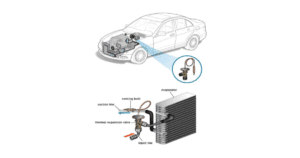 I’ve dealt with a faulty AC system before, and I can tell you diagnosing it early saves money, stress, and sweaty summer drives. One of the most overlooked components in a vehicle’s AC system is the thermal expansion valve (TXV).
It’s small, inexpensive compared to the compressor, but absolutely critical for proper cooling performance. In this complete guide, we’ll cover:
- What a car expansion valve does
- Common car expansion valve symptoms
- Causes of failure
- Repair vs replacement costs
- A detailed comparison table
- A buyer’s guide
- Preventive maintenance tips
- FAQs
Let’s break it.
What Is a Car Expansion Valve?
The expansion valve (often called a TXV) is part of your vehicle’s AC system. It controls how much refrigerant flows into the evaporator. Think of it as a precision metering device that regulates cooling efficiency.
In modern vehicles, the AC system typically uses:
- A compressor
- A condenser
- An evaporator
- An expansion valve (or orifice tube)
- Refrigerant (like R-134a or R-1234yf)
The expansion valve sits between the condenser and evaporator and ensures refrigerant enters at the correct pressure and temperature. If it fails, your entire AC system performance suffers.
8 Common Car Expansion Valve Symptoms
Here are the most noticeable warning signs.
1. AC Blowing Warm Air
This is the most obvious symptom. If the expansion valve gets stuck open or closed, refrigerant flow becomes improper. That leads to:
- Poor cooling
- Completely warm air
- Delayed cooling after startup
This often gets mistaken for a bad compressor, but the valve is sometimes the real culprit.
2. AC Temperature Fluctuates
One minute it’s cold. Next minute it’s warm. A failing TXV may:
- Stick intermittently
- Misread temperature
- Fail to regulate refrigerant flow properly
This causes unstable cabin temperatures.
3. Frost on AC Vents or Evaporator
If the valve is stuck open, too much refrigerant floods the evaporator. That causes:
- Ice buildup
- Frost on AC lines
- Reduced airflow
Eventually, cooling stops completely until the ice melts.
4. Hissing or Whistling Noise
You may hear a:
- Hiss
- Squeal
- Whistle
That can indicate improper refrigerant flow or internal valve blockage.
5. High or Low System Pressure Readings
Using AC manifold gauges, you might notice:
- Extremely high low-side pressure
- Very low low-side pressure
An expansion valve that fails to regulate pressure causes an imbalance.
6. Compressor Short Cycling
The compressor turns on and off rapidly. Why? Because pressure regulation is unstable. The compressor struggles to maintain a proper operating range.
7. Weak Airflow (Indirect Symptom)
While usually related to the blower motor or cabin filter, ice buildup from a stuck valve can restrict airflow.
8. Complete AC Failure
In severe cases, the system may shut down entirely to protect itself.
Comparison Table: Normal vs Failing Expansion Valve
| Feature | Healthy Expansion Valve | Failing Expansion Valve |
| AC Temperature | Consistently cold | Warm or fluctuating |
| Refrigerant Flow | Balanced and controlled | Restricted or excessive |
| Compressor Operation | Smooth cycling | Short cycling |
| Evaporator Condition | No frost | Ice buildup |
| Cabin Comfort | Stable | Inconsistent |
| Noise | Quiet | Hissing/whistling |
| Pressure Readings | Within normal range | Too high or too low |
| Fuel Efficiency | Normal | Slightly reduced |
What Causes Expansion Valve Failure?
Here’s what I’ve seen most often:
1. Contaminated Refrigerant
Debris or moisture clogs the valve.
2. Internal Corrosion
Moisture inside the AC system causes rust-like buildup.
3. Worn Temperature Sensor Bulb
The sensing element can fail over time.
4. Age and Wear
Most expansion valves last 8–12 years, depending on climate and usage.
5. System Overcharge or Undercharge
Improper refrigerant levels strain the valve.
Repair vs Replacement Cost
Here’s a realistic breakdown:
| Repair Type | Estimated Cost (Parts + Labor) |
| Expansion Valve Replacement | $250 – $600 |
| Full AC System Flush + Valve | $500 – $1,200 |
| Compressor + Valve Replacement | $900 – $2,000 |
Costs vary by vehicle make and labor rates.
Personal Experience: Why Early Diagnosis Matters
In my case, the AC would blow cold for about five minutes, then warm up. I assumed it was the compressor. Turned out the expansion valve was sticking intermittently.
Replacing it costs around $400, far less than a new compressor. Lesson learned? Don’t ignore fluctuating AC temperature.
Buyer’s Guide: Choosing the Right Expansion Valve
If you’re replacing one, here’s what to look for:
1. OEM vs Aftermarket
OEM (Original Equipment Manufacturer):
- Perfect fit
- Reliable
- More expensive
Aftermarket:
- Cheaper
- Quality varies
- Good brands perform well
I personally recommend OEM for daily drivers.
2. Compatibility
Always verify:
- Year
- Make
- Model
- Engine size
Wrong valve = improper refrigerant calibration.
3. Material Quality
Look for:
- Corrosion-resistant housing
- Durable sensing bulb
- Precision internal spring mechanism
4. Warranty
Good brands offer 1–2 year warranties.
5. Consider Replacing Receiver-Drier
When replacing the expansion valve, many technicians recommend also replacing:
- Receiver-drier (or accumulator)
This removes moisture and protects the new valve.
Long Detailed Expansion (Deep Technical Insight)
How the Expansion Valve Actually Works
The TXV responds to evaporator temperature via a sensing bulb. It adjusts an internal needle valve to increase or restrict refrigerant flow.
It balances:
- Evaporator pressure
- Refrigerant superheat
- Compressor load
If it sticks open:
- Evaporator floods
- Pressure spikes
- Ice forms
If it sticks closed:
- Evaporator starve
- AC blows warm
Expansion Valve vs Orifice Tube
Some vehicles use an orifice tube instead of a TXV.
| Feature | Expansion Valve | Orifice Tube |
| Adjustability | Variable | Fixed |
| Efficiency | Higher | Moderate |
| Cost | Higher | Lower |
| Used In | Many modern vehicles | Some domestic models |
Preventive Maintenance Tips
To extend expansion valve life:
- Run AC monthly (even in winter)
- Replace the cabin air filter regularly
- Avoid overcharging refrigerant
- Fix refrigerant leaks quickly
- Perform the AC system vacuum before recharge
When Should You Replace It?
Replace immediately if:
- AC won’t cool
- Ice repeatedly forms
- Pressure readings are abnormal
- System contamination is present
Do not delay, as it can damage the compressor.
Read More: What Is An AC Belt In A Car
FAQs: Car Expansion Valve Symptoms
1. Can I drive with a bad expansion valve?
Yes, but AC performance will suffer. Long-term use may damage the compressor.
2. How long does an expansion valve last?
Typically 8–12 years.
3. Is expansion valve replacement difficult?
Yes. It requires refrigerant recovery and AC system evacuation.
4. Can a bad expansion valve damage the compressor?
Yes, improper refrigerant flow can overwork the compressor.
5. How do I test an expansion valve?
Using AC manifold gauges and temperature probes.
6. Does a clogged cabin filter mimic expansion valve symptoms?
Sometimes, especially weak airflow.
7. Should I flush the AC system?
If contamination is present, absolutely.
8. What happens if the valve is stuck open?
Evaporator floods and ice forms.
9. What happens if stuck closed?
No refrigerant flow, no cooling.
10. Is it better to replace or clean?
Replacement is strongly recommended.
Final Thoughts
The expansion valve might be small, but it plays a massive role in your car’s cooling system. Ignoring early symptoms, such as fluctuating temperatures or frost buildup, can lead to costly repairs later.
If your AC feels “off,” don’t assume it’s the compressor. A failing expansion valve is often the hidden cause. Early diagnosis saves money and keeps you cool.