Checking your car’s oil level is one of the simplest yet most important maintenance tasks you can perform. Despite modern vehicles becoming increasingly sophisticated, engine oil remains the lifeblood of every internal combustion engine.
Without the correct amount of clean oil, your engine can suffer excessive wear, overheating, poor performance, and even catastrophic failure. I learned this lesson firsthand after noticing a slight ticking noise coming from my vehicle during a long road trip.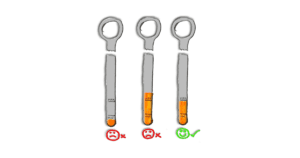 At first, I ignored it, assuming it was normal engine noise. Later, I discovered the oil level was dangerously low. Fortunately, I caught the issue before serious damage occurred.
Since then, checking oil has become a regular part of my vehicle maintenance routine. It takes less than five minutes and can save thousands of dollars in repair costs.
This guide explains exactly how to check the oil level in your car, what the readings mean, common mistakes to avoid, and how to choose the right oil for your vehicle.
Why Engine Oil Is So Important
Engine oil performs several critical functions:
- Lubricates moving engine components
- Reduces friction and wear
- Prevents overheating
- Removes contaminants
- Protects against corrosion
- Improves fuel efficiency
- Extends engine lifespan
Without adequate oil, metal components rub directly against each other, causing rapid wear and potentially complete engine failure.
Quick Comparison Table: Oil Level Conditions
| Oil Level Status | Dipstick Reading | What It Means | Action Required |
| Full | Near MAX mark | Ideal condition | No action needed |
| Slightly Low | Between MIN and MAX | Safe but monitor | Add oil soon |
| Low | At MIN mark | Potential risk | Add oil immediately |
| Very Low | Below the MIN mark | Serious concern | Refill before driving |
| Overfilled | Above the MAX mark | Can damage the engine | Remove excess oil |
When Should You Check Your Oil?
Most experts recommend checking engine oil:
- Once a month
- Before long trips
- Every 1,000 miles (1,600 km)
- After an oil change
- If warning lights appear
- When unusual engine noises occur
Older vehicles may require more frequent inspections.
Tools You’ll Need
The good news is that checking oil requires almost no specialized equipment. You’ll need:
- Clean paper towel or rag
- Gloves (optional)
- Adequate lighting
- Vehicle owner’s manual
That’s it.
Step-by-Step: How To Check The Oil Level In Your Car
Step 1: Park on a Level Surface
- Always park your vehicle on flat ground.
- A sloped surface can cause inaccurate oil readings because the oil shifts inside the oil pan.
- Turn off the engine and engage the parking brake.
Step 2: Let the Engine Cool
- Wait approximately 5–10 minutes after shutting off the engine.
- This allows oil to drain back into the oil pan for an accurate reading.
- Checking immediately after driving may produce misleading results.
Step 3: Open the Hood
- Locate the hood release lever inside the vehicle.
- Open the hood and secure it using the hood prop or hydraulic struts.
- Take a moment to identify the oil dipstick.
Step 4: Find the Oil Dipstick
Most dipsticks have a brightly colored handle:
- Yellow
- Orange
- Red
The owner’s manual can help if you’re unsure.
Step 5: Remove the Dipstick
- Pull the dipstick out completely.
- The first reading is usually inaccurate because oil splashes around while driving.
Step 6: Wipe It Clean
- Use a clean rag or paper towel.
- Remove all oil from the dipstick.
- This ensures an accurate measurement during the next reading.
Step 7: Reinsert the Dipstick
- Push the dipstick fully back into its tube.
- Ensure it is completely seated.
Step 8: Remove It Again
- Pull it out carefully.
- Observe where the oil film reaches.
- This second reading is the accurate one.
Step 9: Read the Oil Level
Most dipsticks include:
- MIN mark
- MAX mark
Some have:
- Crosshatched areas
- Dots
- Holes
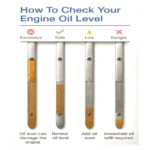
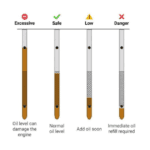
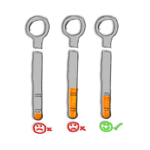
The oil level should fall between MIN and MAX. Ideally, it should be near the MAX mark.
Step 10: Assess Oil Condition
Don’t just check quantity. Inspect oil quality. Healthy oil usually appears:
- Amber
- Light brown
- Smooth
Problematic oil may appear:
- Thick
- Black
- Sludgy
- Milky
Milky oil could indicate coolant contamination.
Understanding Dipstick Markings
| Marking Type | Meaning |
| MIN | Lowest safe oil level |
| MAX | Maximum safe oil level |
| Crosshatch Zone | Safe operating range |
| Below MIN | Add oil immediately |
| Above MAX | Overfilled condition |
Understanding these markings helps prevent underfilling and overfilling.
What If The Oil Level Is Low?
Low oil levels can result from:
- Normal consumption
- Oil leaks
- Worn piston rings
- Valve seal wear
- Delayed oil changes
If low:
- Purchase the recommended oil.
- Remove the oil filler cap.
- Add small amounts.
- Wait a few minutes.
- Recheck the dipstick.
Never add too much at once.
Why Overfilling Oil Is Dangerous
Many drivers assume more oil equals better protection. This is incorrect. Excess oil can:
- Increase crankshaft resistance
- Create foam
- Reduce lubrication
- Damage seals
- Harm catalytic converters
Always stay below the MAX line.
Signs Your Car May Be Low on Oil
Watch for:
Oil Warning Light
The most obvious indicator.
Engine Knocking
Metal-on-metal contact may create knocking sounds.
Burning Smell
Oil may leak onto hot engine components.
Reduced Fuel Economy
Poor lubrication increases resistance.
Engine Overheating
Insufficient oil reduces heat dissipation.
Common Mistakes When Checking Oil
Checking on a Slope
Produces inaccurate readings.
Not Wiping the Dipstick
Creates misleading measurements.
Reading Immediately After Driving
Oil hasn’t settled yet.
Ignoring Oil Color
Quantity isn’t the only concern.
Using the Wrong Oil
Always follow manufacturer specifications.
Conventional vs Synthetic Oil Comparison
| Feature | Conventional Oil | Synthetic Oil |
| Price | Lower | Higher |
| Engine Protection | Good | Excellent |
| Temperature Resistance | Moderate | Superior |
| Longevity | 3,000–5,000 miles | 7,500–15,000 miles |
| Fuel Economy | Standard | Improved |
| Cold Weather Performance | Fair | Excellent |
| Deposit Protection | Moderate | High |
My Personal Experience Checking Oil
Over the years, I’ve owned several vehicles ranging from compact sedans to SUVs. One thing that consistently surprises me is how many drivers never check their oil between service intervals.
I once helped a friend whose engine began making alarming noises. A quick dipstick inspection revealed the oil level barely registered. Adding the correct oil immediately improved operation and likely prevented major engine damage.
Since then, I’ve recommended monthly oil checks to everyone I know. The process is quick, free, and incredibly valuable.
Benefits of Regular Oil Monitoring
Regular oil inspections help:
- Extend engine life
- Improve reliability
- Prevent costly repairs
- Increase fuel economy
- Detect leaks early
- Improve resale value
A few minutes each month can save thousands later.
How Often Should You Add Oil?
Ideally, you shouldn’t need frequent top-offs. However, some vehicles naturally consume oil. Factors include:
- Engine age
- Driving habits
- Climate
- Oil quality
If you’re adding oil regularly, investigate possible leaks or mechanical issues.
Buyer’s Guide: Choosing the Right Engine Oil
Selecting the proper oil matters just as much as maintaining the correct level.
Follow Manufacturer Recommendations
Always consult your owner’s manual. Recommended viscosity examples:
- 0W-20
- 5W-20
- 5W-30
- 10W-30
Consider Climate
Cold climates:
- 0W-20
- 5W-20
Hot climates:
- 5W-30
- 10W-30
Choose Between Synthetic and Conventional
Synthetic oil is ideal for:
- Modern engines
- Turbocharged vehicles
- Extreme temperatures
- Long service intervals
Conventional oil works well for:
- Older vehicles
- Budget-conscious drivers
Look for Industry Certifications
Check for:
- API certification
- ILSAC approval
- Manufacturer approvals
Buy from Reputable Brands
Quality oils provide:
- Better protection
- Cleaner engines
- Longer service life
Avoid unknown bargain products.
Oil Level Check Checklist
Before checking oil:
✓ Park on level ground
✓ Turn the engine off
✓ Wait 5–10 minutes
✓ Locate dipstick
✓ Wipe clean
✓ Reinsert fully
✓ Check reading
✓ Inspect oil condition
✓ Add oil if needed
Long-Term Engine Protection Tips
To maximize engine life:
- Check oil monthly
- Follow service intervals
- Replace filters regularly
- Fix leaks promptly
- Use the correct oil viscosity
- Monitor warning lights
- Keep maintenance records
These habits can add years to engine longevity.
Read More: How Do I Check The Oil On My Car
FAQs: How To Check The Oil Level In Your Car
How often should I check my oil?
Most drivers should check engine oil at least once per month and before long trips.
Can I check the oil when the engine is hot?
It’s best to wait 5–10 minutes after shutting off the engine so the oil can settle.
What color should engine oil be?
Fresh oil is usually amber or light brown. Dark oil isn’t always bad, but thick sludge indicates problems.
What happens if my oil is below the MIN mark?
Driving with low oil can increase engine wear and potentially cause severe damage.
Can too much oil hurt an engine?
Yes. Overfilling can create foam, reduce lubrication efficiency, and damage engine components.
How much oil should I add if the level is low?
Add small amounts gradually and recheck frequently. Avoid overfilling.
Do modern cars still have dipsticks?
Many vehicles do, but some newer models use electronic oil monitoring systems.
Is synthetic oil worth the extra cost?
For most modern vehicles, synthetic oil offers better protection, longer service intervals, and improved performance.
Why does my car keep losing oil?
Possible causes include leaks, worn engine components, or excessive oil consumption.
Can I drive if the oil warning light comes on?
It’s safer to stop and check the oil immediately. Continuing to drive could cause severe engine damage.
Conclusion
Learning how to check the oil level in your car is one of the most valuable maintenance skills a driver can develop. The process takes only a few minutes, requires virtually no tools, and provides critical insight into your engine’s health.
By regularly monitoring both oil level and condition, you can avoid expensive repairs, improve fuel economy, extend engine life, and enjoy greater peace of mind on the road.
Whether you drive a brand-new vehicle or an older high-mileage car, routine oil checks remain one of the easiest ways to protect your investment.