Checking your car’s oil level is one of the simplest yet most important maintenance tasks you can perform. As someone who has owned several vehicles over the years, from older sedans to modern SUVs, I can confidently say that spending just five minutes checking your oil can save you thousands of dollars in engine repairs.
Many drivers wait until a warning light appears on the dashboard before thinking about engine oil. Unfortunately, by that point, damage may already be occurring. Engine oil serves as the lifeblood of your vehicle, lubricating moving parts, reducing friction, cooling components, and preventing premature wear.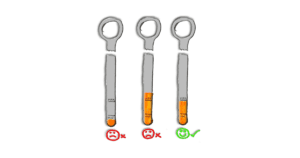 The good news? You don’t need to be a mechanic to check your oil level. With a clean rag, a few minutes, and basic knowledge, anyone can do it. In this comprehensive guide, you’ll learn:
- Why checking oil matters
- Step-by-step instructions
- Common mistakes to avoid
- Warning signs of low oil
- Dipstick vs electronic oil monitoring systems
- Best tools to keep handy
- A buyer’s guide for engine oil
- Frequently asked questions
Let’s get started.
Why Engine Oil Is So Important
Before learning how to check oil, it helps to understand why oil matters. Engine oil performs several critical functions:
Lubrication
Thousands of metal components move rapidly inside your engine. Oil creates a protective layer between these parts, reducing wear and friction.
Cooling
Oil helps remove heat generated by combustion and friction.
Cleaning
Modern oils contain detergents that help keep engine internals clean by suspending dirt and contaminants.
Corrosion Protection
Oil protects metal components from rust and corrosion.
Improved Fuel Efficiency
A properly lubricated engine works more efficiently and uses less fuel. Without sufficient oil, an engine can overheat, wear prematurely, or even fail.
When Should You Check Your Oil?
From personal experience, I recommend checking oil:
- Once every month
- Before long road trips
- After purchasing a used car
- Whenever the oil warning light appears
- If the vehicle has high mileage
- After noticing leaks
Older vehicles may require more frequent monitoring because they tend to burn or leak oil.
Step-by-Step: How to Check Oil Level in Your Car
Follow these simple steps.
Step 1: Park on Level Ground
Park your vehicle on a flat surface.
Checking oil on a slope can produce inaccurate readings because the oil pools unevenly inside the oil pan.
Step 2: Turn Off the Engine
Shut off the engine and wait approximately 5 to 10 minutes.
This allows oil circulating through the engine to drain back into the oil pan.
Checking immediately after turning off the engine may result in a falsely low reading.
Step 3: Open the Hood
Locate and release the hood latch.
Secure the hood using the prop rod if necessary.
Step 4: Find the Dipstick
The dipstick usually has a brightly colored handle:
- Yellow
- Orange
- Red
Check your owner’s manual if you’re unsure.
Step 5: Remove and Wipe the Dipstick
Pull out the dipstick completely.
Use a clean cloth or paper towel to wipe away all oil.
This ensures an accurate reading.
Step 6: Reinsert the Dipstick
Push the dipstick all the way back into its tube.
Make sure it’s fully seated.
Step 7: Pull It Out Again
Remove the dipstick once more and inspect the oil level.
Look for:
- Minimum mark
- Maximum mark
These may be labeled:
- MIN and MAX
- L and H
- Cross-hatched area
Step 8: Read the Oil Level
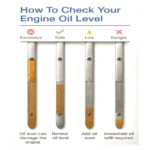
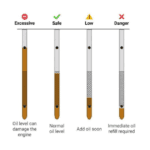
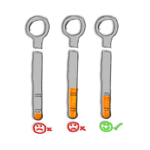
Ideally, oil should sit near the maximum mark.
Perfect Reading
Oil level is between MIN and MAX.
Low Reading
Oil is near or below MIN.
Overfilled Reading
Oil is above MAX.
Overfilling can be just as harmful as running low.
Step 9: Check Oil Condition
While examining the dipstick, inspect the oil’s appearance.
Healthy oil typically appears:
- Amber
- Light brown
- Smooth
Warning signs include:
- Thick sludge
- Milky appearance
- Metal particles
- Burnt smell
These may indicate engine issues requiring professional inspection.
Oil Level Reading Guide
| Oil Level Position | Condition | Action Required |
| Above MAX | Overfilled | Drain excess oil |
| Near MAX | Excellent | No action needed |
| Midway | Good | Continue monitoring |
| Near MIN | Low | Add oil soon |
| Below MIN | Dangerous | Add oil immediately |
Dipstick vs Electronic Oil Monitoring Systems
Many modern vehicles use electronic oil monitoring systems instead of traditional dipsticks.
| Feature | Traditional Dipstick | Electronic Monitor |
| Accuracy | Very High | High |
| Ease of Use | Moderate | Very Easy |
| Cost | Included | Built-In |
| Physical Inspection | Yes | No |
| Oil Condition Check | Yes | Limited |
| Reliability | Excellent | Good |
My Experience
I still prefer traditional dipsticks.
Electronic systems are convenient, but a dipstick lets you inspect oil color, contamination, and consistency directly.
Common Mistakes People Make
Over the years, I’ve noticed drivers making these errors repeatedly.
Checking on Uneven Ground
This creates false readings.
Reading Immediately After Driving
Oil needs time to settle.
Forgetting to Wipe the Dipstick
A dirty dipstick can produce inaccurate measurements.
Using the Wrong Oil
Not all oils are interchangeable.
Always follow manufacturer specifications.
Ignoring Small Oil Losses
Even a slight drop in oil level may indicate a leak.
Signs Your Car May Be Low on Oil
Watch for these warning symptoms.
Oil Warning Light
The most obvious indicator.
Engine Knocking
Insufficient lubrication causes metal parts to contact one another.
Burning Oil Smell
May indicate leaks or oil burning.
Excessive Exhaust Smoke
Blue smoke often signals oil consumption.
Poor Engine Performance
Low oil can increase friction and reduce efficiency.
Overheating
Oil helps cool engine components.
What Happens If You Drive With Low Oil?
The consequences can be severe.
Increased Friction
Metal parts grind against each other.
Excessive Heat
The engine loses cooling capacity.
Premature Wear
Bearings and moving components deteriorate faster.
Engine Seizure
In extreme cases, the engine may lock up completely.
Engine replacement costs can easily reach thousands of dollars.
A simple oil check could prevent all of this.
How Often Should Oil Be Changed?
The old “every 3,000 miles” rule no longer applies to many modern vehicles.
Typical intervals:
| Oil Type | Change Interval |
| Conventional | 3,000–5,000 miles |
| Synthetic Blend | 5,000–7,500 miles |
| Full Synthetic | 7,500–15,000 miles |
Always consult your owner’s manual.
Understanding Oil Colors
Oil color can reveal a lot.
| Color | Meaning |
| Amber | Fresh oil |
| Light Brown | Normal use |
| Dark Brown | Aging oil |
| Black | Dirty but often normal in diesel engines |
| Milky | Possible coolant contamination |
| Metallic | Internal engine wear |
Personal Review: Why I Check Oil Monthly
For years, I rarely thought about oil between service appointments. That changed when one of my older vehicles developed a slow oil leak. The leak wasn’t large enough to leave obvious spots on the driveway, but over several months, the oil level gradually dropped.
Fortunately, a routine oil check revealed the issue before serious engine damage occurred. Since then, I have made it a habit to check the oil every month.
The process takes less than five minutes and provides peace of mind. I’ve caught leaks, detected overdue oil changes, and avoided expensive repairs simply by paying attention to the dipstick.
In my opinion, checking oil is one of the highest-value maintenance habits any driver can adopt.
Buyer’s Guide: Choosing the Right Engine Oil
If your oil level is low, you’ll need the correct replacement oil. Here’s what to consider.
1. Follow Manufacturer Recommendations
Always start with your owner’s manual.
The recommended viscosity is usually listed there.
Examples include:
- 0W-20
- 5W-20
- 5W-30
- 10W-30
2. Understand Viscosity Ratings
Example: 5W-30
- 5W = cold weather performance
- 30 = operating temperature thickness
Lower first numbers perform better during cold starts.
3. Conventional vs Synthetic
Conventional Oil
Pros:
- Lower cost
- Widely available
Cons:
- Shorter lifespan
- Less temperature resistance
Synthetic Oil
Pros:
- Superior protection
- Longer intervals
- Better fuel economy
Cons:
- Higher upfront cost
4. High-Mileage Oil
Ideal for vehicles exceeding:
- 75,000 miles
- 120,000 kilometers
These formulations often help reduce leaks and oil consumption.
5. API and Manufacturer Certifications
Look for:
- API certification
- Manufacturer approvals
These ensure compatibility and performance standards.
Essential Oil Checking Kit
I recommend keeping these items in your garage:
| Item | Purpose |
| Clean microfiber cloth | Wiping dipstick |
| Funnel | Adding oil |
| Flashlight | Viewing markings |
| Spare oil quart | Emergency top-offs |
| Gloves | Cleaner handling |
Seasonal Oil Checking Tips
Summer
High temperatures can accelerate oil breakdown.
Check levels more frequently during extreme heat.
Winter
Cold weather thickens oil.
Allow proper warm-up before driving aggressively.
Advanced Tips for Accurate Oil Checks
Check at Consistent Times
Try checking oil under similar conditions each month.
Track Oil Consumption
Record:
- Mileage
- Oil level
- Amount added
Patterns become easier to spot.
Inspect Under the Vehicle
Look for:
- Fresh drips
- Wet engine surfaces
- Oil stains
These may indicate leaks.
Is It Safe to Add Oil Yourself?
Absolutely.
Adding oil is one of the easiest maintenance tasks.
Just remember:
- Verify the correct oil type.
- Add small amounts.
- Recheck the level frequently.
- Avoid overfilling.
Read More: How To Drain a Car Fuel Tank
FAQs: How Do I Check Oil Level In Car
How often should I check my car’s oil?
Most experts recommend checking once per month and before long trips.
Can I check the oil when the engine is hot?
Yes, but wait 5–10 minutes after shutting off the engine so oil can drain back into the pan.
What if my car has no dipstick?
Many newer vehicles use electronic oil monitoring systems accessible through the dashboard information menu.
Is dark oil always bad?
Not necessarily. Oil naturally darkens with use. Texture, smell, and change interval are more important indicators.
How much oil should be between MIN and MAX?
Typically about one quart (roughly one liter), though this varies by vehicle.
What happens if I overfill the engine oil?
Overfilling can cause foaming, increased pressure, seal damage, and reduced lubrication effectiveness.
Can I mix different oil brands?
Generally, yes, if viscosity and specifications match, but using the same product consistently is preferred.
Why does my oil level keep dropping?
Possible causes include:
- Oil leaks
- Engine wear
- Valve seal problems
- Piston ring wear
- Turbocharger issues
Should I check the oil before or after driving?
Before driving or after the engine has been off for several minutes provides the most accurate reading.
Does synthetic oil need checking?
Yes. Synthetic oil lasts longer but still requires routine level inspections.
How long does checking oil take?
Typically less than five minutes.
What color should healthy engine oil be?
Usually amber to light brown depending on age and usage.
Can low oil cause engine overheating?
Yes. Oil contributes significantly to engine cooling and heat management.
Is the oil warning light the same as a maintenance reminder?
No. The oil warning light indicates potentially low oil pressure, while maintenance reminders track service intervals.
Can I drive immediately after adding oil?
Yes, provided the oil level is within the recommended range and the filler cap is securely installed.
Final Thoughts
Checking your car’s oil level is a simple skill that every driver should learn. It requires no special mechanical knowledge, takes only a few minutes, and can significantly extend engine life.
Whether you drive a brand-new vehicle or an older high-mileage car, regular oil inspections help catch problems early and prevent expensive repairs.
From personal experience, monthly oil checks provide peace of mind and help ensure your vehicle remains reliable for years to come. A few minutes with a dipstick today can save thousands of dollars tomorrow.