The first time my check engine light came on, I did what most drivers do: I ignored it for a few days big mistake. After finally scanning the code, it pointed to a bad Oxygen Sensor.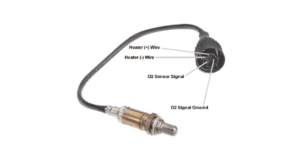 I had no idea what that meant at the time. But I quickly learned something important: That small sensor plays a massive role in fuel economy, engine performance, and emissions.
If you’re wondering what an oxygen sensor does, how it works, how much it costs to replace, and whether you can drive with a bad one, this guide breaks it all down in plain English.
What Is an Oxygen Sensor in a Car?
An oxygen sensor (often called an O2 sensor) measures the amount of oxygen in your car’s exhaust gases.
That information is sent to the engine’s computer (ECU), which adjusts the air-fuel mixture accordingly.
In simple terms:
👉 The oxygen sensor helps your engine burn fuel efficiently.
👉 It keeps emissions low.
👉 It protects your catalytic converter.
Without it, your car would:
- Waste fuel
- Pollute more
- Run rough
- Possibly fail emissions testing
Why Oxygen Sensors Matter More Than You Think
Modern engines rely on precise air-to-fuel ratios.
Too much fuel (rich mixture)?
• Poor fuel economy
• Black smoke
• Fouled spark plugs
Too much air (lean mixture)?
• Overheating
• Engine knocking
• Power loss
The oxygen sensor constantly monitors and corrects this balance multiple times per second. It’s basically your engine’s real-time efficiency monitor.
Where Is the Oxygen Sensor Located?
Most cars have:
- One upstream sensor (before the catalytic converter)
- One downstream sensor (after the catalytic converter)
Newer vehicles may have 4 or more sensors, especially V6 or V8 engines.
Upstream sensors monitor engine performance.
Downstream sensors monitor catalytic converter efficiency.
Types of Oxygen Sensors
There are two main types:
1. Zirconia (Narrowband)
- Most common
- Switches between rich and lean readings
- Affordable
- Reliable
2. Wideband (Air-Fuel Ratio Sensor)
- More precise
- Found in newer vehicles
- Better fuel control
- More expensive
Quick Comparison Table: Oxygen Sensor Types
| Feature | Narrowband O2 Sensor | Wideband O2 Sensor |
| Accuracy | Moderate | High |
| Cost | $30–$100 | $100–$300 |
| Response Speed | Standard | Faster |
| Fuel Efficiency Control | Basic | Advanced |
| Used In | Older vehicles | Modern engines |
| Replacement Difficulty | Easy–Moderate | Moderate |
If your vehicle is 2005 or newer, chances are it uses wideband sensors.
Symptoms of a Bad Oxygen Sensor
Here’s what I personally noticed when mine failed:
- Check engine light turned on
- Noticeable drop in fuel economy
- Slight hesitation during acceleration
Other common symptoms include:
- Rough idle
- Failed emissions test
- Strong fuel smell
- Black smoke from the exhaust
- Engine misfires
The most common diagnostic trouble codes are:
- P0130
- P0131
- P0135
- P0420 (sometimes related)
How Long Does an Oxygen Sensor Last?
Typical lifespan:
- 60,000 to 100,000 miles
Heated sensors and modern designs may last longer. However, these factors reduce lifespan:
- Oil burning
- Coolant leaks
- Poor fuel quality
- Engine misfires
- Contaminants in exhaust
What Happens If You Ignore a Bad O2 Sensor?
Here’s the expensive part. A faulty oxygen sensor can damage your Catalytic Converter. And that repair? $800–$2,500 or more.
Replacing an oxygen sensor early ($150–$400 total) is far cheaper than replacing a catalytic converter.
Oxygen Sensor Replacement Cost
Here’s a realistic breakdown:
| Repair Type | Parts Cost | Labor Cost | Total Cost |
| DIY (Narrowband) | $30–$100 | $0 | $30–$100 |
| DIY (Wideband) | $100–$300 | $0 | $100–$300 |
| Mechanic Replacement | $50–$250 | $100–$200 | $150–$400 |
Luxury vehicles and difficult access can increase labor costs.
Can You Drive With a Bad Oxygen Sensor?
Technically, yes. But you shouldn’t for long. Driving too long with a faulty sensor can:
- Reduce MPG by 10–40%
- Damage the catalytic converter
- Cause carbon buildup
- Increase emissions
If the car runs normally but the check engine light is on, schedule repair soon, not months later.
How to Diagnose a Bad Oxygen Sensor
Here are the main ways:
1. OBD2 Scanner
Plug into your car’s diagnostic port. Look for codes related to:
- O2 sensor circuit
- Heater malfunction
- Lean or rich mixture
2. Multimeter Testing
Advanced DIYers can check the voltage output.
3. Fuel Economy Drop
Unexpected MPG decrease is a common sign.
Buyer’s Guide: Choosing the Right Oxygen Sensor
If you’re replacing it yourself, here’s what matters most.
1. OEM vs Aftermarket
OEM (Original Equipment Manufacturer)
- Perfect fit
- Higher quality control
- More expensive
Aftermarket
- Affordable
- Quality varies
My personal advice:
Stick with reputable brands. Cheap, no-name sensors often fail early.
2. Direct-Fit vs Universal
Direct-Fit
- Plug-and-play
- Correct connector
- Easier installation
Universal
- Requires wire splicing
- Cheaper
- More work
Always choose direct-fit if possible.
3. Sensor Position
Check whether you’re replacing:
- Bank 1 Sensor 1 (upstream)
- Bank 1 Sensor 2 (downstream)
- Bank 2 (on V engines)
Verify using your VIN or repair manual.
4. Heated vs Non-Heated
Most modern vehicles use heated oxygen sensors for faster startup performance. Make sure your replacement matches.
DIY Oxygen Sensor Replacement: Is It Hard?
Here’s the honest breakdown:
Difficulty: Moderate
Time Required: 30–90 minutes
Tools Needed:
- O2 sensor socket
- Ratchet
- Penetrating oil
- Jack and stands (sometimes)
Biggest challenge? Rust. Older sensors can seize in place. Pro tip: Replace sensors when the exhaust is slightly warm, not cold and not scorching hot.
Performance & Fuel Economy Impact
After replacing mine, I noticed:
- Smoother idle
- Better throttle response
- Fuel economy improved by 3 MPG
That might not sound like much, but over a year, that adds up.
How Many Oxygen Sensors Does a Car Have?
- 4-cylinder engines: Usually 2 sensors
- V6/V8 engines: 4 sensors
- Some modern vehicles: 6+ sensors
More cylinders = more sensors.
Read More: Are Kumho Tires Any Good
FAQs: What Is Oxygen Sensor In Car
1. What does an oxygen sensor do?
It measures oxygen levels in exhaust gases to optimize the air-fuel mixture.
2. How much does it cost to replace an oxygen sensor?
Typically $150–$400 at a mechanic.
3. Can I replace an oxygen sensor myself?
Yes, if you have basic tools and moderate DIY skills.
4. Will a bad O2 sensor cause poor gas mileage?
Yes, often significantly.
5. Can a bad O2 sensor damage my engine?
Indirectly, yes, especially if it leads to rich fuel conditions.
6. What happens if I ignore a bad oxygen sensor?
You risk catalytic converter failure.
7. How long does replacement take?
Usually under 1 hour.
8. Do I need to reset the check engine light?
Most cars reset automatically after repair, but sometimes a scanner is needed.
9. Should I replace all oxygen sensors at once?
Not always. Replace only faulty ones unless the mileage is very high.
10. Is oxygen sensor replacement urgent?
It’s not an immediate emergency-level, but shouldn’t be ignoredfor long.
Final Thoughts: Is the Oxygen Sensor Important?
Absolutely. It may be small, but the oxygen sensor directly affects:
- Fuel economy
- Engine performance
- Emissions
- Catalytic converter lifespan
Replacing it on time is one of the smartest maintenance decisions you can make. If your check engine light is on, and your MPG dropped? Don’t ignore it as I did. Scan it. Diagnose it. Fix it. Your wallet will thank you later.