If you’ve ever turned on your car’s air conditioner and instantly felt cold air blowing through the vents, there’s a good chance the AC accumulator is doing its job quietly behind the scenes.
Most drivers know about parts like the compressor or radiator, but the accumulator is one of those hidden components that plays a huge role in keeping your car’s air conditioning system running smoothly.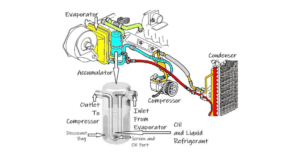 Simply put, an accumulator is a component in a car’s air conditioning system that stores excess refrigerant and removes moisture before the refrigerant returns to the compressor.
Without it, your AC system would struggle to function properly, and expensive components like the compressor could even be damaged. In this guide, we’ll cover:
- What a car accumulator does
- How it works in the AC system
- Symptoms of a failing accumulator
- Replacement costs
- Maintenance tips
- A detailed buyer’s guide
Let’s break it down in simple terms.
What Does An Accumulator Do In A Car?
The accumulator is essentially a refrigerant storage and filtering device located between the evaporator and the compressor in vehicles with orifice tube AC systems. Its main responsibilities include:
1. Storing Excess Refrigerant
Not all refrigerant turns into gas immediately after passing through the evaporator. The accumulator stores any leftover liquid refrigerant so it doesn’t damage the compressor.
2. Removing Moisture
Moisture inside the AC system can cause corrosion and freezing. The accumulator contains a desiccant material that absorbs water from the refrigerant.
3. Filtering Debris
Tiny particles from wear and tear can circulate through the system. The accumulator filters them out to protect important components.
4. Protecting The Compressor
Liquid refrigerant entering the compressor can cause severe damage. The accumulator ensures only vapor reaches it.
In short, it acts as a safety buffer for your car’s AC system.
Where Is The Accumulator Located?
In most vehicles, the accumulator is:
- Found between the evaporator and the compressor
- Located near the firewall or passenger side of the engine bay
- Connected to the low-pressure side of the AC system
It usually looks like a small aluminum cylinder or canister.
How An Accumulator Works (Simple Explanation)
To understand the accumulator, it helps to understand the AC cycle:
- The compressor compresses refrigerant gas.
- The refrigerant moves to the condenser, where it cools and becomes liquid.
- It passes through the orifice tube, which lowers pressure.
- The refrigerant enters the evaporator, producing cold air.
- Any remaining liquid refrigerant moves to the accumulator.
- The accumulator:
- stores liquid refrigerant
- absorbs moisture
- filters contaminants
- Clean refrigerant vapor returns to the compressor.
This continuous loop keeps your cabin cool.
Accumulator vs Receiver Drier
Many people confuse the accumulator with another AC component called the receiver dryer.
Both remove moisture from the AC system, but are used in different types of systems.
| Feature | Accumulator | Receiver Drier |
| AC System Type | Orifice Tube System | Expansion Valve System |
| Location | After the evaporator | After the condenser |
| Main Purpose | Prevent liquid refrigerant from reaching the compressor | Store liquid refrigerant |
| Moisture Removal | Yes | Yes |
| Common in Vehicles | Most American vehicles | Many European and Asian vehicles |
Understanding this difference is important when diagnosing AC problems.
Signs Of A Bad Accumulator
Like most car parts, the accumulator can wear out over time. When it fails, your AC system may start showing symptoms. Here are the most common warning signs.
1. Weak Or Warm AC Air
If the accumulator is clogged or saturated with moisture, refrigerant flow becomes restricted.
Result: your AC won’t cool properly.
2. Moisture Or Ice in the AC System
A bad accumulator can’t absorb moisture properly, leading to:
- frozen evaporator
- ice on AC lines
- inconsistent cooling
3. Strange Noises From The AC System
If liquid refrigerant reaches the compressor, you might hear:
- knocking sounds
- rattling noises
This can eventually damage the compressor.
4. Refrigerant Leaks
Accumulators can develop leaks over time due to corrosion or pressure. Signs include:
- oily residue on AC lines
- hissing sounds
- reduced cooling
5. Mold Or Musty Smell
Moisture trapped in the accumulator can lead to mold growth, causing unpleasant odors from the vents.
Accumulator Replacement Cost
Replacing an accumulator is usually not extremely expensive, but the cost varies depending on the vehicle.
| Service | Average Cost |
| Accumulator Part | $30 – $120 |
| Labor | $80 – $250 |
| Refrigerant Recharge | $100 – $200 |
| Total Cost | $200 – $500 |
Luxury or European cars may cost more due to specialized parts and labor.
When Should An Accumulator Be Replaced?
Most mechanics recommend replacing the accumulator when:
- Replacing the AC compressor
- Opening the AC system for repairs
- The accumulator is leaking
- The desiccant becomes saturated
Why? Because once exposed to air, the desiccant inside the accumulator absorbs moisture and becomes ineffective.
Buyer’s Guide: Choosing The Right Car Accumulator
If you need to replace your car’s accumulator, choosing the right one is important. Here are key things to consider.
1. Vehicle Compatibility
Always ensure the accumulator matches:
- your car make
- model
- year
- engine type
Using the wrYourpart makescause AC system problems.
2. OEM vs Aftermarket
OEM (Original Equipment Manufacturer) parts are made by the vehicle manufacturer.
Aftermarket parts are made by third-party companies.
| Type | Pros | Cons |
| OEM | Perfect fit, reliable | More expensive |
| Aftermarket | Cheaper, widely available | Quality varies |
For long-term reliability, many mechanics recommend OEM or high-quality aftermarket brands.
3. Build Quality
Look for accumulators with:
- corrosion-resistant aluminum
- high-quality desiccant
- durable seals
Cheap parts may fail quickly.
4. Warranty
A good accumulator should come with at least 1 year warranty. Some brands offer lifetime warranties, which can provide extra peace of mind.
5. Brand Reputation
Well-known AC component brands often offer better durability and performance. Popular manufacturers include:
- Denso
- Four Seasons
- UAC
- AC Delco
These brands are commonly used in automotive repairs.
Maintenance Tips For Car Accumulators
Although the accumulator itself requires little maintenance, keeping your AC system healthy can extend its life.
Run Your AC Regularly
Even in winter, run the AC occasionally to keep seals lubricated.
Fix Refrigerant Leaks Quickly
Leaks allow moisture into the system, damaging the accumulator.
Replace Cabin Air Filter
A clogged cabin filter can reduce AC efficiency.
Service The AC System Periodically
Professional inspections help detect issues early.
Can You Drive With A Bad Accumulator?
Technically, yes, but it’s not recommended. A failing accumulator can cause:
- poor AC performance
- moisture buildup
- compressor damage
Since the compressor is one of the most expensive AC components, ignoring accumulator problems can lead to costly repairs.
How Long Does A Car Accumulator Last?
Most accumulators last:
8 – 12 years
or
100,000+ miles
However, lifespan depends on:
- climate conditions
- AC usage
- system maintenance
- refrigerant leaks
DIY Replacement: Is It Possible?
Replacing an accumulator is possible for experienced DIY mechanics, but there are challenges:
- AC systems require specialized toolsThe
- refrigerant must be properly evacuated
- The system must be vacuum sealed before recharge
For most drivers, it’s best handled by a professional mechanic.
Read More: What Does A Gearbox Do In A Car
FAQs: What Is An Accumulator In A Car
What is the purpose of an accumulator in a car?
An accumulator stores excess refrigerant, removes moisture, and protects the compressor from liquid refrigerant in the AC system.
Is the accumulator the same as a receiver dryer?
No. Accumulators are used in orifice tube systems, while receiver driers are used in expansion valve systems.
Can a bad accumulator damage the compressor?
Yes. If liquid refrigerant reaches the compressor, it can cause severe internal damage.
How much does it cost to replace a car accumulator?
Most replacements cost $200 to $500, including parts, labor, and refrigerant recharge.
How do I know if my accumulator is bad?
Common signs include:
- weak AC cooling
- refrigerant leaks
- strange AC noises
- ice on AC lines
- musty odors from vents
Should the accumulator be replaced with the compressor?
Yes. Mechanics almost always replace the accumulator when installing a new compressor to prevent contamination.
Final Thoughts
The car accumulator might not be the most well-known automotive component, but it plays a crucial role in keeping your air conditioning system functioning properly.
Storing excess refrigerant, removing moisture, and protecting the compressor, it helps ensure your AC system stays efficient and reliable.
If you start noticing weak cooling, unusual noises, or refrigerant leaks, the accumulator could be part of the problem. Addressing the issue early can prevent bigger and more expensive repairs down the road.
Regular AC maintenance and timely replacements can keep your car’s cooling system running smoothly for years to come.