Checking your engine oil is one of the simplest yet most important maintenance tasks every vehicle owner should know. Whether you drive a brand-new sedan, a family SUV, a pickup truck, or an older vehicle with higher mileage, monitoring oil levels can help prevent expensive engine repairs and extend the life of your car.
I still remember the first time I checked my own oil. Like many drivers, I assumed it was a complicated mechanic-only task. After watching a few tutorials and spending five minutes under the hood, I realized it was surprisingly easy. Since then, checking oil has become a regular part of my vehicle maintenance routine. The truth is that engine oil is the lifeblood of your vehicle. It lubricates moving parts, reduces friction, prevents overheating, and helps keep internal engine components clean. When oil levels drop too low or the oil becomes contaminated, your engine can suffer serious damage.
In this comprehensive guide, I’ll explain exactly how to check your oil, compare different oil monitoring methods, discuss common mistakes, provide buying recommendations, and answer frequently asked questions.
Why Checking Engine Oil Matters
Before learning how to check your oil, it’s important to understand why this simple task is so valuable. Engine oil performs several critical functions:
- Lubricates engine components
- Reduces friction and wear
- Helps regulate engine temperature
- Prevents corrosion
- Removes contaminants and debris
- Improves engine efficiency
Without adequate oil, engine parts can grind against each other, creating excessive heat and wear. In severe cases, low oil levels can result in:
- Engine seizure
- Damaged pistons
- Worn bearings
- Expensive repairs
- Complete engine failure
Considering that checking oil takes less than five minutes, it’s one of the highest-value maintenance habits any driver can adopt.
Signs Your Oil Needs Attention
Even before checking your oil, your vehicle may provide warning signs. Watch for:
Oil Warning Light
One of the clearest indicators that your oil level or pressure may be low.
Engine Noise
Ticking, knocking, or tapping sounds often indicate insufficient lubrication.
Burning Oil Smell
A strong burnt oil smell may indicate leaking oil contacting hot engine parts.
Reduced Performance
Poor acceleration and sluggish engine response can occur when oil quality deteriorates.
Dark Exhaust Smoke
Excessive smoke may indicate oil consumption problems.
Overheating
Low oil levels reduce cooling efficiency and may contribute to high engine temperatures.
How Do I Check My Oil? Step-by-Step
The traditional dipstick method remains the most accurate and reliable approach.
Step 1: Park on Level Ground
Choose a flat, level surface. An uneven surface can produce inaccurate readings.
Step 2: Turn Off the Engine
Allow the engine to cool for approximately 5–10 minutes. This gives oil time to settle back into the oil pan.
Step 3: Open the Hood
Locate the hood release lever and secure the hood safely.
Step 4: Find the Dipstick
The oil dipstick usually has:
- Yellow handle
- Orange handle
- Brightly colored loop
Consult your owner’s manual if necessary.
Step 5: Remove the Dipstick
Pull it out completely. You’ll likely see oil covering the end.
Step 6: Wipe It Clean
Use:
- Paper towel
- Clean rag
- Shop towel
Remove all oil from the dipstick.
Step 7: Reinsert Fully
Push the dipstick all the way back into its tube.
Step 8: Remove Again
Pull the dipstick out once more. This reading is the accurate one.
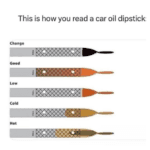
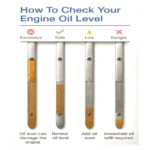
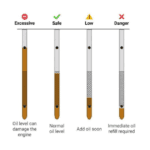
Step 9: Read the Oil Level
Look for markings such as:
- MIN/MAX
- LOW/FULL
- Crosshatched area
The oil level should fall within the acceptable range. Ideally, it should be near the FULL mark.
Step 10: Inspect Oil Condition
Check:
- Color
- Consistency
- Debris
Healthy oil is usually:
- Amber
- Light brown
- Smooth
Dirty oil may appear:
- Black
- Thick
- Gritty
What Oil Color Means
Oil color can reveal useful information.
| Oil Appearance | Meaning |
| Light Amber | Fresh and healthy |
| Dark Brown | Normal usage |
| Black | Due for change soon |
| Milka y | Possible coolant contamination |
| Foamy | Potential moisture contamination |
| Metallic Particles | Possible engine wear |
While color alone doesn’t determine oil quality, it can provide valuable clues.
Comparison Table: Dipstick vs Electronic Oil Monitoring
| Feature | Dipstick Method | Electronic Monitoring |
| Accuracy | Very High | High |
| Cost | Free | Included in vehicle |
| Ease of Use | Moderate | Very Easy |
| Visual Oil Inspection | Yes | No |
| Detects Oil Condition | Yes | Limited |
| Available on Older Vehicles | Yes | Rare |
| Available on New Vehicles | Yes | Often |
| Maintenance Insight | Excellent | Good |
My experience has shown that the dipstick remains the gold standard because it allows direct inspection of oil quality.
How Often Should You Check Your Oil?
Frequency depends on vehicle age and usage.
New Vehicles
Check every month.
Older Vehicles
Check every two weeks.
High-Mileage Cars
Check weekly.
Before Road Trips
Always inspect oil before long-distance travel.
After Heavy Towing
Check oil following strenuous driving conditions. Personally, I make it a habit to check oil during every fuel fill-up on long trips.
Understanding Oil Consumption
Many drivers assume oil levels should never change. That’s not always true. Most engines consume small amounts of oil naturally. Factors affecting oil consumption include:
- Engine age
- Driving habits
- Climate
- Oil type
- Vehicle design
If you’re consistently adding oil between changes, monitor usage closely and consult a mechanic if consumption increases significantly.
Common Mistakes When Checking Oil
Avoid these frequent errors.
Checking Immediately After Driving
Oil hasn’t fully settled yet. Wait several minutes.
Not Using Level Ground
Slopes create inaccurate readings.
Reading the First Pull
Always wipe and reinsert first.
Overfilling Oil
Too much oil can be as harmful as too little.
Ignoring Oil Condition
Level isn’t everything. Quality matters too.
My Personal Experience with Oil Checks
- For years, I relied entirely on service centers.
- I assumed modern vehicles didn’t require owner monitoring.
- That changed when an oil warning light appeared during a road trip.
- After checking the dipstick, I discovered the oil level was significantly below the recommended range.
- Fortunately, adding oil immediately prevented potential engine damage.
- Since then, I check oil regulahave checked.
- The process takes less than five minutes and provides peace of mind before long drives.
- It’s one of those small habits that can save thousands of dollars in repairs.
Conventional vs Synthetic Oil
Many drivers wonder whether oil type affects maintenance.
Conventional Oil
Advantages:
- Lower cost
- Widely available
Disadvantages:
- Shorter lifespan
- Less heat resistance
Synthetic Oil
Advantages:
- Better protection
- Improved temperature performance
- Longer service intervals
- Enhanced engine cleanliness
Disadvantages:
- Higher upfront cost
For most modern vehicles, synthetic oil is worth the investment.
What Happens If Oil Is Low?
Low oil levels create multiple risks. Potential consequences include:
Increased Friction
Parts wear faster.
Excessive Heat
Oil helps cool the engine.
Reduced Fuel Efficiency
Engines work harder when lubrication decreases.
Premature Engine Wear
Components degrade more rapidly.
Engine Failure
Severe oil shortages can destroy an engine.
When to Add Oil
Add oil when:
- Level approaches MIN mark
- Dashboard warning appears
- Manufacturer recThe manufacturering off
Always use the oil grade specified in your owner’s manual. Examples include:
- 0W-20
- 5W-20
- 5W-30
- 10W-30
Mixing incorrect oil types may reduce performance.
Oil Change vs Oil Top-Off
Many drivers confuse these terms.
Oil Top-Off
Adding oil to restore the proper level. Useful when the oil level is low, but the oil quality remains unacceptable.
Oil Change
- Completely draining and replacing old oil.
- Necessary when oil becomes contaminated or reaches service interval limits.
- Adding fresh oil doesn’t replace the need for regular oil changes.
Buyer’s Guide: What You Need for Checking and Maintaining Oil
If you’re planning to perform routine oil checks at home, a few inexpensive tools can make the process easier.
1. Microfiber Shop Towels
Useful for cleaning dipsticks and wiping spills. Look for:
- Reusable cloths
- Absorbent material
- Machine-washable options
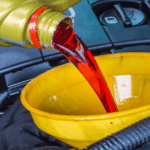
2. Oil Funnel
Helps prevent spills when adding oil. Choose:
- Flexible neck
- Wide opening
- Durable construction
3. Nitrile Gloves
Keeps hands clean. Benefits include:
- Oil resistance
- Better grip
- Disposable convenience
4. LED Flashlight
Helpful for reading dipsticks in low light. Important features:
- Bright beam
- Compact design
- Rechargeable battery
5. Correct Engine Oil
Always verify:
- Viscosity grade
- Manufacturer approval
- Vehicle compatibility
6. Oil Catch Container
Useful for DIY oil changes. Look for:
- Leak-proof design
- Easy pouring spout
- Adequate capacity
Best Practices for Long-Term Engine Health
Following these habits can maximize engine life.
Check Oil Monthly
Consistency is key.
Follow Oil Change Intervals
Don’t exceed manufacturer recommendations.
Use Quality Oil
Cheap oil may provide less protection.
Address Leaks Quickly
Small leaks become larger problems.
Monitor Oil Consumption
Sudden changes may indicate mechanical issues.
Replace Filters Regularly
Clean oil requires a clean filter.
Read More: How Do You Check The Oil Level In Your Car
FAQs: How Do I Check My Oil
How often should I check my oil?
Most drivers should check oil at least once per month. Older vehicles may require more frequent inspections.
Can I check oil when the engine is hot?
Yes, but waiting 5–10 minutes after shutting off the engine provides the most accurate reading.
What if my oil level is below the minimum mark?
Add the manufacturer-recommended oil immediately and recheck the level.
Is black oil always bad?
Not necessarily. Oil naturally darkens with use. However, very dirty or thick oil may indicate it’s time for a change.
Can too much oil damage an engine?
Yes. Overfilling can increase pressure, cause foaming, and damage engine seals.
Should I trust electronic oil monitors?
They are useful but should not completely replace occasional manual inspections.
How long does an oil check take?
Typically, less than five minutes.
What oil level is considered safe?
Anywhere between the minimum and maximum marks is generally safe, though closer to the full mark is preferred.
Why does my car consume oil?
Normal engine wear, driving conditions, and engine design can all contribute to oil consumption.
Can low oil affect fuel economy?
Yes. Reduced lubrication increases friction, making the engine work harder and potentially lowering fuel efficiency.
Final Thoughts
Learning how to check your oil is one of the most valuable automotive skills any driver can develop. It requires no special expertise, takes only a few minutes, and can prevent some of the most expensive vehicle repairs imaginable.
Whether your vehicle uses a traditional dipstick or an advanced electronic monitoring system, regular oil inspections provide critical insight into engine health. From my own experience, a quick oil check before long drives and during routine maintenance has helped avoid unexpected issues and increased confidence behind the wheel.
Think of oil checks as preventive medicine for your engine. A few minutes today can save hundreds or even thousands of dollars tomorrow.
By making oil inspections part of your regular maintenance routine, you’ll improve reliability, extend engine life, and keep your vehicle performing at its best for years to come.