The first time I truly understood what a gearbox does was when I drove a manual car up a steep hill. I shifted into a lower gear, and suddenly the car had more pulling power.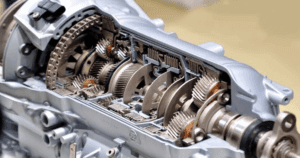 Shift into a higher gear on the highway,y and the engine relaxed, running smoothly at lower RPM. That moment made it clear: 👉 The gearbox is what makes your engine usable.
Without it, your car wouldn’t move properly, accelerate efficiently, or cruise comfortably. It’s one of the most important mechanical systems in any vehicle, le yet most drivers rarely think about it.
In this complete guide, we’ll cover:
- What a gearbox does
- How it works (in simple terms)
- Types of gearboxes
- Manual vs automatic comparison
- Signs of gearbox problems
- Repair and replacement costs
- Buyer’s guide (choosing the right transmission)
- Long technical deep dive
- FAQs
- Meta description
Let’s break it down.
What Does a Gearbox Do in a Car?
A gearbox (also called a transmission) controls how power from the engine is delivered to the wheels. Its main job is to:
✔ Adjust torque (pulling power)
✔ Adjust speed
✔ Keep the engine operating efficiently
✔ Allow the car to move forward or backward
Engines operate best within a specific RPM range. But driving conditions constantly change:
- Starting from a stop
- Climbing hills
- Cruising at highway speeds
- Towing loads
The gearbox changes gear ratios to match those situations.
Simple Explanation: Why Gears Are Necessary
Imagine riding a bicycle. When you’re starting uphill, you use a low gear; it’s easier to pedal but slower.
On flat roads, you switch to a higher gear you go faster with less effort. A car gearbox works the same way,y just more complex.
What Happens Without a Gearbox?
If a car had no gearbox:
- It would struggle to start moving
- It would stall easily
- It would over-rev at high speeds
- Fuel efficiency would suffer
- The engine could be damaged
The gearbox allows flexibility.
Types of Gearboxes (Comparison Table)
| Type | Driver Control | Smoothness | Fuel Efficiency | Maintenance Cost | Best For |
| Manual | Full control | Moderate | High | Low | Driving enthusiasts |
| Automatic | Computer-controlled | Very smooth | Moderate | Moderate | Daily driving |
| CVT (Continuously Variable) | Automatic | Extremely smooth | Very High | Moderate | City driving |
| Dual-Clutch (DCT) | Automatic/manual hybrid | Very fast shifts | High | Higher | Performance cars |
| Automated Manual (AMT) | Semi-automatic | Basic smoothness | Good | Low | Budget vehicles |
Each type has advantages depending on driving style.
Manual Gearbox Explained
A manual transmission requires the driver to:
- Press the clutch pedal
- Shift gears manually
Pros:
✔ Better control
✔ Lower purchase cost
✔ Usually cheaper to repair
✔ More engaging to drive
Cons:
✖ Requires skill
✖ Less convenient in traffic
Automatic Gearbox Explained
An automatic transmission shifts gears on its own using hydraulic systems and computers.
Pros:
✔ Easier to drive
✔ Smooth in traffic
✔ Less fatigue
Cons:
✖ More complex
✖ Higher repair cost
How a Gearbox Works (Step-by-Step)
Let’s simplify it. The engine produces rotational force. That force goes through:
- Clutch or torque converter
- Gear sets
- Output shaft
- Driveshaft
- Wheels
Inside the gearbox are gears of different sizes.
Smaller gear → more speed, less torque
Larger gear → more torque, less speed
By switching between them, the gearbox adapts to driving needs.
What Is Torque and Why Does It Matter
Torque is pulling power. You need high torque for:
- Starting from a stop
- Climbing hills
- Towing
You need lower torque and higher speed for:
- Highway cruising
The gearbox manages that balance.
Signs of Gearbox Problems
If something goes wrong, you might notice:
1️⃣ Grinding Noises
Common in manual transmissions.
2️⃣ Delayed Shifting
Automatic transmission issue.
3️⃣ Slipping Gears
The engine revs, butthe car doesn’t accelerate properly.
4️⃣ Transmission Fluid Leaks
Red or brown fluid under the car.
5️⃣ Warning Light
Transmission fault indicator.
Gearbox Repair Costs
Costs vary widely.
Minor repairs:
$150 – $600
Clutch replacement (manual):
$600 – $1,500
Automatic rebuild:
$2,000 – $4,500
Full transmission replacement:
$3,000 – $7,000+
Luxury vehicles cost even more.
Manual vs Automatic (Detailed Comparison)
| Feature | Manual | Automatic |
| Purchase Cost | Lower | Higher |
| Fuel Economy | Often better | Improving |
| Repair Cost | Lower | Higher |
| Driving Control | High | Moderate |
| Comfort in Traffic | Low | High |
| Longevity | Long-lasting | Depends on maintenance |
There’s no “best” option, only what fits your lifestyle.
My Honest Experience With Gearboxes
I’ve driven both extensively.
Manual:
More fun. More control. Better connection with the car.
Automatic:
More relaxing. Especially in heavy traffic.
If you enjoy driving, a manual feels engaging. If you value convenience, automatic wins.
Buyer’s Guide: Choosing the Right Gearbox
If you’re buying a car, here’s how to choose.
1️⃣ Consider Your Driving Environment
City traffic?
Automatic or CVT is better.
Highway commuter?
Both work fine.
Mountain roads?
The manual gives better control.
2️⃣ Think About Maintenance Budget
Manual transmissions:
Simpler and cheaper to fix.
Automatic transmissions:
More complex and expensive.
3️⃣ Resale Value
In many markets, automatics are more popular and resell more easily.
4️⃣ Long-Term Reliability
Manual transmissions often last longer with fewer issues. But modern automatics are improving rapidly.
5️⃣ Driving Enjoyment
If you love control and shifting yourself → manual.
If you want stress-free driving → automatic.
CVT Gearbox (Special Mention)
A CVT doesn’t use traditional gears. Instead, it uses pulleys and belts to provide:
Infinite gear ratios.
Result:
✔ Smooth acceleration
✔ Excellent fuel efficiency
✖ Less sporty feel
Dual-Clutch Transmission (DCT)
Used in performance vehicles.
Advantages:
✔ Lightning-fast gear changes
✔ Better performance
✔ Improved efficiency
Disadvantages:
✖ Higher repair cost
✖ Complex system
How Long Does a Gearbox Last?
With proper maintenance:
Manual:
200,000+ miles possible.
Automatic:
150,000–200,000 miles is typical.
Key factor:
Fluid maintenance.
Importance of Transmission Fluid
Transmission fluid:
✔ Lubricates gears
✔ Cools system
✔ Ensures smooth shifting
Neglecting fluid changes is a major cause of failure. Change interval: Every 30,000–60,000 miles (varies by vehicle).
Can You Drive With Gearbox Problems?
Short answer: Not recommended. Driving with slipping gears can:
- Cause complete failure
- Increase the repair cost dramatically
Early diagnosis saves money.
Read More: How To Take Fuel Out Of A Car Tank
FAQs: What Does A Gearbox Do In A Car
1. Is a gearbox the same as a transmission?
Yes. They are commonly used interchangeably.
2. Which gearbox is most reliable?
Manual transmissions are generally simpler and more reliable.
3. What happens if the gearbox fails?
The car won’t move.
4. How much does it cost to replace a gearbox?
$3,000 – $7,000 on average.
5. Can the gearbox be repaired instead of replaced?
Yes, depending on damage severity.
6. What causes gearbox failure?
- Low fluid
- Overheating
- Wear and tear
- Aggressive driving
7. How do I maintain my gearbox?
✔ Regular fluid changes
✔ Avoid aggressive shifting
✔ Fix leaks immediately
8. Is CVT better than automatic?
Better fuel efficiency, but not as sporty.
Final Thoughts
The gearbox is one of the most critical systems in your car. It:
- Transfers power
- Adjusts torque
- Controls speed
- Protects the engine
- Improves fuel efficiency
Without it, your engine’s power would be unusable. Whether manual, automatic, CVT, or dual clutch, each type serves the same core purpose:
👉 Delivering power smoothly and efficiently to the wheels. Understanding how it works helps you:
- Drive smarter
- Maintain properly
- Avoid expensive repairs
- Choose the right vehicle