Checking your engine oil is one of the simplest yet most important maintenance tasks you can perform on your vehicle. Despite modern cars becoming increasingly sophisticated, the humble oil dipstick remains one of the best tools for monitoring your engine’s health.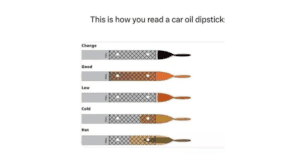 I remember the first time I checked my car’s oil level. I pulled out the dipstick, saw oil smeared all over it, and had absolutely no idea what I was looking at. Was the oil level good? Too low? Too high? The markings seemed confusing.
If you’ve ever felt the same way, you’re not alone. In this comprehensive guide, I’ll walk you through exactly how to read a dipstick for oil, what the markings mean, how often you should check it, and the common mistakes many drivers make.
Why Checking Engine Oil Matters
Engine oil serves several critical functions:
- Lubricates moving engine parts
- Reduces friction and wear
- Helps cool engine components
- Prevents corrosion
- Removes contaminants
- Improves engine efficiency
Driving with low oil can cause catastrophic engine damage that may cost thousands of dollars to repair.
Oil Dipstick Markings Explained
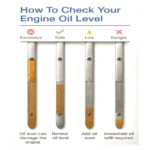
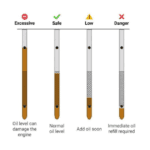
Most vehicles use similar markings to indicate oil levels.
| Dipstick Marking | Meaning | Action Required |
| Above MAX | Too much oil | Drain excess oil |
| At MAX/FULL | Ideal level | No action needed |
| Between MIN and MAX | Safe operating range | Monitor regularly |
| At MIN/LOW | Add oil soon | Top off oil |
| Below MIN | Critically low | Add oil immediately |
The space between MIN and MAX typically represents approximately one quart (or one liter) of oil.
What Does an Oil Dipstick Look Like?
A dipstick is usually:
- Yellow, orange, red, or black handle
- Located near the engine
- A long metal strip attached to the handle
- Marked with level indicators
Common markings include:
- MIN/MAX
- LOW/FULL
- L/H (Low/High)
- Crosshatched area
- Dots or holes
Step-by-Step: How To Read a Dipstick for Oil
Step 1: Park on Level Ground
Always park your vehicle on a flat surface.
An uneven surface can produce inaccurate oil readings.
Step 2: Turn Off the Engine
Allow the engine to cool for 5–10 minutes.
This lets the oil drain back into the oil pan.
Step 3: Locate the Dipstick
Open the hood and locate the dipstick.
Most vehicles have a brightly colored handle for easy identification.
Step 4: Pull Out the Dipstick
Remove the dipstick completely.
You’ll likely see oil smeared along the metal strip.
Ignore this first reading.
Step 5: Wipe It Clean
Use a clean rag, towel, or paper towel.
Remove all oil from the dipstick.
Step 6: Reinsert Fully
Push the dipstick all the way back into its tube.
Make sure it is seated completely.
Step 7: Remove Again
Pull the dipstick out carefully.
This second reading provides the accurate oil level.
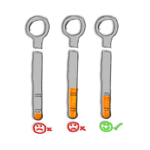
Step 8: Examine the Oil Level
Look closely at where the oil film ends. The oil should fall between:
- MIN and MAX
- LOW and FULL
- Lower and upper dots
Ideally, it should be close to the MAX mark.
Understanding Different Dipstick Designs
Manufacturers use several styles.
Crosshatched Dipstick
A textured area indicates an acceptable oil range. Oil should appear somewhere within the hatch marks.
Example
MAX
////
////
////
MIN
Two-Hole Design
Many vehicles use two holes.
Example
O MAX
|
O MIN
Oil should reach near the upper hole.
Notched Design
Some dipsticks feature notches.
Example
FULL —-
LOW —-
Oil should be between the notches.
How Oil Should Look on a Dipstick
Oil appearance can reveal engine condition.
| Oil Appearance | Condition |
| Amber or light brown | Excellent |
| Dark brown | Normal |
| Black | Older oil |
| Milky | Possible coolant contamination |
| Foamy | Overfilled or contaminated |
| Metallic particles | Potential engine wear |
Signs Your Oil Level Is Too Low
Watch for:
- Oil warning light
- Engine ticking noise
- Increased engine temperature
- Poor fuel economy
- Rough performance
Low oil should never be ignored.
Signs Your Oil Level Is Too High
Many drivers assume more oil is better. It isn’t. Overfilled oil can cause:
- Foaming
- Reduced lubrication
- Oil leaks
- Seal damage
- Catalytic converter damage
How Often Should You Check Your Oil?
I personally recommend checking:
| Driving Style | Inspection Frequency |
| Daily commuting | Monthly |
| Older vehicle | Every 2 weeks |
| High mileage vehicle | Weekly |
| Long road trips | Before every trip |
| Performance vehicle | Weekly |
Common Mistakes When Reading a Dipstick
Checking Immediately After Shutdown
Oil needs time to drain back.
Wait several minutes.
Not Wiping First
The initial pull-out often gives a false reading.
Always wipe and reinsert.
Parking on a Slope
Even slight inclines can distort readings.
Reading the Wrong Side
Sometimes one side smears more than the other.
Use the clearer side.
Confusing Clean Oil with No Oil
Fresh oil can be nearly transparent.
Look carefully in good lighting.
When Should You Add Oil?
Add oil when:
- Oil level approaches the MIN mark
- The level is below the safe operating range
- The manufacturer recommends topping off
Avoid waiting until warning lights appear.
How Much Oil Should You Add?
General guideline:
| Oil Level | Oil to Add |
| At MIN mark | About 1 quart |
| Halfway between MIN and MAX | About ½ quart |
| Slightly below MAX | No oil needed |
Always add small amounts and recheck.
My Personal Experience Reading Oil Dipsticks
Over the years, I’ve checked oil levels on dozens of vehicles from compact sedans to large SUVs and pickup trucks. The biggest lesson I’ve learned is that consistency matters more than perfection.
Many owners only check oil when something goes wrong. However, spending two minutes once a month can prevent expensive engine repairs later.
I also find that checking oil before long road trips provides peace of mind. It’s a simple habit that can save thousands of dollars.
Benefits of Regular Oil Checks
Longer Engine Life
Proper lubrication minimizes wear.
Better Fuel Economy
Engines perform more efficiently.
Lower Repair Costs
Problems are caught early.
Increased Reliability
Reduces breakdown risks.
Improved Resale Value
Demonstrates responsible ownership.
Buyer’s Guide: Tools for Checking Engine Oil
While reading a dipstick requires minimal equipment, these items make the job easier.
Essential Items
Microfiber Towels
Useful for wiping dipsticks clean. Benefits:
- Reusable
- Absorbent
- Lint-free
Disposable Gloves
Keeps hands clean.
Ideal for quick inspections.
LED Flashlight
Helps identify the oil level clearly.
Especially useful in low-light garages.
Oil Funnel
Prevents spills when topping off oil.
Vehicle Owner’s Manual
Provides specific oil specifications and capacities.
What to Look for in Maintenance Tools
Durability
Choose quality materials.
Ease of Storage
Compact tools fit easily in the trunk.
Oil Resistance
Materials should withstand petroleum products.
Visibility
Bright-colored tools are easier to locate.
Advanced Tips for Accurate Oil Reading
Check at the Same Time
Morning checks often provide consistent readings.
Monitor Oil Consumption
Track oil levels monthly. Sudden drops may indicate:
- Leaks
- Burning oil
- Engine wear
Inspect Oil Color
Oil condition can reveal developing issues.
Smell the Oil
A gasoline smell may indicate fuel dilution.
Can You Check Oil While the Engine Is Hot?
Yes, but accuracy may vary. Most manufacturers recommend:
- Warm engine
- Engine off
- Wait 5–10 minutes
- Check level
Always consult your owner’s manual.
Vehicles Without Traditional Dipsticks
Some modern vehicles use:
- Electronic oil monitoring systems
- Dashboard oil level displays
- Digital maintenance alerts
However, many vehicles still include a backup dipstick.
Read More: How To Check Car Engine Oil Level
FAQs: How To Read Dipstick For Oil
How do I know if my oil is low on the dipstick?
If the oil level is near or below the MIN, LOW, or lower mark, your engine needs additional oil.
Should oil be at the top of the dipstick?
Ideally, it should be near the MAX or FULL mark but not above it.
How often should I check my oil dipstick?
Most drivers should check monthly. Older vehicles may require more frequent checks.
Can I drive with oil below the minimum mark?
It’s not recommended. Low oil levels can cause severe engine damage.
What color should oil be on the dipstick?
Fresh oil is usually amber or light brown. Dark oil is common as it ages.
Why is my oil black?
Oil naturally darkens as it accumulates contaminants and combustion byproducts.
What happens if I overfill engine oil?
Overfilling can cause foaming, leaks, seal damage, and reduced lubrication effectiveness.
Is it normal for the oil level to drop between oil changes?
Yes. Many engines consume a small amount of oil during normal operation.
Can fresh oil be hard to see on a dipstick?
Yes. New oil can be almost transparent and difficult to detect.
Do all cars have oil dipsticks?
No. Some newer vehicles use electronic oil monitoring systems instead of traditional dipsticks.
Final Thoughts
Learning how to read a dipstick for oil is one of the most valuable skills any vehicle owner can develop. The process takes less than five minutes and can prevent major engine damage.
Once you understand the markings, checking your oil becomes second nature. Remember:
- Park on level ground
- Wipe the dipstick clean
- Reinsert completely
- Read carefully
- Keep oil between MIN and MAX
Regular oil checks are a small investment of time that pays enormous dividends in engine longevity and reliability.