Most of us grew up thinking a $50,000 car was expensive. Then we learned about supercars. Then hypercars. Then suddenly, someone casually mentions a car that costs more than a beachfront mansion in Malibu, and your brain just… pauses.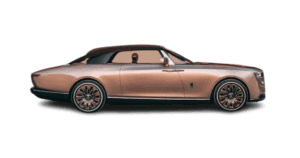 That’s exactly what happened to me the first time I heard about the Rolls-Royce Boat Tail.
Not a concept car.
Not a one-off museum piece.
A real, drivable, road-legal car.
With a price tag rumored to be around $28 million. So naturally, I had questions:
- What is the most expensive car in the world right now?
- Why does it cost that much?
- Is it actually “worth it”?
- And who on earth is buying these things?
This article is my deep dive, part research, part personal reflection, part automotive obsession into the most expensive car ever made, what makes it special, and why it exists at all.
The Short Answer (For the Curious and Impatient)
The most expensive car in the world is the Rolls-Royce Boat Tail, estimated at $28 million USD.
But that answer alone doesn’t even scratch the surface.
Because this car isn’t just expensive, it represents the absolute peak of bespoke automotive luxury, where money stops being a limitation, and craftsmanship becomes the goal.
Let’s break it all down.
What Does “Most Expensive Car” Actually Mean?
Before we name names, it’s important to clarify something. When people ask, “What is the most expensive car in the world?”, they might mean different things:
- Most expensive new car ever sold
- Most expensive custom-built car
- Most expensive auctioned car
- Most expensive production car
In this article, we’re talking about: The most expensive new road-legal car ever commissioned and delivered to a private owner. That distinction matters.
Meet the King: Rolls-Royce Boat Tail
Price: ~$28,000,000
Manufacturer: Rolls-Royce Motor Cars
Units Made: 3
Drivetrain: V12, rear-wheel drive
Purpose: Ultra-luxury, fully bespoke grand touring
This is not a car you “order.” It’s a car you collaborate on.
My First Reaction (And Probably Yours Too)
When I first saw photos of the Boat Tail, my reaction wasn’t “Wow, that’s fast.” It was:
“That looks like a yacht… but somehow legal on the road.” And that’s not accidental.
The Inspiration: A Yacht on Wheels
The Boat Tail takes its name and its entire design philosophy from luxury 1920s and 1930s racing yachts.
- Long, flowing rear deck
- Nautical wood finishes
- Hand-polished aluminum body
- Elegant curves instead of sharp edges
This car isn’t aggressive. It’s confident.
It doesn’t scream.
It whispers wealth.
Why Is the Rolls-Royce Boat Tail So Expensive?
Let’s break down the real reasons behind the price.
1. Only Three Exist
Scarcity alone doesn’t explain everything, but it matters. Rolls-Royce built exactly three Boat Tails, each commissioned by a different ultra-high-net-worth client.
No reruns.
No special editions later.
No “inspired by” versions.
Once they’re gone, they’re gone.
2. Fully Bespoke Means Fully Custom
“Bespoke” gets thrown around a lot in luxury marketing. This is real bespoke.
Each Boat Tail took over four years to design and build, working closely with the owner. Owners didn’t just choose colors, they shaped:
- Exterior proportions
- Interior materials
- Storage compartments
- Personal accessories
- Even the car’s lifestyle purpose
One owner reportedly included custom champagne fridges and matching crystalware, designed specifically for the car.
3. Handcrafted at a Level That Barely Exists Anymore
This isn’t assembly-line manufacturing. This is old-world craftsmanship:
- Hand-formed aluminum panels
- Book-matched wood veneers
- Custom leather tanning
- Paint finishes developed exclusively for one car
Some parts took months to perfect.
Not days.
Not weeks.
Months.
4. It’s a Statement, Not Transportation
The Boat Tail isn’t about speed. It’s about:
- Legacy
- Art
- Identity
- Exclusivity
It’s the automotive equivalent of commissioning a private sculpture from a world-class artist.
How Fast Is the Boat Tail?
Ironically, speed is almost irrelevant here. Still, for the curious:
- Engine: 6.75-liter twin-turbo V12
- Power: ~563 horsepower
- 0–60 mph: Around 5 seconds
- Top speed: Electronically limited
That’s quick but nowhere near hypercar territory. And that’s the point.
This Car Is About Presence, Not Performance
You don’t buy a Boat Tail to race. You buy it to arrive.
Who Buys a $28 Million Car?
This question fascinates people. Because it’s not just about money. The buyers are typically:
- Ultra-high-net-worth individuals
- Collectors with dozens (or hundreds) of cars
- People who already own Bugattis, Ferraris, and Koenigseggs
- Individuals who value privacy and personalization over speed
For them, the Boat Tail isn’t “another car.” It’s a personal artifact.
How Does It Compare to Other Ultra-Expensive Cars?
Let’s put things into perspective.
Bugatti La Voiture Noire – ~$18.7 million
- Hypercar performance
- One-off design
- Aggressive and bold
Pagani Zonda HP Barchetta – ~$17.5 million
- Raw, emotional driving
- Limited run
- Track-focused soul
Rolls-Royce Sweptail – ~$13 million
- Predecessor to the Boat Tail
- Luxury-focused
Mercedes-Benz 300 SLR Uhlenhaut Coupé (Auction) – $143 million
- Historic
- Not a new car
- Museum-level artifact
The Boat Tail sits in its own category: New, bespoke, luxury-first, no performance flexing required.
Is It “Worth It”?
This is the wrong question. At this level, “worth” isn’t financial. It’s emotional. It’s about:
- Owning something no one else ever will
- Participating in its creation
- Leaving behind a legacy object
To the right buyer, it’s priceless.
Why Rolls-Royce, Specifically?
Rolls-Royce has something most automakers don’t:
- A dedicated Coachbuild division
- Decades of heritage in bespoke commissions
- A brand image rooted in discretion, not flash
They don’t chase trends. They create heirlooms.
The Hidden Genius of the Boat Tail
Here’s what really impressed me:
Despite the insane price, the Boat Tail doesn’t feel like a flex.
It feels intentional.
No oversized spoilers.
No ridiculous aero.
No “look at me” nonsense.
It’s confidence without noise.
What This Car Says About the Future of Luxury
The Boat Tail represents a shift:
- Fewer mass-produced flagships
- More ultra-custom commissions
- Luxury as experience, not spec sheets
For the ultra-wealthy, personalization is the new performance.
Final Thoughts: More Art Than Automobile
If you’re looking for speed, buy a hypercar. If you’re looking for technology, buy an EV.
If you’re looking for the most expensive car in the world, you’re really looking at the ultimate expression of craftsmanship, wealth, and individuality.
And right now, nothing does that better than the Rolls-Royce Boat Tail.
Read More: Kumho Tires | My Honest Experience
FAQs: What Is The Most Expensive Car In The World
What is the most expensive car in the world?
The Rolls-Royce Boat Tail, estimated at $28 million USD, is currently the most expensive new car ever sold.
How many Rolls-Royce Boat Tails were made?
Only three were ever built.
Is the Boat Tail street legal?
Yes. It is fully road-legal and drivable.
What engine does the Boat Tail have?
A 6.75-liter twin-turbo V12 engine.
Is it faster than a Bugatti?
No. Speed is not the Boat Tail’s focus.
Who owns the Rolls-Royce Boat Tail?
Rolls-Royce has not officially disclosed owners, though rumors include high-profile celebrities and billionaires.
What makes it so expensive?
Extreme customization, hand craftsmanship, rarity, and bespoke design over several years.
Can someone buy one today?
No. All three units were pre-commissioned and sold.
Is it an investment?
Potentially, but it’s primarily a personal luxury statement, not a speculative asset.
Will Rolls-Royce make something even more expensive?
Very possibly. Coachbuilt commissions are becoming more exclusive.
Closing Note
The most expensive car in the world isn’t about horsepower or lap times.
It’s about story, craftsmanship, and the idea that at a certain point, money stops buying things and starts creating them.