Checking your engine oil is one of those small car maintenance habits that feels optional until it’s not. I used to ignore it. Like many drivers, I assumed modern cars take care of themselves. But after seeing a friend’s engine seize up due to low oil (an expensive lesson), I realized something: checking your oil takes less than 10 minutes and can save thousands in repairs.
Whether you drive a daily commuter, a family SUV, or a performance car, learning how to check oil properly is a basic but powerful skill. In this complete guide, I’ll walk you through:
- Step-by-step instructions (the right way)
- When and how often to check oil
- Cold vs warm oil comparison
- Common mistakes to avoid
- Tools you might need
- A helpful comparison table
- A detailed buyer’s guide
- FAQs that beginners always ask
Let’s dive in.
Why Checking Engine Oil Is So Important
Your engine oil does more than just “lubricate.” It:
- Reduces friction between moving parts
- Prevents overheating
- Removes sludge and debris
- Protects against corrosion
- Extends engine life
Low oil can cause:
- Engine knocking
- Overheating
- Poor fuel economy
- Complete engine failure
And replacing an engine? That’s not cheap. So yes, checking oil matters.
How To Check Oil (Step-by-Step Guide)
Here’s the exact method I personally follow.
Step 1: Park on Level Ground
Always park on flat ground. If the car is tilted, your oil reading won’t be accurate. Turn off the engine.
Step 2: Let the Engine Cool (Or Follow Manual Guidance)
Most manufacturers recommend checking oil when the engine is cool. If you just drove:
- Wait at least 5–10 minutes
- Let the oil settle back into the oil pan
Pro tip: The morning before driving is ideal.
Step 3: Open the Hood
Pull the hood release lever inside your car. Then release the safety latch under the hood. Locate the dipstick. It usually has:
- A bright yellow, orange, or red handle
- An oil can symbol
Step 4: Pull Out the Dipstick
Pull it out fully. Wipe it clean using:
- A lint-free rag
- Or paper towel
This first pull is NOT your real reading.
Step 5: Reinsert the Dipstick
Push it back in completely.
Wait a few seconds.
Pull it out again.
Now check the oil level.
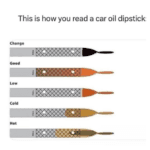
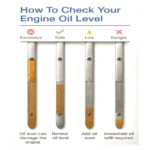
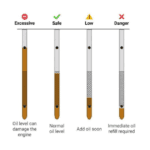
Step 6: Read the Oil Level
At the bottom of the dipstick, you’ll see:
- Two holes
- Or two lines
- Or markings labeled MIN and MAX
The oil level should be between those two marks.
Ideal Range:
Closer to MAX is best — but not over it.
If it’s below MIN → Add oil immediately.
Step 7: Check Oil Color and Condition
Healthy oil:
- Amber or light brown
- Smooth texture
Bad oil:
- Very dark and thick
- Gritty
- Smells burnt
- Milky (could indicate coolant leak)
If oil looks milky, get it inspected immediately.
Comparison Table: Cold vs Warm Oil Check
| Factor | Checking Cold | Checking Warm |
| Accuracy | Very Accurate | Slightly Variable |
| Oil Settling | Fully Settled | May need waiting |
| Safety | Safer | Risk of hot parts |
| Manufacturer Preference | Often Recommended | Some brands allow |
| Best Time | Morning | 5–10 mins after driving |
My Recommendation: Check in the morning before starting the car.
How Often Should You Check Oil?
Here’s a simple guideline:
- Older cars (100,000+ miles): Every week
- Normal vehicles: Once a month
- Before long road trips: Always
- After oil change: Check after a few days
If your car burns oil, check more often.
Signs Your Car May Be Low On Oil
Watch for:
- Oil warning light
- Engine knocking
- Burning oil smell
- Blue exhaust smoke
- Poor acceleration
Never ignore an oil warning light.
What Happens If You Overfill Oil?
Many people think more oil is better. It’s not. Overfilling can cause:
- Foaming oil
- Increased pressure
- Seal damage
- Engine leaks
Keep it between MIN and MAX only.
What If Your Car Doesn’t Have a Dipstick?
Some modern vehicles, like certain models from BMW and Mercedes-Benz, use electronic oil level sensors. To check oil:
- Turn the ignition on
- Navigate to vehicle settings
- Select oil level measurement
- Wait for the system to read
Always consult your owner’s manual.
Buyer’s Guide: Tools & Products To Check Oil Properly
You don’t need much, but a few items make it easier.
1. Microfiber Cloth
- Lint-free
- Reusable
- Cleaner readings
2. Flashlight
Helpful in low-light garages.
3. Correct Engine Oil
Always use manufacturer-recommended viscosity, like:
- 5W-30
- 0W-20
- 10W-40
Check the owner’s manual for specifications.
Comparison Table: Conventional vs Synthetic Oil
| Feature | Conventional Oil | Synthetic Oil |
| Price | Lower | Higher |
| Engine Protection | Standard | Superior |
| High Temperature Resistance | Moderate | Excellent |
| Cold Start Performance | Average | Excellent |
| Oil Change Interval | 3,000–5,000 miles | 7,500–10,000 miles |
If the budget allows, synthetic oil offers better long-term protection.
Common Mistakes When Checking Oil
Avoid these:
- Checking on the uneven surface
- Not wiping the dipstick first
- Checking immediately after turning off the engine
- Overfilling
- Ignoring oil color
These small errors lead to incorrect readings.
My Personal Routine (What Works Best)
Here’s what I do:
- Check oil once per month
- Always in the morning
- Keep spare oil in the trunk
- Check before long trips
- Log oil consumption if needed
It takes less than 5 minutes now. Habit beats repair bills.
Long-Form Expansion: Deep Dive Into Engine Oil and Maintenance
Understanding Oil Consumption
Some engines naturally consume oil. Performance engines and turbocharged cars burn slightly more oil due to:
- Higher internal temperatures
- Increased pressure
- Thinner oil usage
It’s not always a leak; sometimes it’s normal consumption.
Oil Level vs Oil Quality
Even if the level is fine, quality matters. Dark oil isn’t always bad; modern detergents darken oil as they clean deposits. But gritty texture? That’s a red flag.
When To Add Oil
If the oil level is just above MIN:
Add small amounts gradually.
- Add half a quart
- Wait a minute
- Recheck
Never dump a full bottle at once.
Seasonal Considerations
Cold weather:
- Oil thickens
- Harder starts
- More engine wear
Hot weather:
- Oil thins
- Higher evaporation risk
Using the correct viscosity is critical.
How Checking Oil Saves Money
Ignoring oil can lead to:
- Timing chain damage
- Worn bearings
- Cylinder scoring
- Complete engine replacement
Checking oil prevents catastrophic failure.
Read More: What Is A Coil In A Car
FAQs: How To Check Oil
1. Can I check oil while the engine is running?
No. Always turn the engine off.
2. Should oil be at the MAX line?
Close to it is ideal. Not over.
3. What color should oil be?
Amber to light brown is healthy.
4. Is black oil always bad?
Not necessarily. It may just be dirty from the cleaning engine.
5. Can low oil cause overheating?
Yes. Oil helps remove engine heat.
6. How long should I wait after driving?
At least 5–10 minutes.
7. Why is my oil milky?
Possible coolant leak. Get inspected immediately.
8. How much oil do I add if it’s low?
Add small amounts, recheck frequently.
9. Does synthetic oil last longer?
Yes, generally 7,500–10,000 miles.
10. Can too much oil damage the engine?
Yes. It can cause pressure issues and seal damage.
Final Thoughts
- Checking your oil isn’t complicated.
- It doesn’t require mechanical expertise.
- It doesn’t require special tools.
- But it requires consistency.
Five minutes a month can extend your engine’s life by years. And in my experience, it’s one of the easiest maintenance habits you can build.