If you’ve ever had a Check Engine Light come on, there’s a good chance your oxygen sensor was involved. I’ve personally seen dozens of car owners panic over engine warning lights, and surprisingly often, the culprit was a simple O2 sensor.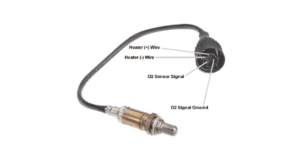 It’s small, inexpensive compared to major engine parts, yet incredibly important. So what does an oxygen sensor actually do? In simple terms:
👉 An oxygen sensor measures how much oxygen is in your car’s exhaust gases. 👉 It helps your engine computer adjust the air-fuel mixture for optimal performance.
Without it, your car would:
- Burn too much fuel
- Pollute more
- Lose power
- Damage expensive components
Let’s break this down in a clear, casual, and practical way.
What Is an Oxygen Sensor?
An oxygen sensor (O2 sensor) is part of your vehicle’s emissions and fuel management system.
It works alongside your car’s engine control unit (ECU) to make sure the engine burns fuel efficiently. Most modern vehicles from brands like:
- Toyota
- Honda
- Ford
- BMW
Use multiple oxygen sensors.
What Does an Oxygen Sensor Actually Do?
Your engine needs the right balance of:
- Air
- Fuel
- Spark
The ideal air-fuel ratio for gasoline engines is about 14.7:1. The oxygen sensor checks the exhaust to see if the mixture is:
- Too rich (too much fuel)
- Too lean (too much air)
Then it sends data to the ECU, which adjusts fuel injection in real time. It’s constantly correcting your engine every second you drive.
Where Is the Oxygen Sensor Located?
Most cars have:
- Upstream (pre-catalytic converter) sensor
- Downstream (post-catalytic converter) sensor
Upstream monitors engine performance. Downstream monitors catalytic converter efficiency. Some vehicles have 2–4 sensors, depending on engine layout.
Upstream vs Downstream Oxygen Sensor (Comparison Table)
| Feature | Upstream O2 Sensor | Downstream O2 Sensor |
| Location | Before the catalytic converter | After the catalytic converter |
| Purpose | Adjust fuel mixture | Monitor the catalytic converter |
| Affects Fuel Economy | Yes | No |
| Affects Performance | Yes | No |
| Failure Symptoms | Rough running, poor MPG | Check the engine light mostly |
| Replacement Priority | High | Moderate |
If your car feels sluggish or burns more fuel, it’s usually the upstream sensor.
Why Is the Oxygen Sensor So Important?
Let’s be honest, most drivers ignore it. But here’s what it actually controls:
1. Fuel Efficiency
A bad O2 sensor can reduce MPG by 10–40%.
2. Engine Performance
Wrong mixture = weak acceleration.
3. Emissions Control
It helps reduce harmful gases.
4. Catalytic Converter Protection
A bad sensor can destroy your catalytic converter, which is extremely expensive.
Signs of a Bad Oxygen Sensor
From experience, these are the most common symptoms:
1. Check Engine Light
Code examples:
- P0130
- P0141
- P0161
2. Poor Fuel Economy
You’ll notice more frequent fuel stops.
3. Rough Idle
The engine may shake or stall.
4. Rotten Egg Smell
Unburned fuel is damaging the catalytic converter.
5. Failed Emissions Test
Very common reason.
How Much Does It Cost to Replace an Oxygen Sensor?
Here’s a realistic cost breakdown:
| Vehicle Type | Sensor Cost | Labor Cost | Total Average |
| Economy Car | $30–$120 | $50–$150 | $100–$250 |
| SUV | $50–$180 | $80–$200 | $150–$350 |
| Luxury Car | $100–$300 | $150–$400 | $300–$700 |
Upstream sensors usually cost slightly more.
How Long Does an Oxygen Sensor Last?
Typically:
60,000 – 100,000 miles
However:
- Cheap fuel
- Oil-burning engines
- Coolant leaks
- Poor maintenance
Can shorten lifespan.
Can You Drive With a Bad Oxygen Sensor?
Yes, but it’s not smart. Driving long-term with a faulty O2 sensor can:
- Damage the catalytic converter
- Reduce fuel economy
- Increase emissions
- Cause engine damage
The catalytic converter can cost over $1,000 to replace.
Buyer’s Guide: Choosing the Right Oxygen Sensor
If you’re replacing one yourself, here’s what I recommend.
1. OEM vs Aftermarket
OEM sensors
- Guaranteed compatibility
- More expensive
- Reliable
Aftermarket sensors
- Cheaper
- Quality varies
For vehicles like Toyota or Honda, OEM is often worth it.
2. Heated vs Unheated Sensors
Most modern cars use heated oxygen sensors (HO2S). They:
- Warm up faster
- Improve cold start performance
Always match your original sensor type.
3. Direct Fit vs Universal
Direct Fit
- Plug-and-play
- No wiring work
Universal
- Requires wire splicing
- Cheaper
- Not beginner-friendly
I personally recommend direct fit.
4. Number of Wires
O2 sensors may have:
- 1-wire
- 2-wire
- 3-wire
- 4-wire
More wires usually mean a heated sensor. Match exactly.
How to Diagnose a Bad Oxygen Sensor
Steps:
- Scan OBD-II codes.
- Look at live data (voltage fluctuation).
- Check fuel trim readings.
- Inspect wiring.
Healthy sensor voltage fluctuates rapidly between 0.1V and 0.9V.
Slow response = bad sensor.
Deep Dive: How Oxygen Sensors Work
There are two main types:
1. Zirconia Sensors (Most Common)
Generate voltage based on oxygen difference.
2. Wideband Sensors
More accurate. Used in modern performance engines. Manufacturers like BMW and Ford often use advanced wideband systems.
How Many Oxygen Sensors Does a Car Have?
Depends on:
- Number of cylinders
- Number of catalytic converters
- Engine design
Typical 4-cylinder:
2 sensors.
V6 or V8:
4 sensors.
DIY Replacement: Is It Hard?
Basic steps:
- Disconnect the battery.
- Locate sensor.
- Spray penetrating oil.
- Use the O2 sensor socket.
- Install a new sensor.
Time required:
30–60 minutes.
Tip: Replace when the exhaust is slightly warm (not hot).
What Happens If You Ignore It?
Here’s what I’ve personally seen happen:
- MPG drops dramatically
- The engine runs rich
- Catalytic converter clogs
- Repair costs skyrocket
Fixing a $100 sensor early can prevent a $2,000 repair.
Read More: What Is An EGR Valve
FAQs: What Does An Oxygen Sensor Do In A car
1. What is the main job of an oxygen sensor?
To monitor oxygen levels in the exhaust and adjust the fuel mixture.
2. Can a bad O2 sensor cause rough driving?
Yes.
3. Does it affect fuel economy?
Absolutely.
4. Is it expensive to replace?
Usually affordable compared to major engine parts.
5. How many oxygen sensors are in a car?
Usually 2–4.
6. Can I replace it myself?
Yes, with basic tools.
7. Will a bad O2 sensor fail emissions?
Yes.
8. How often should it be replaced?
Around 60k–100k miles.
Final Thoughts
The oxygen sensor may be small, but it’s one of the most important components in your car. It controls:
- Fuel efficiency
- Engine performance
- Emissions
- Catalytic converter health
If your Check Engine Light comes on, don’t ignore it.