Checking your engine oil level is one of the simplest maintenance tasks you can do, yet it’s also one of the most important. I used to ignore it completely, assuming modern cars would somehow take care of themselves.
That assumption changed after I noticed my car running a little rough and discovered the oil level had dropped much lower than expected.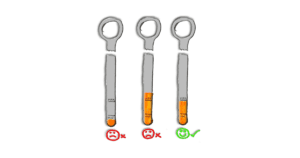 Since then, checking oil has become part of my routine. It takes less than five minutes and can potentially save thousands of dollars in engine repairs.
Whether you’re a new driver or someone who simply hasn’t checked oil before, this guide will walk you through everything you need to know.
Why Engine Oil Matters
Engine oil serves several critical functions:
- Lubricates moving engine components
- Reduces friction and wear
- Helps cool engine parts
- Prevents sludge buildup
- Protects against corrosion and rust
Driving with insufficient oil can lead to overheating, poor performance, and in severe cases, complete engine failure.
Signs Your Oil Level May Be Low
Before checking, your vehicle may already be showing warning signs. Common symptoms include:
- Oil warning light on dashboard
- Engine making ticking or knocking noises
- Burning oil smell
- Reduced fuel efficiency
- Engine running hotter than usual
- Rough acceleration
However, many vehicles consume oil gradually without obvious symptoms, which is why manual checks remain important.
Step-by-Step: How To Check Your Oil Level
Step 1: Park on Level Ground
For an accurate reading, park your car on a flat surface.
An uneven surface can cause oil to collect on one side of the oil pan and give an incorrect reading.
Step 2: Turn Off the Engine
Turn the engine off and wait approximately 5–10 minutes.
This allows the oil to drain back into the oil pan.
Some manufacturers recommend checking when the engine is warm, while others suggest checking when cold. Your owner’s manual is always the best reference.
Step 3: Open the Hood
Locate the hood release lever and securely prop the hood open.
Find the oil dipstick, which usually has a brightly colored handle (yellow, orange, or red).
Step 4: Remove and Clean the Dipstick
Pull out the dipstick completely.
Use a clean rag or paper towel to wipe away the oil.
The first reading is usually inaccurate because oil splashes around while driving.
Step 5: Reinsert the Dipstick
Insert the dipstick fully back into its tube.
Push it in completely.
Step 6: Remove It Again and Read the Level
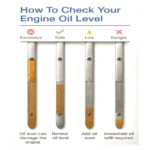
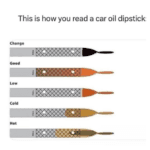
Pull it out once more and inspect the oil level. Most dipsticks have:
- MIN and MAX marks
- Two dots
- Crosshatched markings
Ideally, the oil should sit near the upper mark without exceeding it.
Understanding Dipstick Readings
| Oil Level | Meaning | Action Required |
| Above Maximum | Too much oil | Drain excess oil |
| Near Maximum | Ideal level | No action needed |
| Midway | Acceptable | Monitor regularly |
| Near Minimum | Low oil | Add oil soon |
| Below Minimum | Dangerous | Add oil immediately |
Also Check Oil Condition
Oil quantity isn’t the only thing that matters. Look at the oil’s appearance:
Healthy Oil
- Amber or light brown
- Smooth texture
Old Oil
- Very dark or black
- Thick consistency
- Contains debris or sludge
Dirty oil may indicate it’s time for an oil change.
My Personal Experience Checking Oil
The first time I checked my oil, I expected it to be complicated. Surprisingly, it was incredibly easy. What shocked me more was discovering the oil level had dropped significantly despite no warning lights appearing.
Since then, I check oil roughly once a month and before long road trips. This simple habit gives peace of mind and has probably helped extend my engine’s lifespan.
Modern vehicles are more reliable than ever, but engines still consume oil over time. Even newer cars can burn a small amount between service intervals.
Traditional Dipstick vs Electronic Oil Monitoring
Many modern vehicles now include electronic oil sensors.
Comparison Table
| Feature | Traditional Dipstick | Electronic Oil Monitor |
| Accuracy | Very high | Usually accurate |
| Ease of Use | Moderate | Extremely easy |
| Cost | No additional cost | Included on newer vehicles |
| Detects Oil Condition | Yes (visual inspection) | Usually no |
| Works if Sensor Fails | Yes | No |
| Best For | All vehicles | Newer models |
Personally, I still prefer the traditional dipstick because it allows me to inspect both oil level and oil condition at the same time.
Common Mistakes When Checking Oil
1. Checking on a Slope
This can create false readings.
2. Not Waiting After Turning Off Engine
Oil needs time to settle.
3. Forgetting to Wipe the Dipstick First
This often leads to incorrect measurements.
4. Overfilling the Engine
Too much oil can be just as harmful as too little.
Excess oil can foam, reducing lubrication efficiency.
5. Using the Wrong Oil Type
Different engines require different oil viscosities.
Always follow manufacturer recommendations.
How Often Should You Check Engine Oil?
A good rule is:
- Once every month
- Before long trips
- After noticing unusual engine behavior
- Every 1,000 miles for older vehicles
Some engines naturally consume more oil than others.
What Happens If Oil Gets Too Low?
Running low on oil can cause:
- Increased engine friction
- Excessive heat buildup
- Premature engine wear
- Bearing damage
- Complete engine seizure
Engine replacement costs can easily reach several thousand dollars, making regular oil checks one of the best preventative maintenance habits.
Buyer’s Guide: Tools and Products That Make Oil Checks Easier
While checking oil requires very little equipment, a few inexpensive items can make the process easier.
1. Microfiber Towels
Useful for wiping the dipstick clean. Look for:
- Lint-free material
- Washable design
- Oil-resistant fabric
2. Funnel
A funnel helps avoid spills when adding oil. Choose:
- Long neck design
- Flexible construction
- Easy storage size
3. Nitrile Gloves
Engine oil can be messy.
Disposable gloves keep your hands clean and protect your skin.
4. Flashlight
Helpful when checking oil in poor lighting conditions.
LED flashlights work particularly well.
5. Spare Engine Oil
Keeping one approved bottle in your trunk can be extremely useful during emergencies. Before purchasing oil, verify:
- Correct viscosity rating (5W-30, 0W-20, etc.)
- Manufacturer approval standards
- Synthetic vs conventional requirements
Tips for Maintaining Proper Oil Levels
Check Regularly
Small leaks and oil consumption can go unnoticed.
Watch for Leaks
Look for dark spots under your parked vehicle.
Follow Oil Change Intervals
Fresh oil protects engine components better.
Use High-Quality Oil
Premium oils often provide better protection and cleaner operation.
Pay Attention to Warning Lights
Never ignore an oil pressure warning light.
Read More: Bad Car AC Pressure Switch Symptoms
FAQs: How To Check My Oil Level
1. Should I check my oil when the engine is hot or cold?
Most vehicles can be checked after the engine has been turned off for 5–10 minutes. Always consult your owner’s manual for specific recommendations.
2. How often should I check my engine oil?
Once a month is generally sufficient, though older vehicles may require more frequent checks.
3. Can I drive with low oil?
It is not recommended. Low oil levels can quickly cause severe engine damage.
4. What color should engine oil be?
New oil is usually amber or light brown. Very dark, thick oil may indicate it’s time for an oil change.
5. Is it bad to overfill engine oil?
Yes. Excessive oil can cause foaming, increased pressure, and potential engine damage.
6. Why is my car losing oil without leaks?
Some engines naturally burn small amounts of oil during operation, especially higher-mileage vehicles.
7. Do electric vehicles need engine oil?
Pure electric vehicles do not require engine oil because they lack traditional internal combustion engines.
8. What if my car has no dipstick?
Many newer vehicles use electronic oil monitoring systems accessible through the infotainment screen or dashboard menu.
9. Can dirty oil affect fuel economy?
Yes. Old oil creates additional friction, which can slightly reduce efficiency.
10. How long does it take to check oil?
Usually less than five minutes, making it one of the quickest maintenance checks you can perform.
Final Thoughts
Learning how to check your oil level is one of the easiest and most valuable skills a car owner can develop. It requires almost no tools, only a few minutes of your time, and can significantly reduce the chances of costly engine damage.
From personal experience, regularly checking oil provides reassurance that everything is functioning properly. It has become part of my monthly vehicle maintenance routine and is something I recommend every driver do.
Even if your car includes modern electronic monitoring systems, manually inspecting the oil occasionally remains a smart habit. A few minutes today could save you from major repair bills tomorrow.