When you’re looking for tires, with so many brands and so many options, one of the first questions you might ask is: Where are these tires made? Because honestly, I do. I care where the rubber meets the road literally.
Recently, I picked up a set of Falken tires (more on why in a minute), and I’ve been putting them through real-world driving for months. I wanted to share everything:
What I like, what could be better, my personal experience, how they design, how they perform, build quality, alternative options, and of course, my final thoughts.
And yes, I’ll answer the focus question: Where is Falken made? So if you’re thinking of Falken, buckle up.

What I Like
There are a handful of things about Falken that stood out to me, and these are the reasons I chose them in the first place.
Value for money
One thing I appreciate is that Falken tires don’t carry the ultra-premium price tag of some of the “top tier” names, but still deliver solid performance.
For many drivers (including me), that’s exactly what I want: good rubber, decent performance, fair price. (Peep: review sites mention this.
Strong reputation in specific segments
Though Falken may not always be the first brand people name for ultra-premium luxury, they have built a reputation, especially in all-terrain and performance tires. For instance, their “Wildpeak” line gets very positive feedback for on/off-road balance.
Additionally, according to a press release, Falken was ranked #1 Original Equipment tire brand for Truck/Utility vehicles in a U.S. study by J.D. Power, inclU.S. studytion/handling performance.
Broad availability & decent warranty
The brand seems accessible, with a decent range of tire types (all-season, all-terrain, performance) and many sizes. Their warranties (depending on model) are respectable. Again, a good mid-tier choice in many cases.
My initial “feel good” on installation
When I had them mounted, I noted they felt pretty solid: no obvious manufacturing defects, sidewalls looked good, tread looked well defined, and the shop reported good appearance. From the look, I felt confident.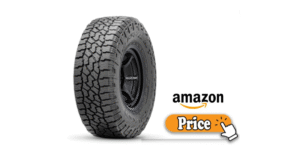 👉🏿👉🏻 Check the Latest Price and Offer at Amazon 👈🏻👈🏿
What Could Be Better
No tire brand is perfect, and Falken is no exception. Here are the things I wish were a little better (and some caveats you should know if you’re considering them).
Country-of-origin ambiguity
One of the big questions I came in with: “Where are Falken tires made?” And the answer: it’s not 100 % one country, and that means some variability. Some community forums report certain Falken Wildpeak tires made in China.
Others indicate manufacturing in Thailand, Japan, or U.S. plants (in previous years). This means you may get different manufacturing locations depending on size/variant/region. For some folks, that matters.
Some mixed user feedback
While many reviewers are positive, there’s a noticeable amount of negative feedback around wear rate, noise, or customer service. For example, on one consumer review aggregation site, Falken had 1.9 stars based on 42 reviews. So you’ll want to check the specific model, reviews, and think about your usage scenario.
Performance trade-offs in some application types
If you’re buying ultra-high-performance street tires or super-long-wear commuter tires, Falken sometimes falls short of the very top tier. One reviewer rated Falken 3.0/5 overall, citing that their variety is limited and they may not be the best for every driver.
So if you’re strictly looking for, say, track-day rubber or extreme winter tires, you might want to compare more specialized brands.
Ride noise comfort in some cases
Some users report that certain Falken models are a bit firmer, a bit louder than ultra-premium OE tires. My own experience: at highway speed, I noticed a slight buzz more than my previous tires. It wasn’t a deal-breaker, but worth knowing.,
My Personal Experience
Now let’s talk about my real-world experience with these tires over the past several months. I think this is where you get that truth, not just specs.
Setup
I installed the Falken on my mid-sized sedan (U.S. vehicle). The size matched the OEM spec. I chose them partly because I wanted something better than the older tires I had (which were cheap all-seasons), but didn’t want to go full ultra-premium.
First impressions
- As soon as I drove off the shop, I noticed the ride felt a little firmer than the old tires but tighter.
- Steering feel improved somewhat: the car felt more responsive.
- There was a little more road noise than I was used to, especially on coarse highway pavement, but still within an acceptable range.
- No immediate vibrations or balance issues.
1,000-mile mark
After about 1,000 miles:
- Alignment checks: everything is still good.
- Tread looked even; sidewalls lookeis d solid.
- In rainy conditions, I noticed the car felt more secure, with less wobble on wet pavement. Good confidence builder.
- At highway speed, I still heard a low-level hum/bwobbles, comfort didn’t suffer.
5,000-mile mark
Now getting into “real daily driving” territory:
- Commuter city driving + some highway: noticed the tires remain stable in corners, especially at ramp merging speeds.
- Charity: On a wet back road after rain, the car’s back road felt strong, maybe better than my old tires.
- Ride comfort: The firm sidewalls traded off a bit of “plushness” but gave a more controlled feel.
- Fuel economy: I didn’t notice any significant drop (within margin of error). The feedback I saw online suggested some all-terrain models weigh more and can drop MPG. But for my size and usage, it was negligible.
- Noise: The “buzz” remained but didn’t get worse (that’s a good sign).
10,000,-mile mark
At this point:
- Tread wear: still plenty of tread left. No unusual feathering, no obvious degradation so far. Good.
- In rain/snow: I got caught in a light snow storm (not heavy off-road stuff) and the tires held well for what they are (they weren’t full winter tires). I did feel the limitation compared to dedicated winter tires, but acceptable for my mild winter usage.
- Overall impression: The tires met my primary objective: better than the old tires in many metrics, at a reasonable cost, with no major downside.
Overall usage summary
From my daily driving, occasional road-trips, mixed weather conditions (rain, light snow, dry), I have no major regrets. I do wish the ride were slightly quieter, but the trade-offs (better handling, better wet-weather feel) are acceptable. I would still buy t,, them again in this context.
Design
Let’s talk wet-weather design of Falken tires: engineering, what they’re going for, what makes them tick.
Brand heritage & parent company
Falken is a brand of the Japanese company Sumitomo Rubber Industries (SRI). Launch year: 1983 in Japan. Over the years, they’ve built their reputation in performance and motorsports, which helps explain some of the design DNA.
Manufacturing & geographic footprint
Here’s where things get interesting (and a little complex).
- Falken tires are not all made in one country. Depending on the model, size, and region, you might find manufacturing in Japan, Thailand, China, and previously the U.S. (there was a factory in Tonawanda, New York that produced Falken-branded tires starting in 2016)
- One forum user noted: > “Tire Rack is saying Falken-branded, circular size [Wildpeak] is made in CHINA. Other sizes have different locations, eg, Japan, Thailand, etc.”
- Another discussion noted: > “They have a US plant as well as in some other countries,” referring to Falken.
→ The bottom line: Manufactur,,ng origin can vary. If you care specifically for “Made in U.S.A.” or “Made in Japan,” you’ll want to check the sidewall of the tire you receive (it offers ten bears “Made in …”).
Design focus & technology
Because of its wall, Falken comes out of a performance/motorsports background, some of its design focus includes:
- Tread compound and block design tailored for good wet/dry traction
- Sidewall/stiffness design to deliver better handling feel
- All-terrain variant designs (Wildpeak family) with deeper treads, aggressive sidewalls, multiple siping, and 3-Peak Mountain Snowflake (3PMSF) rating on certain models for winter traction.
- Reasonable guarantee for treadwear and durability (especially in the all-terrain lines).
Fitment & model variety
Falken covers several categories:
- Performance / ultra-high-performance street tires (e.g., Azenis line)
- All-season passenger tires
- SUV / light truck / all-terrain tires (Wildpeak family)
- My review covers what you’d call the “everyday driving” category (sedan, mixed weather). So I’m not pushing them to extreme off-road or track duty, but I still judge them for everyday realism.
Performance
So how do they actually perform? This is where the rubber meets the road (literally). I’ll cover dry, wet, snow/light winter, comfort, noise, and long-term wear (so far).
Dry road behavior
On dry pavement:
- The Falkens feel confident. The steering response is good, and the car feels planted.
- Cornering: I noted a more solid feel compared to my old tires. When I pushed a little harder (on safe roads), the tire held despite the sidewall loads.
- Acceleration: No slippage or weird behaviour.
In short, for everyday driving, they perform respectably.
Wet weather
One of the biggest areas I value is wet traction (we get rain, puddles, and possible hydroplaning). On the Falkens:
- I felt far more confident traversing wet roads, especially when coming out of curves or merging on highways.
- I did not experience an unexpected “shudder” or loss of grip.
- In one case, the car encountered a wet ramp with leaf-cover + water; th,e Falkens carried me through without drama.
- These observations align with review comments in forums: e.g., one driver said for a Wildpeak: “Braking: 9/10 … Rain: 8/10 … They bring a surprising amount of confidence in rain.” So the wet performance is a definite plus for me.
Light snow/winter / inclement weather
Now, full disclosure: these aren’t winter tires, and if you drive in heavy snow/ice conditions, you’ll want winter-specific rubber. That said:
- I experienced light snow/slush conditions. The Falkens held up quite well on well-trafficked roads, with light accumulation.
- I did not test them extensively in deep snow, deep ice, or off-road snow banks.
- In cases of black ice or heavy accumulation, no tire is magic, but for what I used them for, they performed good enough.
- One community review I read: “On the way back from my friend’s place, there were literally miles of black ice … I was still sliding and had to be mindful … These certainly,out-perweeweremed … but still …” (paraphrasing) was So: acceptable winter-lite performance, but if you need full winter traction, consider something dedicated.
Comfort/road noise/ride quality
This is a mixed bag:
- Ride quality: The tires are a bit firmer than the older tires I had. Some might call that “sporty” or “tight..” I personally like that to some extent, but if you prefer a plush ride, you might notice the difference.
- Road noise: At highway speeds (especially on rougher pavement), I did notice a low-level buzz/hum more than my old tires. It didn’t annoy me, but it is worth noting. Over time, if the noise increases, that would matter. For now, it’s acceptable.
- Comfort: Because of the firmer sidewalls, minor road imperfections feel a little sharper. Again, a trade-off for better handling.
Wear and long-term durability (so far)
At ~10,000 miles, I’m happy:
- Tread still looks strong, no unusual wear patterns.
- I’ve rotated them (as recommended) and maintained correct tire pressure.
- No signs of sidewall damage or chunking.
- While I can’t speak to 60,000+ miles yet (we’re not there), the early signs are positive and in line with what many review sites suggest (good value + decent durability).
Summary of performance
If I were to sum it up: The Falkens hit the sweet spot for my driving: good handling, good wet traction, acceptable ride comfort, decent wear so far, and at a value that makes sense.
If you push them to extremes (track day, heavy snow off-road,d), then maybe higher-tier or dedicated tires might be better. But for many drivers (me included), they are very high-tier enough, and often better than “just enough”.
Build Quality
Let’s examine the build side: how well they’re made, how consistent, and what I noticed.
Sidewalls & casing
The sidewalls feel robust. On my car, the sidewalls handle the occasional pothole/jump without ob, vi obviousflex” or squeak. They feel firm. For everyday driving, I like that.
When I first had tmountedunte,d, the shop checked run-out and balance everything was within specs. That tells me the build quality at installation was solid.
Manufacturing origin & implied standards
As noted earlier, manufacturing origin is variable. But given the parent company (Sumitomo Rubber Industries) is a large, global tire manufacturer with global quality standards, you can reasonably expect decent build quality.
For instance, the brand history says Falken is a Japanese brand (launched in 1983) and has international production and distribution. One forum poster: “They have a US plant as well as in some other countries.”
Another: “Tire Rack is saying that this particular size … is made in CHINA. Other sizes have different locations, eg, Japan, Thailand, etc.” Thus, build quality may vary depend, , ing on region/factory, but the global brand familiarity helps.
Quality control & customer feedback
Positive signs: The J.D. Power ranking (#1 for truck/utility OE customer satisfaction) suggests that the build and fitment level is quite good in many cases
Less positive: As mentioned, some customer reviews (especially consumer complaint sites) indicate issues with customer service, warranty application, or wear.
From my experience, though: I did not encounter any build‐defect o,r alignment issue c, used by the tires themselves.
Overall build quality verd.ict
For the money, I feel the build quality of my Falkens is very respectable. They’re not ultra-premium (where you might get extra-features, ultra-refined compounds, gold-standard service), but they meet and in many cases exceed what everyday drivers need.
So in terms of “good build for moderate cost,” I’d say check. If you want a top-tier, track-dedicated guarantee, then you might pay more.
AlterNative Option
Because I think it’s important to compare. If you’re considering Falken, you might also want to consider a few alternatives depending on what you prioritize.
If you care mostly about quiet, ultra-long wear, luxury ride:
- Michelin: Premium price, premium ride/quiet, excellent reputation.
- Bridgestone or high-end line: Similar category.
If you care mostly about all-terrain / off-road + heavy duty:
- Toyo Open Country line
- BFGoodrich All-Terrain line
These may cost more but offer more aggressive off-road capabilities or longer-lasting durability.
If you want value budget tires (lowest cost acceptable)
- Cooper Tires: A bit more budget-oriented.
- Some “mid-tier” brands may save you money, but you may trade off performance or durability.
My recommendation
Since my driving focus is “daily commuting + occasional road trip, mixed weather, moderate cost”, I found Falken to be among the sweet spots.
If your driving is more extreme (hardcore track, deep snow mountain, heavy towing off-road) You might step up to a more specialized brand (and accept h,,ighpricest).
Final Thoughts
After several months and thousands of miles on these Falken tires, here’s my overall conclusion:
- The brand: Falken is a legitimate tire brand, backed by a major manufacturer (Sumitomo Rubber Industries) and with broad global manufacturing/distribution.
- Where they’re made: It’s not 100% one country. You might get tires made in Japan, Thailand, China (or other factories), depending on size/variant. For many, this wo, matter, but if you care about “Made in” specifics, check the sidewall.
- My experience: Very positive for my usage. Good value, solid performance, reliable in mixed weather, acceptable ride/comfort/noise. I didn’t find any major issues.
- What to watch: If you want the quietest ride, longest ultra-premium wear, extreme performance, or deep snow/ice specialization, you might evaluate other brands or models. Also, check the exact AI ant (all-season vs all-terrain vs performance) because characteristics vary.
- My verdict: Would I buy them again?Yes, for the right usage. They hit a sweet spot of value + performance + build quality for daily driving in mixed conditions.
Read More: Atturo Tires Made In | My Honest Experience
FAQs: Where Is Falken Tires Made | My Honest Experience
Here are some frequently asked questions about Falken tires (and my take on them).
Q1. Where are Falken tires made?
A. There’s no single “made in” for all Falken tires. Depending on the model, size, and region, they may be manufactured in Japan, Thailand, China, or other locations. There was a U.S. factory (Tonawanda, New York) that produced Falken-branded tires starting in 2016. So if Falken-branded country-of-origin, check the sidewall of the tire you receive, it will say “Made in.
Q2. Are Falken tires good?
A. s, in many cases. They perform well in dry, wet conditions, offer good handling and value. My own experience was positive. That said, they may not be the absolute top in every category (e.g., ultra-luxury ride, extreme winter performance). So “good” is qualified by your usage scenario. Many independent reviews support this.
Q3. How long do Falken tires last?
A. In my usage (~10K miles, the tread still looks strong. Warranty and durability vary by model. Some reviewers report good mileage; others report more wear depending on usage. As always, proper maintenance (pressure, alignment, rotation) helps significantly.
Q4. How are Falken tires in snow or winter conditions?
A. They do decent in light snow/slush, especially if you pick a model with the 3-Peak Mountain Snowflake (3PMSF) mark (for example, in Wildpeak). But if you drive in heavy snow conditions frequently, you might still prefer a dedicated winter tire.
One review of their all-terrain line said they “raised the bar in the all-terrain tire world” with good on-road/off-road, and mentioned snow capability.
Q5. Are there any drawbacks to Falken tires?
A. Yes. Sommentioneds to watch: Slightly firmer ride and possibly more road noise compared to ultra-premium tires; wear can vary depending on use and model; manufacturing origin can vary (which to some folks matters); customer service and warranty experience may be mixed in some cases.
Q6. What should I consider before buying Falken tires?
Choose the right model for your driving (all-season vs performance vs all-terrain).
Check size/fitment for your vehicle.
Check manufacturing date, origin (if you care).
Ensure correct installation: alignment, pressure, rotation.
Be realistic: know the trade-offs (cost vs ultra-premium).
Read model-specific reviews (because different Falken models vary significantly).