Checking your engine oil is one of those simple car maintenance tasks that most people ignore until something goes wrong. I used to be that person. I’d drive for months without thinking about oil levels, assuming the dashboard light would warn me if anything was wrong. Big mistake. By the time an oil warning light appears, damage may already be happening.
Learning how to check oil properly takes less than five minutes, and it can literally save your engine. In this complete, high-readability guide, I’ll walk you through:
- What engine oil does
- How to check oil step-by-step
- When to check it
- Common mistakes to avoid
- What the dipstick markings mean
- What to do if the oil is low
- A comparison table for oil conditions
- A buyer’s guide for choosing engine oil
- FAQs most drivers ask
Let’s get into it.
Why Checking Your Engine Oil Is So Important
Your engine oil is the lifeblood of your vehicle. It:
- Lubricates moving parts
- Reduces friction
- Prevents overheating
- Removes dirt and debris
- Protects against corrosion
Whether you drive a small sedan like the Toyota Corolla or a performance machine like the Ford Mustang, your engine relies on proper oil levels to survive.
Low oil = increased friction.
Increased friction = heat.
Heat = engine damage.
And engine damage is expensive.
When Should You Check Your Oil?
Here’s what I personally recommend:
- Once a month
- Before long road trips
- If your oil warning light appears
- After noticing strange engine noise
- If you smell burning oil
Many modern cars, like the Honda Civic, have oil life monitoring systems, but don’t rely on them alone. Manual checks are still king.
How Do I Check Oil? (Step-by-Step Guide)
Let’s break this down into simple, practical steps.
Step 1: Park on Level Ground
Make sure the car is:
- On a flat surface
- The engine turned off
- Cool (wait at least 10–15 minutes after driving)
Hot oil can give inaccurate readings.
Step 2: Open the Hood
Locate the hood release lever (usually under the dashboard). Lift the hood and secure it with the hood prop rod if needed.
Step 3: Locate the Dipstick
The dipstick usually has:
- A yellow or orange handle
- A small loop or grip
In most vehicles, like the Hyundai Elantra, it’s clearly labeled.
Step 4: Pull the Dipstick Out
Pull it out completely. You’ll see oil on the end, but don’t read it yet.
Step 5: Wipe It Clean
Use:
- A clean rag
- Paper towel
Wipe the dipstick completely clean.
Step 6: Reinsert the Dipstick
Push it all the way back in. This ensures you get an accurate measurement.
Step 7: Pull It Out Again and Check
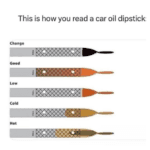
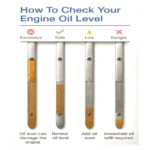
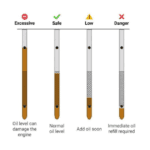
Now look at the oil level. You’ll see:
- Two holes
- Two lines
- Or “MIN” and “MAX” markings
Oil should be between those marks.
Understanding Dipstick Readings
Here’s a simple breakdown:
| Oil Level Position | What It Means | Action Needed |
| Above MAX | Overfilled | Drain some oil |
| At MAX | Perfect | No action |
| Mid-range | Safe | Monitor |
| Near MIN | Low | Add oil soon |
| Below MIN | Very Low | Add oil immediately |
What Does Oil Color Tell You?
Oil color matters too.
| Oil Color | Meaning | Is It Okay? |
| Amber / Light Brown | Fresh oil | ✅ Yes |
| Dark Brown | Used oil | ⚠ Normal |
| Black | Very old oil | ❌ Change soon |
| Milky | Coolant mixing | 🚨 Serious problem |
| Gritty / Thick | Contaminated | ❌ Change oil |
Milky oil could indicate a blown head gasket, something you never want to ignore.
How Much Oil Should You Add?
If oil is low:
- Remove the oil filler cap
- Add small amounts (¼ quart at a time)
- Wait a minute
- Recheck dipstick
Never overfill. Overfilling can cause:
- Foaming
- Pressure buildup
- Seal damage
- Engine performance issues
Common Mistakes When Checking Oil
I’ve made a few of these myself. Here’s what to avoid:
❌ Checking on uneven ground
❌ Not wiping the dipstick first
❌ Checking immediately after turning the engine off
❌ Confusing transmission dipstick with oil dipstick
❌ Overfilling
Small mistakes can lead to big repair bills.
Buyer’s Guide: Choosing the Right Engine Oil
If you need to top off or change oil, choosing the right type matters.
1. Check Your Owner’s Manual
Always follow the manufacturer’s recommendation.
2. Understand Oil Viscosity
Examples:
- 5W-30
- 10W-40
- 0W-20
Lower first number = better cold start performance. Cars like the Mazda CX-5 often require 0W-20 for fuel efficiency.
3. Conventional vs Synthetic
| Type | Pros | Cons |
| Conventional | Cheap | Shorter lifespan |
| Synthetic Blend | Balanced | Mid-cost |
| Full Synthetic | Best protection | Expensive |
For newer engines like those in the BMW 3 Series, full synthetic is often recommended.
4. Oil Brand Quality
Look for the API certification mark. Trusted brands include:
- Mobil 1
- Castrol
- Valvoline
- Shell
How Often Should You Change Oil?
Old rule: Every 3,000 miles. Modern rule:
- 5,000–7,500 miles (conventional)
- 7,500–10,000 miles (synthetic)
Always check your manual.
Signs Your Oil Needs Changing
- Engine knocking
- Rough idle
- Burning smell
- Poor fuel economy
- Dark, thick oil
Don’t wait for the oil light.
Can You Check Oil Without a Dipstick?
Some newer vehicles use electronic sensors instead of dipsticks. Luxury models, such as certain trims of the Mercedes-Benz C-Class, may require checking the oil through the infotainment system.
In that case:
- Turn the ignition on
- Access vehicle info
- Select oil level
But manual dipsticks are still more reliable.
Personal Experience: Why I Now Check Monthly
A few years ago, I skipped oil checks for months. One day, I heard a faint ticking noise. Oil was below the minimum. I topped it off, and the noise disappeared.
Since then? I check every month. It’s quick, easy, and gives peace of mind. Five minutes now can save thousands later.
Read More: What Is A Coil In A Car
FAQs: How Do I Check Oil
1. Should I check oil when the engine is hot or cold?
The best time is when the engine is warm but turned off for 10–15 minutes.
2. How long should I wait after driving?
At least 10 minutes.
3. Can I drive with low oil?
You shouldn’t. It risks severe engine damage.
4. Why is my oil black?
Oil darkens as it collects dirt. That’s normal.
5. What happens if I overfill the oil?
Foaming, pressure issues, leaks, and engine damage.
6. Do electric cars need oil checks?
No. Fully electric vehicles do not use engine oil.
7. Why does my oil disappear?
Possible causes:
- Leaks
- Burning oil
- Worn piston rings
- Valve seal issues
8. Is checking oil really necessary in modern cars?
Yes. Even the most advanced engines still rely on oil.
Final Thoughts: Checking Oil Is Simple But Powerful
Checking your engine oil is:
- Easy
- Fast
- Free
- Extremely important
You don’t need to be a mechanic. You don’t need special tools. You need five minutes and a clean rag. Make it a monthly habit. Your engine and your wallet will thank you.