If you’ve ever seen your check engine light turn on and heard someone say, “It’s probably the oxygen sensor,” you’re not alone.
The oxygen sensor (often called the O2 sensor) is one of the most commonly replaced parts in modern vehicles, but it’s also one of the most misunderstood.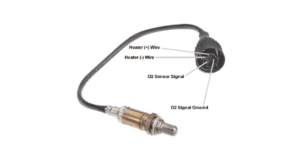 I used to think it was just some small emissions component that didn’t really matter. But after replacing a faulty one in a compact sedan similar to the Toyota Corolla, I realized just how critical this tiny sensor is for:
- Fuel economy
- Engine performance
- Emissions control
- Overall engine health
In this guide, we’ll break it all down in simple, easy-to-understand language. You’ll learn:
- What an oxygen sensor does
- How it works
- Where it’s located
- Symptoms of failure
- Replacement costs
- Upstream vs downstream sensors (comparison table included)
- Buyer’s guide for choosing the right one
- Frequently asked questions
Let’s get into it.
What Is an Oxygen Sensor?
An oxygen sensor is a small electronic device located in your vehicle’s exhaust system. Its job? To measure how much oxygen is present in the exhaust gases leaving your engine.
Based on that data, your car’s computer (ECU) adjusts the air-fuel mixture to ensure optimal combustion.
Too much fuel?
Too much air?
The O2 sensor helps correct it.
What Does an Oxygen Sensor Do in a Car?
Here’s the simple explanation:
The oxygen sensor ensures your engine burns fuel efficiently. It does this by:
- Measuring oxygen levels in exhaust gases
- Sending voltage signals to the engine control unit (ECU)
- Helping the ECU adjust the fuel injection system
When everything works correctly, your engine runs:
- Smoothly
- Efficiently
- Cleanly
- With better fuel economy
Whether you drive a daily commuter like the Honda Civic or a performance vehicle like the Ford Mustang, the oxygen sensor plays the same critical role.
How Does an Oxygen Sensor Work?
Let’s simplify this. Your engine burns fuel and air. The ideal ratio is: 14.7 parts air to 1 part fuel (called the stoichiometric ratio).
The oxygen sensor monitors whether the engine is running:
- Rich (too much fuel)
- Lean (too much air)
It produces a voltage signal:
- Low voltage = Lean mixture
- High voltage = Rich mixture
The ECU reads this signal and adjusts fuel delivery accordingly. This process happens constantly, multiple times per second.
Types of Oxygen Sensors
Most modern cars have at least two oxygen sensors:
- Upstream (before catalytic converter)
- Downstream (after catalytic converter)
Here’s a clear comparison:
| Feature | Upstream O2 Sensor | Downstream O2 Sensor |
| Location | Before the catalytic converter | After the catalytic converter |
| Main Job | Controls fuel mixture | Monitors catalytic converter efficiency |
| Impact on Performance | High | Moderate |
| Affects Fuel Economy | Yes | No (directly) |
| Failure Symptoms | Rough idle, poor MPG | Emissions warning |
Vehicles like the Hyundai Elantra typically have at least two sensors, while larger SUVs may have four or more.
Why Is the Oxygen Sensor Important?
A faulty oxygen sensor can cause:
- Poor fuel economy
- Rough engine performance
- Increased emissions
- Failed emissions tests
- Engine damage (if ignored long-term)
I once ignored a check engine light for weeks in a crossover similar to the Mazda CX-5. Fuel mileage dropped noticeably. After replacing the O2 sensor? Mileage improved almost immediately.
Symptoms of a Bad Oxygen Sensor
Here are the most common signs:
1. Check Engine Light
Often triggered with codes like P0130–P0161.
2. Poor Fuel Economy
The engine runs rich and burns more fuel.
3. Rough Idle
Unstable combustion.
4. Failed Emissions Test
Very common.
5. Rotten Egg Smell
Indicates catalytic converter stress.
How Long Does an Oxygen Sensor Last?
Typically:
- 60,000 to 100,000 miles
Driving conditions matter:
- City driving = More wear
- Poor-quality fuel = Faster degradation
- Oil-burning engines = Shorter lifespan
Luxury vehicles like the BMW 3 Series often have more sensitive systems that trigger warning lights quickly.
Oxygen Sensor Replacement Cost
Here’s what you can expect:
- Part cost: $50–$200
- Labor cost: $100–$300
- Total: $150–$500
Upstream sensors typically cost more than downstream ones.
Can You Drive with a Bad Oxygen Sensor?
Technically? Yes. Should you? No. Here’s why:
- Reduced fuel efficiency
- Increased emissions
- Possible catalytic converter damage
- Long-term engine wear
Ignoring it can turn a $200 repair into a $1,200 catalytic converter replacement.
Comparison Table: Good vs Bad Oxygen Sensor
| Feature | Healthy O2 Sensor | Failing O2 Sensor |
| Fuel Economy | Normal | Decreased |
| Check Engine Light | Off | On |
| Emissions | Low | High |
| Engine Performance | Smooth | Rough |
| Exhaust Smell | Normal | Strong / Sulfur |
How to Diagnose an Oxygen Sensor Problem
- Use an OBD-II scanner
- Check engine codes
- Inspect wiring
- Test voltage output
- Examine fuel trim readings
Many auto parts stores scan codes for free.
Buyer’s Guide: Choosing the Right Oxygen Sensor
If you’re replacing one, here’s what to consider.
1. OEM vs Aftermarket
OEM:
- Guaranteed compatibility
- Higher cost
Aftermarket:
- Cheaper
- Quality varies
2. Direct Fit vs Universal
Direct Fit:
- Plug-and-play
- Easier installation
Universal:
- Requires wiring
- Cheaper
I personally recommend direct-fit unless you’re experienced.
3. Heated vs Non-Heated
Modern vehicles use heated sensors for faster warm-up. Most cars built after 1996 use heated O2 sensors.
4. Brand Reputation
Reliable brands include:
- Bosch
- Denso
- NTK
- Walker
Cheap, no-name sensors often fail quickly.
How Many Oxygen Sensors Does a Car Have?
It depends:
- 4-cylinder engine: Usually 2–4 sensors
- V6 or V8: 4 or more
Modern vehicles like the Mercedes-Benz C-Class can have multiple sensors per bank.
Can You Replace an Oxygen Sensor Yourself?
Yes if:
- You have an O2 sensor socket
- You can access the sensor easily
- It’s not seized or rusted
Basic steps:
- Disconnect battery
- Locate sensor
- Remove connector
- Unscrew sensor
- Install a new one
Be cautious with hot exhaust components.
Does an Oxygen Sensor Improve Fuel Economy?
Yes, when functioning properly. A bad O2 sensor can reduce fuel economy by up to 40% in extreme cases. Replacing a faulty one often restores efficiency quickly.
What Happens If You Ignore a Bad Oxygen Sensor?
Long-term risks include:
- Catalytic converter damage
- Spark plug fouling
- Engine overheating
- Carbon buildup
- Failed emissions test
It’s not a part you want to ignore.
Oxygen Sensor vs Mass Air Flow Sensor (Quick Clarification)
People often confuse them. Oxygen Sensor:
- Measures the exhaust oxygen
- Adjusts fuel mixture
Mass Air Flow Sensor:
- Measures incoming air
- Helps calculate fuel amount
Both are critical but perform different jobs.
Read More: How To Drive A DSG Gearbox Car
FAQs: What Does an Oxygen Sensor Do In A Car
1. What exactly does an oxygen sensor control?
It controls air-fuel mixture efficiency by sending data to the ECU.
2. How do I know which oxygen sensor is bad?
An OBD-II scanner will show codes identifying the bank and position.
3. Is it expensive to fix?
Usually moderate is far cheaper than a catalytic converter replacement.
4. Will a bad oxygen sensor cause misfires?
Yes, if the fuel mixture becomes too rich or lean.
5. How long can I drive with a bad one?
Short-term driving is possible, but prolonged use risks engine damage.
6. Does premium fuel fix oxygen sensor problems?
No. Fuel type does not repair sensor failure.
7. Can a bad O2 sensor damage the engine?
Yes, especially over time due to improper fuel mixture.
8. How often should I replace it?
Around 60,000–100,000 miles or when symptoms appear.
Final Thoughts: Small Sensor, Big Responsibility
The oxygen sensor might be small, but it plays a huge role in your vehicle’s health. It:
- Optimizes fuel efficiency
- Reduces emissions
- Protects your catalytic converter
- Keeps your engine running smoothly
From compact cars like the Toyota Corolla to performance vehicles like the Ford Mustang, every modern car depends on this tiny component.
If your check engine light turns on, don’t panic, but don’t ignore it either. A quick diagnostic scan could save you hundreds. And now you know exactly what an oxygen sensor does and why it matters.