If your car’s air conditioning suddenly stops cooling or starts making weird squealing noises, there’s a good chance your AC belt (also called a serpentine or drive belt) is trying to tell you something.
I learned this the hard way. One hot afternoon, my car’s AC went from icy cold to barely tolerable within minutes. At first, I blamed the refrigerant. Then I noticed a high-pitched squeal every time I started the engine.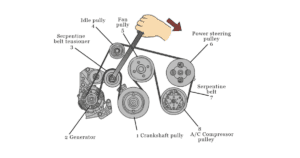 That’s when I discovered the real culprit: a worn-out AC belt. In this guide, I’ll walk you through my honest experience replacing a car AC belt, what it cost, what to watch for, and whether you should DIY or call a mechanic.
This is not just theory, it’s practical, real-world insight to help you avoid mistakes and save money.
What Is a Car AC Belt?
Before diving into the replacement process, let’s quickly understand what the AC belt does. The AC belt is a part of your engine’s belt system that powers the air conditioning compressor.
In most modern vehicles, it’s integrated into the serpentine belt, which also runs components like:
- Alternator
- Power steering pump
- Water pump
If the belt fails, your AC compressor won’t spin, and that means no cold air.
My Experience: How I Knew the AC Belt Was Failing
Here’s exactly what I noticed:
1. Squealing Noise on Startup
Every time I started the car, there was a sharp squeal for a few seconds. Classic sign of belt wear or slipping.
2. Weak AC Cooling
The air wasn’t as cold as before, especially when idling.
3. Visible Cracks on the Belt
After popping the hood, I saw tiny cracks along the belt ribs.
4. Burning Rubber Smell (Occasionally)
This happens when the belt slips and overheats. At this point, I knew replacement wasn’t an option,l it was urgent.
Should You Replace the AC Belt Yourself?
Here’s where things get interesting. I debated between doing it myself and taking it to a mechanic. Eventually, I tried replacing it myself, and here’s my honest take:
DIY Pros:
- Saves money
- Quick job (30–60 minutes)
- Satisfying if you like hands-on work
DIY Cons:
- Requires tools (belt tensioner tool, wrench set)
- Tight engine spaces can be frustrating
- Risk of incorrect installation
AC Belt Replacement: Step-by-Step (My Process)
Here’s how I did it:
Step 1: Locate the Belt Routing Diagram
Most cars have a diagram under the hood. If not, take a photo before removing the belt.
Step 2: Release Tension
Using a wrench, I rotated the belt tensioner to loosen the belt.
Step 3: Remove the Old Belt
Once loose, the belt slipped off easily.
Step 4: Compare Old vs New Belt
Important: Match length, width, and rib count.
Step 5: Install the New Belt
Follow the routing diagram carefully.
Step 6: Reapply Tension
Release the tensioner slowly to secure the belt.
Step 7: Test the Engine
Started the car, no squeal, and the AC was back to full power.
Comparison Table: Old vs New AC Belt
| Feature | Old Worn Belt | New Replacement Belt |
| Appearance | Cracked, faded | Smooth, flexible |
| Grip | Slipping | Strong grip |
| Noise | Squealing | Silent |
| AC Performance | Weak cooling | Full cooling restored |
| Reliability | Unpredictable | Highly reliable |
| Cost Value | Risky | Worth every dollar |
Cost Breakdown: What I Paid
Here’s what I spent:
- New AC Belt: $20–$50
- Tools (if needed): $30–$100
- Mechanic Cost (if outsourced): $80–$150 total
My Total Cost (DIY): ~$35
One of the cheapest fixes with a huge impact.
When Should You Replace Your AC Belt?
Based on my experience and research:
Replace Every:
- 50,000 to 100,000 miles
- Or every 4–6 years
Replace Immediately If You Notice:
- Cracks or fraying
- Squealing noise
- AC is not working properly
- Belt glazing (shiny surface)
Buyer’s Guide: Choosing the Right AC Belt
Not all belts are created equal. Here’s what I learned while shopping:
1. Material Matters
Look for belts made from:
- EPDM rubber (long-lasting, heat-resistant)
2. Check Compatibility
Always match:
- Vehicle make/model
- Engine type
3. Brand Reputation
Reliable brands tend to last longer and perform better.
4. Rib Count & Length
Even a slight mismatch can cause slipping or damage.
5. Warranty
Some belts come with limited warranties worth considering.
Types of Car Belts (Quick Overview)
| Belt Type | Function | Common in Modern Cars |
| Serpentine Belt | Drives multiple components | Yes |
| V-Belt | Older systems | Rare |
| Timing Belt | Controls engine timing | Yes (different system) |
Common Mistakes to Avoid
From my experience, here’s what NOT to do:
❌ Installing the Wrong Belt Size
Leads to slipping or snapping.
❌ Ignoring Belt Tension
Too loose = noise, too tight = damage.
❌ Skipping Inspection
Check pulleys and tensioner while you’re at it.
❌ Not Following Routing Diagram
This can cause serious engine issues.
Signs Your AC Belt Needs Immediate Replacement
- Loud squealing when the AC is on
- AC stops cooling suddenly
- Belt visibly damaged
- Engine accessories malfunction
Don’t delay; this small part can affect multiple systems.
Is It Worth Replacing the AC Belt?
Absolutely. From my experience:
- It restored my AC instantly
- Eliminated annoying noise
- Improved engine efficiency
For such a low cost, the impact is huge.
Read More: How To Test A Car AC Pressure Switch
FAQs: Car AC Belt Replacement | My Honest Experience
1. How long does an AC belt last?
Typically between 50,000 and 100,000 miles, depending on usage and conditions.
2. Can I drive with a bad AC belt?
Technically,y yes, but not recommended. It can affect other components and leave you stranded.
3. How long does replacement take?
- DIY: 30–60 minutes
- Mechanic: About 30 minutes
4. Is an AC belt the same as a serpentine belt?
In most modern cars, yes, the AC is powered by the serpentine belt.
5. What happens if the belt breaks?
- AC stops working
- Possible loss of power steering or alternator function
6. Do I need special tools?
A basic wrench or belt tensioner tool is usually enough.
7. Why is my new belt still squealing?
Possible reasons:
- Improper tension
- Worn pulleys
- Misalignment
Final Verdict (My Honest Opinion)
Replacing the AC belt was one of the easiest and most rewarding fixes I’ve done on my car.
If you’re even slightly comfortable with basic tools, I’d recommend trying it yourself. But if your engine bay is cramped or complicated, a mechanic is still a reasonable option.