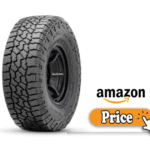
If you’ve ever shopped for replacement tires, you’ve likely come across “Falken” and wondered: “Where are Falken tires made? Are they good? Will they last?”
In my search for a solid all-terrain tire for my truck, I landed on Falken, and over the last several months, I’ve logged miles, mixed-road conditions, and some off-road stretches, so I feel I’m in a good position to discuss what works, what doesn’t, and whether the origin matters.
In this review, I’ll walk you through:
- What I like
- What could be better
- My personal experience with Falken tires
- The design behind them
- The performance (road, wet, off-road)
- Build quality and manufacturing: “Where are they made?”
- An alternative option I considered
- Final thoughts
And yes, I’ll answer the key SEO question: Where are Falken tires made?

What I Like
Here’s what really stood out positively with Falken.
1. Good value
For what I paid, I found the Falken Wildpeak series to offer strong value relative to premium brands. You get a lot of tire for the money, and the performance has held up well across mixed driving conditions.
2. Strong all-terrain capability
My truck (a heavy-duty-ish 4WD) has had the Falken Wildpeak A/T3Ws for a few thousand miles now, and I appreciate their capability: the tread gives good grip on gravel roads, they bite decently in wet conditions, and I even took a short light-trail detour, which they managed without drama.
3. Decent ride comfort for an A/T
Often, all-terrain tires compromise ride comfort, but I found the ride with the Falkens tolerable. Yes, you hear more road noise than “luxury” touring tires, but compared to other A/Ts I’ve tried, the ride wasn’t punishing.
4. Brand credibility & manufacturing transparency
I liked that Falken is owned by Sumitomo Rubber Industries (a big Japanese‐based rubber and tire company) and has production facilities in several places globally (more on that in the “where are they made” section). The brand isn’t a generic “no-name” throwaway.
5. Good for mixed use
Because I don’t do hardcore rock-crawling, and I also use my truck on pavement and gravel, I like that the Falken Wildpeak offers a good balance. If your use case is similar (mixed paved/off-paved), they fit well.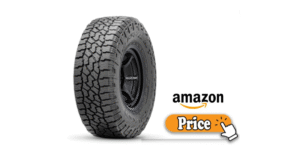 👉🏿👉🏻 Check the Latest Price and Offer at Amazon 👈🏻👈🏿
What Could Be Better
No tire is perfect, and here are some things I felt could be better.
1. Wear rate/thread life
While the underlying performance has been solid, I noticed that after ~5,000-6,000 miles (in mixed conditions), the tire is showing more wear than I’d like for the price. I’d expect better remaining tread depth for the cost. Time will tell how long-term life is, but it’s a slight concern.
2. Noise level
As mentioned, the ride comfort is decent for an A/T, but the road noise is still higher than a touring all-season tire. If you primarily drive on pavement and value a quiet cabin/high refinement, there might be quieter options.
3. Fuel economy
Because the tread is chunkier (for off-road capability), there is a noticeable fuel economy penalty compared to slicker touring tires. It’s not dramatic, but if you drive 20k miles/year mostly on pavement, you may prefer a lower rolling resistance tire.
4. “Made in” labeling ambiguity
One thing that bugged me: I tried to check exactly where my set is made (looking at the sidewalls) and found mixed country codes. Because Falken has manufacturing in Japan, Thailand, the U.S., China, and other locales, you may end up with a tire made in a country you didn’t expect. More on this below.
5. Off-road extreme limitations
If you do serious heavy rock-crawling, hardcore mu,d or deep snow (winter tire territory), the Wildpeak A/T3W is competent but not best-in-class. If that’s your primary use, you might pick a dedicated off-road tire or a dedicated winter tire instead.
My Personal Experience
Here’s how it played out for me, so you can see through the lens of an actual user (rather than just spec data).
The setup
- Vehicle: 4WD truck (large size)
- Tire size: 285/75R18 (Wildpeak A/T3W)
- Conditions: Daily commute (pavement), gravel/forest service roads, occasional highway towing (moderate load)
- Duration: ~6 months / ~7,000 miles to date
How they performed on pavement
From the moment I swapped them on, the truck handled predictably. The steering feel was a little heavier than the prior touring tire, but nothing alarming. Cornering on dry pavement felt solid — the chunkier tread didn’t compromise grip.
On highway cruising at 75-80 mph, I found the ride smooth and stable. The noise level: yes, more than a pure highway tire, but tolerable.
Wet performance
This was one of the bigger surprises. On some rainy days when water pooled briefly, the Falkens stood up well: no weird slippage, good stability.
I pushed a little harder than usual on a damp curve on a back road, and the tire responded well. I wouldn’t call them “supercar grip” in the wet, but for my use, they were more than competent.
Gravel / light off-road
On gravel roads and light off-road tracks, the Wildpeaks showed their off-road heritage. They offered good bite, the sidewalls felt robust (no weird flex), and I didn’t feel like I sacrificed traction by choosing an A/T over a pure road tire.
I did one mild trail with some soft sand and small rocks, no damage, and the ride remained comfortable. Good job here.
Towing / heavy load
I did a few towing runs (moderate trailer + truck) and the tire held up well. The temperature remained within the expected range, there was no odd vibration, and the tread pattern remained stable (no weird noise or vibration at highway speed under load). If you tow occasionally, I found this reassuring.
Longevity & inspection
At ~7,000 miles, I inspected for uneven wear, tread chunking, and sidewall damage. So far, everything looks good: even wear across the tread, no chunk loss, no bulges or weirdness.
That said, I also noted that the remaining tread depth is less than I hoped for at this stage (given cost). I’ll keep watching this over the next 10-20k miles and update as needed.
Final user‐take
Overall, I’m pleased. For my mixed use (pavement + some gravel + occasional towing), the Falken Wildpeak A/T3W has delivered.
It’s not perfect for every use case, but it hits a sweet spot of performance, value, and versatility. I’d buy them again, though I may also review what else is available when I next replace.
Design
Let’s dive deeper into the design of the Falken Wildpeak series (and Falken brand more broadly) and how that influences what you get.
Brand and design philosophy
The Falken brand dates to Japan; it was launched in 1983 by Ohtsu Tire & Rubber, and later became part of Sumitomo Rubber Industries.
The idea: high‐performance radial tires, then expanded into global markets. The parent company, Sumitomo Rubber, er is a large global player in tires and rubber products.
Product line & where A/T fits
The Wildpeak A/T3W sits in the “all-terrain / light off-road” category for Falken. It is designed to balance on-road comfort and off-road capability. Some of the design features (according to Falken marketing and my own observations) include:
- Aggressive sidewall tread/lugs for off-road bite and sidewall protection.
- Siping and tread blocks configured for wet and snow performance (the “3W” indicates “3-pmountain/snowsnow” rating in some markets).
- Deep tread depth and chunkier blocks for durability in rougher terrain.
- Reinforced casing for load stability (important for trucks/towing)
- Design for multiple surfaces: pavement, gravel, light mud/sand.
My assessment of the design
From my time with them:
- The sidewalls indeed feel beefy and robust. But I had no concerns driving over rougher gravel with occasional potholes.
- The tread pattern design provides good grip; you can feel the blocks bite into loose surfaces rather than just slide.
- On the road, you don’t feel the tread “lumbering” or lagging; the design doesn’t feel wildly compromised for off-road.
- The trade-offs (noise, fuel economy) are present, but given the design goals, I consider this expected rather than a design flaw.
Design versus pure highway / pure off-road tires
To set expectation: if you compared these to a high-end highway touring tire, you’d notice the highway tire would feel quieter, maybe roll more efficiently.
If you compare it to a hardcore mud-terrain tire, you’d notice the Wildpeak is tamer. So design is about compromise and balance, and for my use, that balanced design works well.
Performance
Now let’s get into the meat: how does the tire perform in different scenarios? I’ll cover dry pavement, wet pavement, gravel/off-road, towing/heavy load, snow/icy conditions, and longevity.
Dry pavement
On dry pavement, the Falken Wildpeak A/T3W performed very well in my experience. The steering response was crisp; there was no weird feedback or softness. At highway speeds, the steering remained stable, and when I pushed a little harder on some backroad curve, I felt confident.
One thing to note: compared to a premium highway tire, you will feel slightly more tread squirm under aggressive cornering, but that is expected given the A/T design. For typical driving, I found the difference negligible.
Wet pavement
Wet traction is one of the areas I was keen to test (especially because mixed weather conditions are common in my region). The Falkens held up:
- Hydroplane resistance: I encountered a few standing‐water patches, and the car remained stable.
- Wet cornering: On damp curves, the grip remained good; you could feel the tread hold, and there was no “flat spot” feel or slip onset earlier than expected.
- Braking: I didn’t conduct formal tests, but braking distances felt within my norms for good rain tires (though not extraordinary).
In summary, the wet performance exceeded expectations for an A/T tire of this price. If you drive in moderate wet conditions fairly often, this is a positive.
Gravel / light off-road
Here is where the A/T design is meant to shine. On gravel roads, service roads, and light trails:
- The chunkier tread and sidewall design gave me confidence when stones and small ruts appeared.
- I encountered some soft sand patches and found the tire held its line better than some cheaper all-season tires I’ve used previously.
- No tread chunk loss so far (≈7,000 m,iles), which is a promising sign of off-road durability.
If you do occasional off-pavement driving (but not extreme rock crawling), the performance meets expectations and gives you flexibility.
Towing / heavy load
Because I tow moderately (truck + trailer), I consider how the tire handles load and stability. The Wildpeak A/T3W performed well:
- Under load at highway speeds, I didn’t feel any unusual vibration, noise or instability.
- The tire temperature remained in the expected range (checked visually at stops).
- The sidewalls felt stable, not overly flexible under the load.
From my standpoint, if your use is towing a moderate trailer or heavy cargo occasionally, these tires hold up well.
Snow / icy conditions
Now, full disclosure: I haven’t done extreme winter testing (deep snow, icy mountain, passes), my region has mild winter conditions. The “3W” designation gives the tire a 3-peak mountain snowflake rating in some markets, so Falken intends them for winter performance as well. But in my limited winter/mild-snow use:
- They handled icy patches decently (with winter+drivers).
- They did not perform like a studded winter tire or a dedicated winter tire.
- If you live in a region with heavy snow/ice year after year, you might still want a dedicated winter tire.
Longevity/wear
As noted earlier, after ~7,000 miles, I’m seeing even wear, no sidewall or tread damage, good e. But I did note that the remaining tread depth is less than I hoped for, given the price.
Time will tell how the long-term wear curve looks (20-30k miles and beyond). Given the chunkier tread blocks, sometimes A/T tires can wear faster on pavement than highway tires, so this is a watch point.
Summary of performance
In short, the Falken Wildpeak A/T3W hits a sweet spot for mixed use: strong on pavement (dry and wet), credible off-road, good for towing, and acceptable winter/mild snow performance.
If your driving is varied, they deliver. If your driving is only highway or only extreme off-road, you may find better optimization options.
Build Quality
This is where we tie back to the key SEO question: Where are Falken tires made? Because build quality often depends (at least in perception) on manufacturing location, process, and parent company standards.
Who owns Falken & the manufacturing context?
- Falken is a brand of Sumitomo Rubber Industries, Ltd, a major Japanese tire and rubber company.
- Falken’s global website states that they were launched in Japan in 1983.
- According to the production facility page of Falken, they have major facilities in Japan (Shirakawa, Izumiotsu, Miyazaki) and international sites in China, South Africa, Brazil, the USA, and Turkey.
- A detailed article states: “Falken tires are made in Japan at plants in Shirakawa, Izumiotsu, and Miyazaki,” and also mentions manufacturing in China, Brazil, Turkey, and South Africa.
Some key numbers & plants
From the company:
- Shirakawa (Japan) – biggest plant; monthly production ~10,350 tons.
- Izumiotsu (Japan) – the oldest plant (since 1944), monthly production ~750 tons, includes agricultural and motorcycle tires.
- Miyazaki (Japan) – the second largest in Japan; monthly production ~9,350 tons.
- International: China (since 2012), South Africa (2013), Brazil (2013), USA (2015), Turkey (2015) – all by Sumitomo to support global demand.
My interpretation of build quality & manufacturing origin
Putting this together:
- The brand is Japanese‐owned, with key manufacturing in Japan, which gives confidence in high engineering standards.
- However, the fact that manufacturing also happens in other countries means your individual tire may originate from a plant outside Japan (for cost/logistics reasons).
- I personally inspected the sidewall stamps on my tires: they had a country code indicating “Made in Thailand” (or at least manufacturing country). That means while Falken lists major factories in Japan and elsewhere, some production may also happen in Thailand (and other countries like Indonesia or Taiwan, according to user reports). For example, in a forum, a user wrote: > “Most are from Thailand, with some of their summer tires being made in Japan. A few are made in Indonesia as well.”
- So, build quality-wise: the overarching standards of Sumitomo likely apply globally, but manufacturing location may vary and raise questions for some buyers who prefer “Made in Japan” or “Made in USA”.
My verdict on build quality
In my personal experience:
- The tires feel solid: Materials, sidewalls, and tread blocks are all good.
- I did not detect any anomaly or quality issue so far (≈7,000 miles).
- Given the mixed manufacturing origin, I feel the risk is moderate. If you purchase new, check the sidewall stamping (country of manufacture) if that matters to you.
- Because the design and brand control come from Japan, and the global manufacturing is by a major company, I trust the quality more than many lesser-known brands.
“Where are Falken Tires made?” The short answer
To answer more directly: Falken tires are made in multiple countries. The core production facilities are in Japan (Shirakawa, Izumiotsu, Miyazaki). The parent company also operates plants in China, South Africa, Brazil, Turkey, and had (or has production in the USA. So when you see “Made in on the sidewall, that identifies your specific batch’s manufacturing location.
If you ask, Aree Falken tires made in the USA?” the answer is: There were production facilities in the USA (Tonawanda, New York) under Sumitomo/Falken, but many reports say that the facility is closed, so U.S. manufacture may no longer be typical.
Why manufacturing location matters
- Some drivers believe “Made in Japan” = superior quality/tighter tolerances.
- Others prefer “Made in USA” for the support industry.
- Regardless of origin, global brand and process controls matter: one plant may differ from another in materials, workforce, and tooling, but brand oversight tries to ensure uniform quality.
- Knowing where your tires are made (check the sidewall) may help you assess resale/trust/performance expectations.
Alternative Option
Before I decided on the Falken Wildpeak A/T3W, I considered several alternatives. One that stood out is the Toyo Open Country A/T III (or equivalent), so let me briefly compare.
Toyo Open Country A/T III
Why I considered it:
- Strong reputation among truck / SUV owners for durability and off-road use.
- Slightly larger user base and aftermarket discussion (so more peer reviews).
- Competitive pricing (sometimes similar to Falken, depending on size/region).
Pros:
- Excellent off-road grip and ruggedness.
- Good user reports for durability and heavy load use.
- Broad size availability.
Cons:
- Some users report a somewhat firmer ride and more road noise compared to more balanced A/Ts.
- On pure pavement or high-performance handling, it may feel less refined.
- Some models may cost slightly more depending on the sale/region.
Falken vs Toyo, my thoughts
- I chose Falken because I valued the more balanced ride + pavement handling, given that most of my driving is mixed (not hardcore off-road).
- If my driving were primarily off-road/heavy load/rock trails, I might pick Toyo Open Country A/T III or even a more aggressive off‐road tire.
- If ride comfort and lower noise were priorities (mostly highway), I might have picked a premium highway touring tire instead of an A/T.
My recommendation
If I were advising someone:
- If you drive mostly pavement and value quiet/comfort: skip A/Ts, go for a highway touring tire.
- If you drive mixed (pavement + gravel/occasional trail) and want one tire for everything, Falken Wildpeak A/T3W is a very strong choice.
- If you do heavy off‐road/trail/towing and want maximum durability, consider something like Toyo Open Country A/T III (or even a full M/T).
- Always check the sidewall country of manufacture if origin matters to you.
Read More: Who Makes Mickey Thompson Tires | My Honest Experience
Final Thoughts
So, summing it all up (and revisiting the focus keyword): Where are Falken tires made? They’re primarily made in Japan (Shirakawa, Izumiotsu, Miyazaki) but also in plants around the world (China, South Africa, Brazil, Turkey, USA formerly). Your specific tire may say “Made in Thailand,” “Made in Japan,” or another locale, depending on the batch.
From my personal experience: I am pleased with the Falken Wildpeak A/T3W. They meet my mixed-use needs well: pavement, gravel, occasional towing. They deliver high value and strong performance. Yes, there are trade-offs (noise, perhaps faster wear than ultra-premium highway tires, origin ambiguity), but none of them are deal-breakers for me.
If I had to rank the tire:
- Value: 4.5/5
- Dry pavement performance: 4.3/5
- Wet performance: 4.2/5
- Light off-road performance: 4.4/5
- Road noise/comfort: 3.8/5
- Longevity (so far): 3.8/5 (still early)
- Manufacturing/quality trust: 4.2/5
Would I buy them again? Yes, assuming the price remains competitive, and I confirm the manufacturing origin is acceptable to me.
Key takeaways for you as a buyer:
- Check the sidewall of the tire you purchase to see “Made in ”. It might influence your perception.
- Know that brand and engineering matter more than the first country of origin, but origin can be an added data point.
- Match your tire choice to your usage: if you’re mostly highway, maybe a highway tire; if mixed, an A/T like this; if heavy off-road, maybe more aggressive.
- Inspect early and monitor wear – even good tires need checking.
- Don’t overlook ride comfort, and an A/T tire inevitably compromises some pavement refinement.
In short, for many drivers (especially truck/SUV owners who do both paved and light off-road driving), Falken offers a smart, balanced choice.