Checking your car’s oil is one of those things most people know they should do… but often forget. I’ll be honest, I used to ignore it too. Until one day,y my engine started making a weird ticking noise. Turned out, my oil was dangerously low. That quick lesson stuck with me. Now? I check it regularly,y and it takes less than 2 minutes. The truth is, engine oil is the lifeblood of your car. Without it:
- Parts grind together
- Heat builds up
- And damage happens fast
This guide will walk you through everything:
- Exactly how to check your oil
- What the results mean
- When to add or change oil
- And how to choose the right oil
Let’s make this simple.
What Does Engine Oil Actually Do?
Before checking it, it helps to know why it matters.
Engine oil:
- Lubricates moving parts
- Reduces heat
- Cleans debris and sludge
- Prevents corrosion
Without enough oil or clean oil, your engine wears out much faster.
When Should You Check Your Oil?
From experience, the best habit is:
👉 Once every 2–4 weeks
👉 Before long trips
👉 If your car is older
Also, check immediately if:
- A warning light comes on
- You hear unusual engine noise
- The engine feels rough
Step-by-Step: How To Check Your Car’s Oil
Here’s the easiest method anyone can follow.
Step 1: Park on Level Ground
Make sure your car is flat, not tilted.
Step 2: Turn Off the Engine
Wait about 5–10 minutes so the oil settles.
Step 3: Open the Hood
Find the hood release inside your car.
Step 4: Locate the Dipstick
It usually has:
- A bright yellow or orange handle
Step 5: Pull It Out and Wipe It Clean
Use:
- Tissue
- Cloth
This gives an accurate reading.
Step 6: Insert It Back Fully
Push it all the way in.
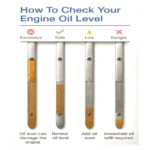
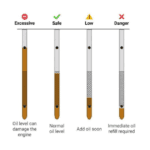
Step 7: Pull It Out Again and Check the Level
You’ll see markings like:
- MIN
- MAX
What it means:
- Between marks → OK
- Near MIN → Add oil
- Below MIN → Urgent
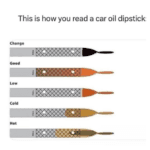
Step 8: Check Oil Color and Texture
Healthy oil:
- Light brown or amber
Bad oil:
- Very dark or black
- Gritty
- Milky (this is serious)
Oil Condition Guide (Quick Comparison Table)
| Oil Condition | Appearance | Meaning | Action Needed |
| Clean Oil | Light brown/amber | Good condition | No action |
| Slightly Dirty | Darker brown | Still usable | Monitor soon |
| Dirty Oil | Black | Needs change | Change oil |
| Milky Oil | Creamy/light brown | Coolant contamination | Immediate repair |
| Low Oil Level | Below the MIN mark | Not enough oil | Add oil immediately |
My Personal Experience: What Most People Get Wrong
The biggest mistake I used to make?
👉 Checking oil incorrectly
- I didn’t wait after turning off the engine
- I didn’t wipe the dipstick first
That gave me false readings.
Another mistake:
👉 Ignoring oil color
Even if the level is fine, dirty oil can still damage your engine.
How Often Should You Change Engine Oil?
General rule:
- Every 5,000–10,000 km
- Or every 3–6 months
But it depends on:
- Driving habits
- Oil type
- Car age
Types of Engine Oil (Comparison Table)
| Oil Type | Best For | Pros | Cons | Cost |
| Conventional | Older cars | Cheap | Less durable | 55 |
| Synthetic Blend | Mixed driving | Better protection | Slightly expensive | $75 |
| Full Synthetic | Modern/high-performance | Best performance & longevity | More expensive | $90 |
| High Mileage | Cars over 100,000 km | Reduces leaks & wear | Not for new engines | $105 |
Buyer’s Guide: Choosing the Right Engine Oil
Choosing oil isn’t complicated if you follow a few key rules.
1. Check Your Owner’s Manual
This tells you:
- Oil grade (like 5W-30)
- Recommended type
2. Understand Oil Grades
Example: 5W-30
- 5W = cold temperature performance
- 30 = high-temperature thickness
3. Match Your Driving Style
| Driving Type | Recommended Oil |
| City driving | Synthetic blend |
| Highway driving | Full synthetic |
| Old engine | High mileage |
4. Climate Matters
Hot climates → thicker oil
Cold climates → thinner oil
5. Don’t Always Choose the Cheapest Option
Cheap oil:
- Breaks down faster
- Offers less protection
Signs Your Oil Needs Immediate Attention
Watch out for:
- Engine noise
- Burning smell
- Smoke from exhaust
- Oil warning light
- Poor fuel efficiency
Can You Check Oil Without a Dipstick?
Some modern cars don’t have dipsticks. Instead, they use:
- Digital oil monitoring systems
Check:
- Dashboard menu
What Happens If You Don’t Check Your Oil?
From real-world experience, this can lead to:
- Engine overheating
- Increased wear
- Complete engine failure
Worst case:
👉 Engine replacement (very expensive)
Long Deep Dive: Why Oil Monitoring Is So Important
Inside your engine:
- Metal parts move at high speed
- Temperatures rise quickly
Oil acts as:
- A cushion
- A cooling agent
- A cleaner
Over time, oil:
- Breaks down
- Collects dirt
- Loses effectiveness
That’s why checking it regularly is critical. Even modern engines aren’t immune; if anything, they’re more sensitive.
Common Mistakes to Avoid
❌ Checking oil on a slope
❌ Not wiping the dipstick
❌ Overfilling oil
❌ Ignoring oil color
❌ Waiting too long between checks
Pro Tips (From Experience)
✔ Keep a small cloth in your car
✔ Check oil when refueling
✔ Always carry extra oil
✔ Learn your car’s normal oil consumption
Read More: Car Expansion Valve Stuck Open Symptoms
FAQs: How To Check The Oil In Your Car
1. Can I check oil when the engine is hot?
Yes, but wait a few minutes for an accurate reading.
2. What if I overfill the engine oil?
Too much oil can cause pressure buildup and damage seals.
3. How much oil should I add?
Add small amounts and recheck, don’t guess.
4. Why is my oil black?
It’s normal over time, but very dark oil means it’s time for a change.
5. Can low oil damage my engine immediately?
Yes, especially at high speeds or long drives.
6. Is synthetic oil really better?
Yes, especially for modern engines and long-term protection.
7. Do new cars still need oil checks?
Absolutely. Technology helps, but manual checks are still important.
Final Thoughts: A Simple Habit That Saves Thousands
Checking your oil isn’t complicated, and it doesn’t take long.
But it can:
- Prevent breakdowns
- Extend engine life
- Save you a lot of money
If there’s one takeaway, it’s this:
👉 Check your oil regularly, even when everything seems fine. Because the moment you notice a problem… it might already be too late.