If you’ve ever heard someone say, “My car blew a head gasket,” you probably noticed how serious it sounded. And honestly, it is. The head gasket is one of those small, hidden components that quietly keep your engine running smoothly.
You don’t see it, you don’t think about it… until something goes wrong. Then suddenly, it becomes very important and often expensive. I remember the first time I dealt with a head gasket issue.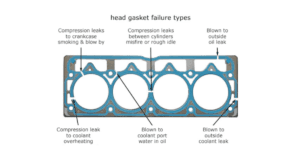 My car started overheating randomly, white smoke came out of the exhaust, and I thought, “Okay, this can’t be good.” Turns out, it was the head gasket, and that experience taught me just how critical this part really is.
In this guide, I’ll break everything down in a simple, real-world way:
- What a head gasket actually does
- Why it fails
- Warning signs to watch for
- Repair vs replacement decisions
- And how to choose the right one
Let’s get into it.
What Is a Head Gasket?
A head gasket is a seal that sits between two major parts of your engine:
- The engine block
- The cylinder head
Its main job is to seal the combustion chamber and keep different engine fluids from mixing.
Think of it like this:
It’s like a super-strong barrier that keeps:
- Coolant
- Engine oil
- Combustion gases
…all in their proper places.
Without it, your engine simply cannot function properly.
What Does a Head Gasket Actually Do?
The head gasket performs three critical roles:
1. Seals Combustion Pressure
Your engine creates tiny explosions to generate power. The gasket keeps that pressure contained.
2. Prevents Fluid Mixing
It ensures:
- Coolant stays in coolant passages
- Oil stays in oil channels
If these mix → major engine damage.
3. Maintains Engine Efficiency
A properly sealed engine runs:
- Cooler
- More efficiently
- More powerfully
Types of Head Gaskets (Comparison Table)
Here’s a clear comparison of the most common types:
| Type | Material | Durability | Cost Range | Best For | Pros | Cons |
| Multi-Layer Steel (MLS) | Multiple steel layers | Very High | $250 | Modern engines | Strong, heat-resistant | Expensive |
| Composite | Graphite + metal core | Medium | $350 | Older cars | Affordable, flexible | Less durable |
| Copper | Solid copper | High | $450 | Performance/racing engines | Excellent heat conductivity | Needs precise installation |
| Elastomer | Steel with rubber coating | Medium | $550 | Daily driving vehicles | Good sealing ability | Wears faster under stress |
My Personal Take: Why Head Gaskets Fail More Often Than You Think
From experience, head gaskets don’t usually fail randomly. There’s almost always a reason.
The #1 cause? Overheating.
When your engine overheats:
- Metal expands
- The gasket gets crushed or warped
- Sealing fails
Other common causes include:
- Poor maintenance
- Low coolant levels
- Cheap gasket materials
- Engine design flaws
Symptoms of a Blown Head Gasket
This is where things get real. Catching these early can save you a lot of money.
🚨 Warning Signs:
1. Engine Overheating
If your temperature gauge keeps rising, don’t ignore it.
2. White Smoke from Exhaust
Looks like steam → coolant is burning inside the engine.
3. Milky Oil
Check your oil cap:
- If it looks like chocolate milk → coolant is mixing with oil.
4. Loss of Power
The engine feels weak or rough.
5. Coolant Loss Without Leaks
Coolant disappears, but you see no drips.
6. Bubbles in the Radiator
Indicates combustion gases entering the cooling system.
Repair vs Replacement: What Should You Do?
Here’s the truth:
Repairing a head gasket is NOT cheap.
Typical Cost:
- Labor-heavy job
- Can range from:
- $500 (basic cars)
- to $2000+ (complex engines)
My Advice:
- If your car is old → weigh repair cost vs car value
- If your car is newer → fixing is usually worth it
Buyer’s Guide: Choosing the Right Head Gasket
If you’re replacing a head gasket, choosing the right one matters a lot.
1. Match Your Engine Type
Always check:
- Engine size
- Model compatibility
A wrong fit = guaranteed failure.
2. Material Matters
For Daily Driving:
- Go with MLS or composite
For High Performance:
- Choose copper or MLS
3. Consider Your Driving Style
| Driving Style | Recommended Type |
| City driving | Composite |
| Highway commuting | MLS |
| Racing/performance | Copper |
4. Brand Reputation
Avoid super cheap, unknown brands. Head gaskets are not the place to save money.
5. Complete Gasket Kits vs Single Gasket
Sometimes it’s smarter to buy a full gasket kit, which includes:
- Valve cover gasket
- Intake gasket
- Exhaust gasket
How Long Does a Head Gasket Last?
Typically:
- 100,000 to 200,000 km
But this depends heavily on:
- Maintenance
- Driving habits
- Cooling system health
Can You Drive with a Blown Head Gasket?
Short answer: You shouldn’t.
Driving with a blown gasket can lead to:
- Engine failure
- Warped cylinder head
- Complete engine replacement
Preventing Head Gasket Failure
Here’s what actually works:
✔ Regular Coolant Checks
✔ Fix Overheating Immediately
✔ Use Quality Engine Oil
✔ Maintain Radiator & Thermostat
✔ Avoid Engine Overload
Real-World Experience: What I Learned the Hard Way
When my gasket failed, I ignored the early signs:
- Slight overheating
- Occasional white smoke
Big mistake.
A small repair turned into:
- Full gasket replacement
- Machining the cylinder head
- Huge repair bill
Lesson: Never ignore early symptoms.
Extended Deep Dive (Long-Form Explanation)
Let’s go deeper into how it actually works.
Inside your engine:
- Pistons move up and down
- Fuel ignites
- Pressure builds
The head gasket sits right in the middle of this chaos.
It must:
- Handle extreme heat
- Withstand pressure
- Prevent leaks
That’s why materials like:
- Steel
- Copper
…are used.
Even a tiny crack can cause:
- Pressure loss
- Fluid leaks
- Engine imbalance
Read More: How To Open Engine Hood
FAQs: What Is A Head Gasket In A Car
1. What causes a head gasket to fail?
Mostly overheating, but also poor maintenance and wear over time.
2. Is a blown head gasket fixable?
Yes, but it can be expensive depending on the engine.
3. How do I confirm a blown head gasket?
Mechanics use:
- Compression tests
- Leak-down tests
- Chemical tests
4. Can coolant mixing with oil destroy the engine?
Yes. It removes lubrication and causes severe damage.
5. Is head gasket repair worth it?
Depends on:
- Car value
- Repair cost
- Overall condition
6. Can I replace a head gasket myself?
Technically, yes, but it’s a complex job requiring:
- Tools
- Mechanical experience
7. How long does replacement take?
Usually:
- 6 to 20 hours of labor
Final Thoughts
The head gasket might be small, but it plays a massive role in your engine’s health. If there’s one thing to remember, it’s this:
👉 Overheating is your biggest enemy.
👉 Early detection saves money.
👉 Quality parts matter.
Treat your engine well, and your head gasket will quietly do its job for years without ever bothering you.