If you’ve ever dealt with rough idling, sudden stalling, poor fuel economy, or that annoying check engine light, there’s a good chance your fuel rail pressure sensor might have been involved.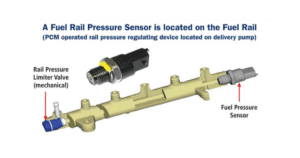 I’ve diagnosed dozens of fuel system issues over the years, and I can confidently say this tiny component is one of the most misunderstood yet critical sensors in modern vehicles. It doesn’t look impressive.
It’s small. Often overlooked. But when it fails? Your engine performance can drop fast. In this guide, I’ll break down:
- What a fuel rail pressure sensor is
- How it works
- Symptoms of failure
- Real-world experience with replacements
- A comparison table
- A buyer’s guide
- FAQs
Let’s make it simple and practical.
What Is a Fuel Rail Pressure Sensor?
A fuel rail pressure sensor (FRPS) is an electronic device that monitors the fuel pressure inside the fuel rail and sends that information to the vehicle’s Engine Control Module (ECM).
The fuel rail is the pipe that distributes fuel to your engine’s fuel injectors. Think of it like this:
- The fuel pump sends fuel to the rail
- The sensor measures the pressure
- The ECM adjusts fuel delivery accordingly
Modern engines rely heavily on accurate pressure data to optimize performance, emissions, and fuel efficiency.
Why It’s So Important in Modern Vehicles
In older carbureted engines, fuel pressure wasn’t monitored electronically. But in today’s vehicles, especially direct injection engines,s precision is everything. Without accurate fuel pressure readingsThe air-fuel
- The ratio becomes incorrect
- The engine may run lean or rich
- Emissions increase
- Power decreases
- Fuel economy suffers
In turbocharged engines, this becomes even more critical because fuel demands change rapidly.
How a Fuel Rail Pressure Sensor Works (Simple Explanation)
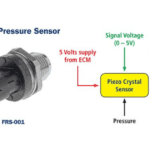
The sensor uses a pressure-sensitive diaphragm and converts mechanical pressure into an electrical signal. Here’s the basic process:
- Fuel enters the rail.
- Pressure builds.
- The sensor detects that pressure.
- It sends a voltage signal to the ECM.
- The ECM adjusts fuel injector timing and pulse width.
Most sensors operate within a 0–5 volt reference signal range. Higher pressure = different voltage output.
Where Is the Fuel Rail Pressure Sensor Located?
Typically:
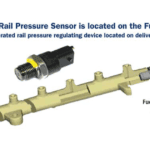
- Mounted directly on the fuel rail
- Near the intake manifold
- Sometimes integrated into the high-pressure fuel pump (on direct injection systems)
In diesel engines, it’s often more robust due to much higher pressures.
Common Symptoms of a Bad Fuel Rail Pressure Sensor
Here’s what I’ve personally seen most often:
1. Check Engine Light
Most common trigger. Codes like:
- P0190
- P0191
- P0192
- P0193
2. Hard Starting
The engine cranks longer than usual.
3. Rough Idle
The engine feels unstable when idling.
4. Poor Acceleration
Delayed throttle response.
5. Stalling
Especially under load.
6. Reduced Fuel Economy
ECM compensates incorrectly.
7. Black Smoke (Rich Condition)
Too much fuel is injected.
Personal Experience: What It’s Like Replacing One
In my experience:
- Replacement usually takes 30–90 minutes
- Part cost ranges from affordable to moderate
- Access difficulty depends on engine layout
On turbocharged direct injection vehicles, it can be trickier. One thing I always recommend: Relieve fuel pressure before replacement. Safety matters.
Comparison Table: Fuel Rail Pressure Sensor vs Fuel Pressure Regulator
| Feature | Fuel Rail Pressure Sensor | Fuel Pressure Regulator |
| Primary Role | Monitors fuel pressure | Controls fuel pressure |
| Sends Data to ECM | Yes | No |
| Mechanical or Electronic | Electronic | Mechanical or Electronic |
| Affects Injector Timing | Indirectly | Indirectly |
| Failure Symptoms | Check engine light, rough running | Fuel leaks, pressure imbalance |
| Replacement Cost | Moderate | Moderate |
| Common Failure Type | Electrical fault | Diaphragm wear |
Many people confuse these two, but they do very different jobs.
What Causes Fuel Rail Pressure Sensor Failure?
From what I’ve seen:
- Heat damage
- Electrical short circuits
- Fuel contamination
- Internal diaphragm failure
- Vibration wear
- Corrosion at the connector
In diesel systems, high pressure accelerates wear.
Can You Drive with a Bad Fuel Rail Pressure Sensor?
Technically? Yes. Should you? Not for long. Driving with a faulty sensor can:
- Damage injectors
- Damagethe catalytic converter
- Cause poor fuel economy
- Lead to sudden stalling
It’s not something to ignore.
Buyer’s Guide: Choosing the Right Fuel Rail Pressure Sensor
If you’re shopping for one, here’s what I look for:
1. OEM vs Aftermarket
OEM:
- Exact factory specs
- Reliable calibration
- Higher cost
Aftermarket:
- More affordable
- Quality varies
For fuel sensors, I usually lean toward OEM or premium aftermarket brands.
2. Compatibility
Always verify:
- Year
- Make
- Model
- Engine size
- VIN if possible
Fuel systems differ even within the same vehicle generation.
3. Build Quality
Look for:
- High-quality connector pins
- Strong housing
- Proper sealing O-ring
Cheap sensors fail quickly.
4. Warranty
Minimum:
- 1-year warranty
Better brands:
- 2–3 years
5. Calibration Accuracy
Some cheaper sensors send inaccurate voltage signals. Inaccurate readings can cause new problems.
Fuel Rail Pressure Sensor in Gas vs Diesel Engines
Gasoline engines:
- Lower pressure
- Less expensive sensors
Diesel engines:
- Extremely high pressure
- Heavy-duty sensors
- More expensive replacements
Diesel systems are less forgiving when sensors fail.
Replacement Cost Breakdown
Average estimates:
- Part: $50–$250
- Labor: $100–$300
- Total: $150–$500
Luxury or diesel vehicles may exceed this range.
Signs It’s Not the Sensor
Sometimes symptoms mimic sensor failure. Check these first:
- Weak fuel pump
- Clogged fuel filter
- Faulty wiring
- ECM issues
- Fuel pressure regulator failure
Always diagnose before replacing.
Testing a Fuel Rail Pressure Sensor
Professional testing includes:
- Scan tool live data
- Voltage reference check
- Multimeter resistance testing
- Comparing actual vs commanded fuel pressure
Guessing leads to wasted money.
How It Impacts Engine Performance
When working correctly, the sensor allows:
- Optimal combustion
- Maximum efficiency
- Stable idle
- Smooth acceleration
- Lower emissions
It plays a huge role in modern fuel injection systems.
Long-Term Maintenance Tips
- Use high-quality fuel
- Replace the fuel filter regularly
- Fix leaks quickly
- Keep electrical connectors clean
Prevention saves money.
Read More: Can A Bad Coil Pack Cause a Car Not To Start
FAQs: What Is A Fuel Rail Pressure Sensor
1. What happens if the fuel rail pressure sensor goes bad?
The engine may run poorly, stall, or trigger the check engine light.
2. Can I clean a fuel rail pressure sensor?
No. It’s an electronic component and should be replaced if faulty.
3. How long does a fuel rail pressure sensor last?
Typically 100,000 miles or more.
4. Will a bad sensor cause misfires?
Yes, if fuel delivery becomes inconsistent.
5. Can it cause limp mode?
Yes. Some vehicles enter reduced power mode.
6. Is it expensive to fix?
Moderately priced compared to injectors or fuel pumps.
7. Does it affect fuel economy?
Absolutely. Incorrect pressure readings waste fuel.
8. Can a bad battery trigger sensor codes?
Sometimes, low voltage causes false readings.
9. Is replacement difficult?
Depends on the engine layout. Usually moderate difficulty.
10. Should I replace it preventively?
Only if showing symptoms or high mileage.
Final Thoughts
The fuel rail pressure sensor may be small, but it plays a massive role in your engine’s performance. From my experience, it’s one of those parts that drivers rarely think about until it fails.
But understanding how it works gives you an advantage. You’ll recognize symptoms early, avoid unnecessary repairs, and make smarter buying decisions.
If your car is hesitating, stalling, or throwing pressure-related codes, don’t ignore it. Sometimes, solving the problem is as simple as replacing this one small sensor.