If there’s one vehicle maintenance task every driver should learn, it’s checking the engine oil with the dipstick. It takes less than five minutes, requires no special tools, and can help you catch problems before they turn into expensive repairs.
I’ll admit, when I bought my first car, I had no idea what an oil dipstick even looked like. I assumed oil checks were something only mechanics needed to do. One day, after hearing an unusual ticking sound from the engine, I decided to learn how to check the oil myself.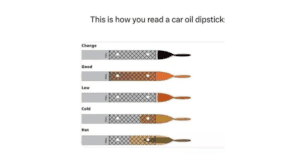 To my surprise, the oil level was dangerously low. A simple top-up prevented what could have been thousands of dollars in engine damage. Since then, checking the dipstick has become part of my monthly routine.
It’s one of the easiest ways to monitor your vehicle’s health and gives you peace of mind before long road trips. Whether you’re a first-time car owner or just need a refresher, this guide will walk you through everything you need to know about checking your oil dipstick correctly.
Why Checking Your Oil Matters
Your engine relies on oil to keep hundreds of moving parts lubricated and protected. Without enough clean oil, friction increases, temperatures rise, and engine components wear out much faster.
Regularly checking your oil helps you:
- Prevent engine damage
- Detect oil leaks early
- Monitor oil consumption
- Improve engine performance
- Maintain better fuel efficiency
- Extend engine life
- Avoid costly repairs
The best part? It costs nothing but a few minutes of your time.
What Is an Oil Dipstick?
An oil dipstick is a long, thin metal rod that extends into the engine’s oil pan. Its purpose is simple: it measures the oil level and gives you a quick look at the oil’s condition. Most dipsticks have:
- A brightly colored handle (often yellow or orange)
- A long metal blade
- Minimum (MIN or LOW) marking
- Maximum (MAX or FULL) marking
- Sometimes crosshatched markings indicating the safe oil range
Think of it as your engine’s built-in health monitor.
When Should You Check Your Oil?
One thing I learned over the years is that timing matters. Checking your oil at the wrong time can lead to inaccurate readings. For the most accurate result:
- Park on level ground.
- Turn off the engine.
- Wait 5–10 minutes so the oil drains back into the oil pan.
- Check before long trips.
- Inspect at least once every month.
- Check more frequently if your vehicle has high mileage or is known to consume oil.
Some manufacturers recommend checking the oil when the engine is cold, while others allow checks after a brief wait following normal driving. Always consult your owner’s manual for your specific vehicle.
Step-by-Step: How to Check Your Oil Dipstick
Checking the oil is straightforward and only takes a few steps.
Step 1: Park Safely
Park on a flat, level surface and engage the parking brake.
Step 2: Turn Off the Engine
Allow the engine to cool slightly or wait several minutes after shutting it off.
Step 3: Open the Hood
Locate the hood release inside the cabin, then open and secure the hood.
Step 4: Find the Dipstick
Look for a brightly colored handle marked with an oil symbol or labeled “Engine Oil.”
Step 5: Remove the Dipstick
Pull it out slowly.
Don’t worry if the first reading looks messy.
Step 6: Wipe It Clean
Use a clean paper towel or lint-free cloth.
This removes oil splashed during engine operation.
Step 7: Reinsert the Dipstick
Push it fully back into the tube.
Step 8: Remove It Again
Pull it out carefully and hold it horizontally.
Now you have the true reading.
Step 9: Read the Oil Level
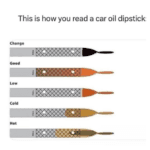
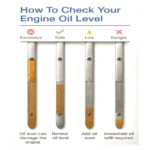
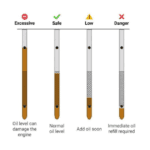
The oil should fall between the MIN and MAX markings. Ideal reading:
✔ Near the MAX line
Acceptable reading:
✔ Anywhere between MIN and MAX
Needs attention:
✘ Below MIN
Step 10: Inspect Oil Condition
Besides level, examine the oil itself. Healthy oil is usually:
- Amber
- Smooth
- Thin
- Clean
Oil that needs attention may appear:
- Black
- Thick
- Milky
- Gritty
- Contaminated
If the oil looks milky, it may indicate coolant contamination and should be inspected by a qualified technician.
Comparison Table: Healthy Oil vs. Oil That Needs Attention
| Feature | Healthy Engine Oil | Oil That Needs Attention |
| Color | Amber or light brown | Very dark, black, or milky |
| Texture | Smooth | Thick or gritty |
| Oil Level | Between MIN and MAX | Below MIN or excessively high |
| Smell | Mild petroleum odor | Strong burnt smell |
| Engine Performance | Smooth and quiet | Rough, noisy, sluggish |
| Sludge | None | Visible sludge or deposits |
| Fuel Economy | Normal | May decrease |
| Recommended Action | Continue monitoring | Change oil or inspect engine |
Understanding Oil Level Readings
Many drivers wonder what different oil levels mean.
Oil at Maximum
Perfect.
No action needed.
Oil Slightly Below Maximum
Completely normal.
Most vehicles operate perfectly within the safe range.
Oil Near Minimum
Monitor closely.
Consider topping off if recommended by your owner’s manual.
Oil Below Minimum
Add the correct oil immediately before driving long distances.
Running an engine with insufficient oil can lead to severe damage.
Oil Above Maximum
Too much oil can also be harmful. Overfilled engines may experience:
- Increased pressure
- Oil foaming
- Seal damage
- Reduced lubrication efficiency
If you suspect overfilling, correct the oil level before extended driving.
Common Mistakes People Make
I’ve made several of these myself over the years. Avoid these common errors:
- Checking on uneven ground
- Reading the dipstick without wiping it first
- Using the wrong oil type when topping off
- Ignoring low oil levels
- Waiting until the warning light appears
- Overfilling the engine
- Forgetting regular monthly checks
These simple mistakes can lead to inaccurate readings or unnecessary wear.
What If the Oil Is Low?
If the dipstick shows the oil below the MIN mark:
- Confirm the reading by checking again.
- Add the manufacturer-recommended oil gradually.
- Wait a few minutes.
- Recheck the level.
- Stop adding once the oil reaches the proper range.
Adding small amounts at a time helps prevent overfilling.
How Often Should You Check Your Oil?
From my experience, once every month is a great habit for most drivers. You should check more often if you:
- Drive long distances regularly
- Tow trailers
- Drive in very hot or cold climates
- Own an older vehicle
- Notice oil spots where you park
- Frequently drive in stop-and-go traffic
Frequent checks can help identify issues before they become serious.
Comparison Table: Checking Oil Yourself vs. Relying Only on Service Visits
| Feature | Check It Yourself | Only During Scheduled Service |
| Cost | Free | Included only during service |
| Time Required | About 5 minutes | Depends on appointment |
| Detects Low Oil Early | Yes | Not always |
| Helps Prevent Engine Damage | Yes | Sometimes too late |
| Good for Road Trips | Excellent | Limited |
| Builds Maintenance Confidence | Yes | No |
| Frequency | Anytime | Every few months |
My Personal Experience
Checking the oil dipstick used to seem intimidating, but after doing it a few times, it became second nature. On one occasion, I noticed the oil level had dropped more than expected between oil changes. There were no warning lights, and the car seemed to run normally.
A quick inspection later revealed a small oil leak from a worn gasket. Catching it early meant a relatively inexpensive repair instead of risking engine damage.
That experience reinforced an important lesson: warning lights are helpful, but they shouldn’t be your only line of defense. A quick monthly dipstick check can reveal problems long before they become serious.
Buyer’s Guide: What You Need for Easy Oil Checks
You don’t need an expensive toolbox to check your engine oil, but a few inexpensive items can make the job cleaner and easier.
1. Lint-Free Microfiber Cloth
A reusable microfiber cloth removes oil from the dipstick without leaving fibers behind. It’s durable, washable, and keeps readings accurate.
2. Disposable Paper Towels
Paper towels work well for occasional oil checks and are convenient for travel or emergencies.
3. Small Flashlight
Some engine bays are poorly lit. A compact LED flashlight makes it easier to locate the dipstick and clearly read the oil level.
4. Nitrile Gloves
If you prefer to keep your hands clean, disposable nitrile gloves provide excellent protection from oil and grime.
5. Funnel
A small funnel makes topping off engine oil much easier and helps prevent spills into the engine bay.
6. Correct Engine Oil
Always keep a quart (or liter) of the manufacturer-recommended engine oil in your vehicle. In an emergency, you’ll have the proper oil available if the level is low.
7. Vehicle Owner’s Manual
Your owner’s manual provides the correct oil viscosity, capacity, maintenance intervals, and specific instructions for checking the oil on your vehicle. It’s one of the most valuable maintenance resources you own.
Extra Tips for Accurate Oil Checks
Over the years, a few habits have consistently helped me get reliable readings:
- Check the oil at roughly the same time each month.
- Inspect the area under your vehicle for fresh oil spots.
- Wipe the dipstick thoroughly before taking the final reading.
- Avoid checking immediately after turning off a hot engine unless your owner’s manual specifically allows it.
- Record unusually high oil consumption so you can discuss it during your next service appointment.
- If the oil level changes dramatically between checks, have the engine inspected for leaks or excessive oil consumption.
These simple routines take only a few minutes but can provide valuable insight into your engine’s condition.
Read More: Car AC Pressure Switch Bypass
FAQs: How To Check Your Oil Dipstick
How often should I check my oil dipstick?
Most drivers should check the oil once a month and before any long trip. Older vehicles or those with higher mileage may benefit from more frequent checks.
Should I check the oil when the engine is hot or cold?
For many vehicles, the best practice is to check the oil after the engine has been turned off for 5–10 minutes, allowing the oil to drain back into the oil pan. Always follow your owner’s manual for the recommended procedure.
What color should engine oil be?
Fresh engine oil is typically amber or light brown. It naturally darkens over time, but thick, gritty, or milky oil may indicate contamination or the need for service.
What happens if my oil is below the minimum mark?
Low oil levels reduce lubrication and increase engine wear. Add the correct oil as soon as possible and investigate any recurring oil loss.
Can I drive if the oil level is low?
Short trips may be possible if the level is only slightly low, but driving with oil below the minimum mark can seriously damage the engine. Top it off before continued driving.
Why is my oil level dropping between oil changes?
Some engines consume a small amount of oil naturally. However, frequent drops may indicate leaks, worn engine components, or excessive oil consumption that should be inspected.
What if I accidentally overfill the engine oil?
Too much oil can cause foaming, increased crankcase pressure, and reduced lubrication. If the oil is significantly above the MAX mark, the excess should be removed.
Does dark oil always mean it needs changing?
No. Oil often darkens as it collects contaminants during normal operation. The decision to change oil should be based on your maintenance schedule, oil condition, and manufacturer recommendations rather than color alone.
Can I use any engine oil to top it off?
No. Use the viscosity grade and specifications recommended by your vehicle manufacturer to ensure proper engine protection and performance.
Is checking the dipstick enough to know my engine is healthy?
Checking the dipstick is an excellent routine maintenance habit, but it doesn’t replace scheduled servicing. It should be combined with regular oil changes, filter replacements, and inspections according to your vehicle’s maintenance schedule.
Final Thoughts
Learning how to check your oil dipstick is one of the simplest yet most valuable maintenance skills any driver can master. In just a few minutes each month, you can monitor your engine’s oil level and condition, catch leaks early, and help prevent costly repairs.
From my own experience, this quick routine has paid off more than once by revealing issues before they became major problems. Whether you drive a brand-new vehicle or a trusted older car, taking a moment to check the dipstick is a small investment of time that can make a big difference in your engine’s longevity and reliability.
Make it a habit, and your vehicle will thank you with smoother performance and fewer surprises.