I’ll be honest, I ignored my cabin air filter for years. I changed the engine oil on time. I rotated tires. I even replaced brake pads early. But the cabin air filter? Out of sight, out of mind.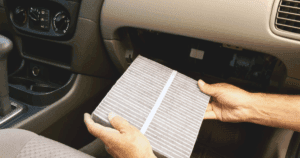 Then one summer afternoon, I turned on the AC and noticed:
- Weak airflow
- A slightly musty smell
- More dust than usual on my dashboard
That’s when I decided to check the cabin air filter, and what I found was shocking. It looked like a vacuum bag from 1998.
Changing it took me under 15 minutes, required zero mechanical skills, and instantly improved airflow and cabin freshness.
In this complete guide, I’ll walk you through:
- What a cabin air filter actually does
- When to replace it
- Step-by-step replacement instructions
- A comparison table of filter types
- A buyer’s guide
- Pro tips most people miss
- FAQs
Let’s get started.
What Is a Cabin Air Filter?
A car cabin air filter cleans the air that enters your vehicle through the heating and air conditioning system (HVAC).
It filters out:
- Dust
- Pollen
- Dirt
- Mold spores
- Road debris
- In some cases, exhaust fumes and odors
Think of it like your car’s version of a home HVAC filter.
Unlike the engine air filter (which protects the engine), the cabin air filter protects you and your passengers.
Signs You Need to Change Your Cabin Air Filter
Here’s what I personally experienced before replacing mine:
1. Weak Airflow
Even at max fan speed, the air felt restricted.
2. Bad Smell from Vents
A stale or moldy odor when the AC turns on.
3. Excess Dust Inside the Car
Dashboard and seats are getting dusty quickly.
4. Allergy Symptoms While Driving
Sneezing or irritated eyes inside the vehicle.
5. Whistling Sound
Air is struggling to pass through the clogged filter. If you notice one or more of these, it’s probably time.
How Often Should You Replace It?
Most manufacturers recommend:
Every 12,000–15,000 miles OR Once per year
However, replace it sooner if:
- You drive in dusty areas
- You live in high-pollution cities
- You park under trees
- You have allergies
I now replace mine every 10–12 months.
Where Is the Cabin Air Filter Located?
In most cars, it’s found:
- Behind the glove box (most common)
- Under the dashboard
- Under the hood near the windshield
For many vehicles, like:
- Toyota
- Honda
- Ford
- Hyundai
- Nissan
…it’s usually behind the glove compartment. Check your owner’s manual for the exact location.
Tools You’ll Need
Good news: Most cars require no tools at all. Sometimes you may need:
- Small flathead screwdriver
- Phillips screwdriver
That’s it.
Step-By-Step: How To Change Cabin Air Filter
Here’s exactly how I did it.
Step 1: Turn Off the Car
Make sure the engine and AC are off.
Step 2: Open the Glove Box
Empty it. You’ll likely see:
- Side tabs
- A small damper arm
Step 3: Release Glove Box Stops
Gently squeeze the sides inward to let it drop down. If there’s a damper arm, carefully unclip it. Now you’ll see a rectangular filter housing.
Step 4: Remove the Filter Cover
It usually has:
- Two side clips
- A snap-on cover
Press and remove.
Step 5: Pull Out Old Filter
Carefully slide it out.
⚠️ Watch for debris falling.
Take note of the airflow direction arrow.
Step 6: Insert New Filter
Match airflow direction (usually arrow pointing down or toward the cabin). Slide it in gently.
Step 7: Reassemble Everything
- Replace cover
- Lift the glove box
- Reattach damper
- Close the glove box
Done.
Total time: 10–15 minutes.
Cabin Air Filter Types Comparison Table
| Filter Type | Price Range | Best For | Pros | Cons |
| Basic Paper Filter | $10–$20 | Budget users | Cheap, easy install | Limited odor control |
| Activated Carbon Filter | $20–$40 | City drivers | Removes odors & exhaust fumes | Slightly more expensive |
| HEPA Cabin Filter | $30–$60 | Allergy sufferers | Best filtration | Higher cost |
| Reusable/Washable | $40–$80 | Long-term savings | Eco-friendly | Must clean regularly |
My Honest Opinion on Filter Types
After testing both paper and carbon filters:
Activated Carbon Wins for Me
Why?
- Better odor removal
- Cleaner cabin smell
- Worth the extra $10
If you live in polluted cities, carbon is a game-changer.
Buyer’s Guide: How To Choose the Right Cabin Air Filter
Here’s what to look for:
1. Compatibility
Always check:
- Year
- Make
- Model
- Engine type (sometimes matters)
Use auto parts store lookup tools.
2. Filtration Level
If you:
- Have allergies → Choose HEPA
- Drive in traffic daily → Choose carbon
- Want basic protection → Paper is fine
3. Brand Quality
Stick with trusted brands. Cheap no-name filters may:
- Collapse
- Allow air bypass
- Restrict airflow
4. Airflow Efficiency
Better filters balance:
- Filtration
- Proper airflow
Too restrictive = weak AC.
5. Price vs Value
Spending $25 instead of $12 can:
- Improve air quality
- Reduce odors
- Improve comfort
It’s a small upgrade with a big comfort impact.
What Happens If You Don’t Change It?
Here’s what I learned the hard way:
Reduced AC Performance
The blower motor works harder.
Mold Growth
Moist filters trap bacteria.
Increased Allergy Symptoms
Blower Motor Damage (Rare but possible)
Replacing it is cheaper than repairing HVAC components.
Does Changing Cabin Filter Improve AC?
Yes, if the old one was clogged. After I replaced mine:
- Airflow increased immediately
- The cabin cooled faster
- No musty smell
It felt like I upgraded the AC system.
DIY vs Mechanic Replacement
| Option | Cost | Time | Difficulty |
| DIY | $15–$40 | 15 minutes | Very Easy |
| Mechanic | $50–$120 | 30 minutes | None (you wait) |
DIY saves significant money.
Pro Tips Most People Don’t Know
1. Vacuum the Housing
Before installing a new filter, vacuum debris inside.
2. Replace Before Summer
Peak AC season demands good airflow.
3. Write Date on Filter
Mark install date for future reminder.
4. Check Every Oil Change
Quick inspection takes 2 minutes.
5. Don’t Blow It Out With Air
Compressed air damages filter fibers.
Common Mistakes To Avoid
- Installing backwards (check airflow arrow!)
- Buying the wrong size
- Forcing it into the slot
- Ignoring weird smells after install (could be evaporator issue)
Is It Really Worth Changing?
Absolutely. For under $30:
- Cleaner air
- Better AC performance
- Less dust
- Improved comfort
It’s one of the highest-value maintenance tasks.
Read More: What Test Should Be Performed On Abrasive Wheels
FAQs: How To Change Car Cabin Air Filter
1. Can I drive without a cabin air filter?
Technically, yes, but dust and debris enterthe HVAC system. Not recommended.
2. Does the cabin air filter affect gas mileage?
Indirectly. A clogged filter makes the blower motor work harder, slightly increasing the load. The effect is minimal but real.
3. Is the cabin air filter the same as the engine air filter?
No.
Engine air filter → Protects engine
Cabin air filter → Protects passengers
4. How long does replacement take?
Usually 10–15 minutes.
5. Why does my new filter smell?
New carbon filters may have a slight scent initially. It disappears quickly.
6. Can I clean instead of replace?
Paper filters: No. Reusable filters: Yes (follow instructions).
7. How much does a cabin air filter cost?
Between $10 and $60, depending on type.
8. What if airflow is still weak?
Possible issues:
- Blower motor
- AC evaporator clog
- Vent blockage
9. Do electric cars have cabin filters?
Yes. All modern vehicles with HVAC systems use them.
10. Is HEPA worth it?
If you have allergies, absolutely. Otherwise, carbon is a balanced choice.
Final Thoughts: Small Part, Big Difference
Changing your cabin air filter is:
- Cheap
- Easy
- Fast
- Impactful
It improves comfort immediately. If you haven’t checked yours in over a year, I strongly recommend doing it this weekend. Your lungs (and your AC system) will thank you.