Checking your engine oil is one of those simple maintenance tasks that many drivers overlook until a warning light appears. I’ve learned over the years that spending just two minutes with a dipstick can save thousands of dollars in engine repairs.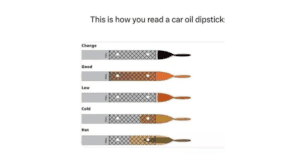 The first time I checked my car’s oil, I wasn’t entirely sure what I was looking at. The dipstick had markings, the oil looked different from what I expected, and I couldn’t tell whether the level was good or bad. After learning the proper method, it became one of the easiest maintenance checks I perform every month.
If you’ve ever wondered how much oil should be on a dipstick, you’re in the right place. This guide explains everything in simple language, from understanding the markings to avoiding common mistakes and knowing exactly when to add oil.
Quick Answer
The ideal oil level should be:
- Between the MIN and MAX marks
- Preferably close to the MAX line without going above it
- Never below the MIN mark
- Never above the MAX mark
Think of the space between the minimum and maximum marks as the engine’s safe operating zone.
Why Engine Oil Matters
Engine oil performs several essential jobs:
- Lubricates moving engine parts
- Reduces friction
- Prevents overheating
- Removes dirt and contaminants
- Protects against corrosion
- Extends engine life
Without enough oil, metal parts begin rubbing against each other, causing excessive wear. Too much oil can also damage seals and create pressure problems. Maintaining the correct level is the perfect balance.
Understanding the Dipstick
Most vehicles have a yellow, orange, or brightly colored dipstick handle. The metal dipstick usually includes:
- Two holes
- Two lines
- Crosshatched area
- MIN and MAX markings
These indicate the acceptable oil range.
A properly filled engine should have oil somewhere inside this marked area.
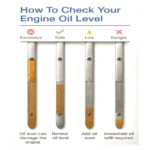
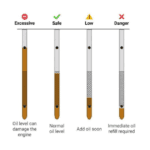
What the Oil Level Should Look Like
| Oil Level | What It Means | Action Needed |
| Above MAX | Too much oil | Drain excess oil |
| At MAX | Perfect | No action |
| Three-quarters full | Excellent | No action |
| Middle of the range | Safe | Monitor regularly |
| Just above MIN | Acceptable | Consider topping up soon |
| Below MIN | Too low | Add oil immediately |
How to Check Your Oil Correctly
Many incorrect readings happen because people skip a few simple steps.
Step 1: Park on Level Ground
Always park on a flat surface. An incline causes oil to collect on one side of the oil pan, leading to inaccurate readings.
Step 2: Turn Off the Engine
Allow the engine to cool for about:
- 5–10 minutes after driving
This lets the oil drain back into the oil pan.
Step 3: Pull Out the Dipstick
Remove the dipstick completely. Ignore the first reading.
Step 4: Wipe It Clean
Use:
- Paper towel
- Clean cloth
Remove all oil.
Step 5: Reinsert Fully
Push the dipstick completely back in.
Wait one second.
Pull it out again.
Step 6: Read the Oil Level
Now you’ll see the true oil level.
The oil should sit somewhere between the minimum and maximum marks.
My Personal Experience
I used to believe that more oil was always better. One day, I accidentally overfilled my engine by nearly a quart after an oil change. Fortunately, I noticed foam forming on the dipstick before driving very far. I drained the extra oil and avoided what could have become an expensive repair.
Since then, I have always added oil slowly, about half a quart at a time, and rechecked the level before adding more. That simple habit has saved me from both underfilling and overfilling.
How Much Oil Is Between MIN and MAX?
Most vehicles have approximately:
- 1 quart (about 1 liter) between the minimum and maximum marks.
However:
Some vehicles vary slightly.
Always verify with your owner’s manual.
Signs Your Oil Is Too Low
Low oil may cause:
- Oil warning light
- Engine knocking
- Ticking noises
- Increased engine temperature
- Reduced performance
- Burning smell
- Premature engine wear
Never ignore these symptoms.
Signs You Have Too Much Oil
Too much oil can cause:
- White or blue smoke
- Foamy oil
- Oil leaks
- High crankcase pressure
- Catalytic converter damage
- Seal damage
Overfilling is almost as harmful as running low.
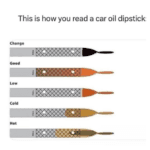
Clean Oil vs Dirty Oil
Oil color tells part of the story.
| Oil Appearance | Condition | Recommendation |
| Light amber | New | Excellent |
| Golden brown | Normal | Good |
| Dark brown | Used | Usually acceptable |
| Black | Dirty | May need changing |
| Milky | Coolant contamination | Seek mechanical inspection |
| Foamy | Overfilling or contamination | Diagnose immediately |
Remember, dark oil alone doesn’t always mean it’s bad. Many modern oils darken quickly while still protecting the engine.
Common Mistakes People Make
Checking immediately after shutting off
Oil hasn’t drained yet.
Reading only once
Always wipe and reinsert.
Parking on a hill
This changes the reading.
Adding too much oil
Always add gradually.
Ignoring the owner’s manual
Some engines have specific procedures.
How Often Should You Check the Oil?
A good habit is:
- Once every month
- Before long road trips
- Every 1,000 miles, if your vehicle uses oil
- After an oil change
- Before towing heavy loads
Older vehicles should be checked more often.
Can You Drive with Low Oil?
Technically yes. But only if it’s slightly below the safe level and you’re heading directly to add oil. If the oil warning light comes on while driving:
- Pull over safely.
- Turn off the engine.
- Check the oil.
- Add the correct oil if needed.
Continuing to drive with insufficient oil can severely damage the engine.
What Happens If You Never Check the Dipstick?
You risk:
- Engine seizure
- Bearing failure
- Increased fuel consumption
- Costly repairs
- Shortened engine lifespan
A two-minute monthly inspection is far cheaper than replacing an engine.
Buyer’s Guide: Choosing the Right Engine Oil
Selecting the correct engine oil is just as important as maintaining the proper oil level. Here are the key factors to consider before buying:
1. Follow the Recommended Viscosity
Always use the viscosity grade recommended by your vehicle manufacturer, such as:
- 0W-20
- 5W-20
- 5W-30
- 10W-30
Using the wrong viscosity can affect lubrication, fuel economy, and engine wear.
2. Choose the Right Oil Type
There are three main categories:
- Conventional Oil: Budget-friendly and suitable for older vehicles with basic maintenance needs.
- Synthetic Blend: A balance of cost and performance, offering better protection than conventional oil.
- Full Synthetic: Best for modern engines, turbocharged vehicles, and extreme temperatures. It generally lasts longer and provides superior protection.
3. Look for Industry Certifications
Check the bottle for certifications such as API (American Petroleum Institute) or ILSAC. These indicate the oil meets recognized performance standards.
4. Consider Driving Conditions
Frequent stop-and-go traffic, towing, extreme heat, or very cold climates may require higher-performance synthetic oils.
5. Buy from Trusted Retailers
Purchase engine oil from reputable auto parts stores, dealerships, or established online retailers to avoid counterfeit products.
Maintenance Tips
Good oil maintenance doesn’t stop at checking the dipstick. Make these habits part of your routine:
- Change oil at the recommended service interval.
- Replace the oil filter with every oil change.
- Check for leaks under your vehicle.
- Monitor oil color and consistency.
- Keep a spare quart of the correct oil in your trunk.
- Record oil changes in a maintenance log.
Consistent maintenance helps maximize engine life and can improve resale value.
Read More: Car AC Pressure Switch Bypass
FAQs: How Much Oil Should Be On Dipstick
Should the oil be exactly on the MAX line?
No. Anywhere between the MIN and MAX marks is considered safe, though many mechanics prefer the level to be near the MAX mark without exceeding it.
Is it okay if the oil is halfway between MIN and MAX?
Yes. A midpoint reading is generally safe. You can continue driving,g but keep an eye on the level, especially if your engine tends to consume oil.
How much oil should I add if it’s below MIN?
In many vehicles, the difference between MIN and MAX is about one quart (roughly one liter). Add small amounts—around half a quart at a time—and recheck the dipstick to avoid overfilling.
Can I overfill my engine by accident?
Yes. Pouring in too much oil can lead to foaming, increased pressure, leaks, and potential engine damage. Always add oil gradually and verify the level after each addition.
Should I check the oil when the engine is hot or cold?
For the most accurate reading, park on level ground, turn off the engine, and wait 5–10 minutes before checking the dipstick. This allows the oil to drain back into the oil pan.
Why does my oil look black?
Engine oil naturally darkens as it collects contaminants. Black oil isn’t automatically bad, but if it has become thick or gritty, or if you’ve exceeded the recommended oil change interval, it’s time for a change.
What if the dipstick shows no oil?
Do not continue driving. Add the correct engine oil immediately and inspect for leaks or excessive oil consumption. If the level doesn’t improve or the warning light remains on, have the vehicle inspected.
How often should I check my engine oil?
Most drivers should check the oil at least once a month, before long trips, and after every oil change. Older vehicles or engines that consume oil may require more frequent checks.
Final Thoughts
Knowing how much oil should be on a dipstick is one of the simplest yet most valuable skills any vehicle owner can learn. The ideal reading is between the MIN and MAX marks, with the oil level sitting close to the upper mark but never above it.
In my experience, taking a couple of minutes each month to check the dipstick has become a small habit that provides real peace of mind. It helps catch leaks early, prevents accidental overfilling, and reduces the risk of expensive engine damage.
Whether you drive a brand-new car or an older, high-mileage vehicle, regular oil checks are a quick, inexpensive way to keep your engine running smoothly for years to come.