If you’ve ever driven a car or even just ridden in one, you’ve benefited from one of the most important mechanical components under the hood: the gearbox. Before I became interested in how cars actually worked, I assumed pressing the accelerator simply made the car go faster.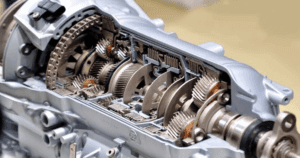 But after learning about gearboxes and driving both manual and automatic vehicles, I realized just how much this component influences performance, fuel economy, comfort, and even the personality of a car.
What Is a Gearbox?
A gearbox, also called a transmission, is the system that transfers power from the engine to the wheels while changing the gear ratio to match different driving conditions.
Simply put, the gearbox helps your engine operate efficiently regardless of whether you’re:
- Starting from a stop
- Driving through city traffic
- Climbing steep hills
- Cruising on the highway
- Reversing
Without a gearbox, your car would struggle to move from a standstill or reach high speeds efficiently. Think of it like riding a bicycle.
When you’re climbing a hill, you switch to an easier gear. When riding downhill, you choose a harder gear to gain speed.
A car gearbox performs the same function but automatically or manually, depending on the vehicle.
Why Does a Car Need a Gearbox?
Car engines produce power efficiently only within a specific RPM (Revolutions Per Minute) range.
The gearbox keeps the engine operating within this ideal range by changing gears as speed changes.
Without one:
- The engine would stall when starting.
- Fuel consumption would increase dramatically.
- Acceleration would suffer.
- The engine would wear out faster.
- High-speed driving would become nearly impossible.
How Does a Gearbox Work?
Here’s a simplified version of what happens.
- The engine generates power.
- The clutch or torque converter connects the engine to the transmission.
- Inside the gearbox, different gears mesh together.
- These gears adjust torque and speed.
- The driveshaft sends power to the wheels.
- The wheels rotate and move the vehicle.
Lower gears provide:
- More torque
- Less speed
Higher gears provide:
- Less torque
- Higher speed
Main Parts of a Gearbox
Although designs vary, most gearboxes include:
- Input shaft
- Output shaft
- Countershaft
- Gear sets
- Bearings
- Synchronizers
- Shift forks
- Clutch (manual)
- Torque converter (automatic)
- Transmission fluid
Each component works together to ensure smooth gear changes.
Types of Car Gearboxes
Today’s vehicles generally use one of several transmission types.
1. Manual Gearbox
The driver changes gears using a gear stick and a clutch pedal.
Advantages
- Better driver control
- Lower maintenance cost
- Excellent fuel economy
- More engaging driving experience
Disadvantages
- Learning curve
- Can be tiring in traffic
- Requires clutch replacement over time
2. Automatic Gearbox
The car changes gears automatically.
Advantages
- Very easy to drive
- Great for city traffic
- Smooth gear shifts
- Less driver fatigue
Disadvantages
- Higher repair costs
- More expensive initially
- Slightly lower efficiency in some older models
3. CVT (Continuously Variable Transmission)
Instead of fixed gears, a CVT uses belts and pulleys to provide seamless acceleration.
Advantages
- Excellent fuel economy
- Smooth acceleration
- Comfortable driving
Disadvantages
- Different driving feel
- Can be noisy under acceleration
- Costly repairs
4. Dual-Clutch Transmission (DCT)
Uses two separate clutches to pre-select gears.
Advantages
- Lightning-fast gear changes
- Excellent performance
- High efficiency
Disadvantages
- Expensive repairs
- Can feel jerky at low speeds
- More complex
5. Automated Manual Transmission (AMT)
An automated version of a manual gearbox.
Advantages
- Affordable
- Good fuel economy
- Easier than manual
Disadvantages
- Slower gear shifts
- Less refined
- Mild hesitation during acceleration
Gearbox Types Comparison Table
| Feature | Manual | Automatic | CVT | DCT | AMT |
| Ease of Driving | Moderate | Excellent | Excellent | Very Good | Good |
| Fuel Economy | Excellent | Very Good | Excellent | Excellent | Very Good |
| Maintenance Cost | Low | High | Medium-High | High | Medium |
| Performance | High | Good | Moderate | Excellent | Good |
| City Driving | Fair | Excellent | Excellent | Good | Good |
| Highway Driving | Excellent | Excellent | Very Good | Excellent | Good |
| Learning Curve | High | Very Low | Very Low | Low | Low |
Manual vs Automatic Gearbox
| Feature | Manual | Automatic |
| Gear Changes | Driver | Vehicle |
| Clutch Pedal | Yes | No |
| Driving Skill Required | Higher | Lower |
| Fuel Economy | Slightly Better | Nearly Equal in Modern Cars |
| Purchase Price | Lower | Higher |
| Traffic Comfort | Lower | Excellent |
| Repair Cost | Lower | Higher |
Common Signs of Gearbox Problems
Watch for these warning signs:
- Grinding noises
- Delayed gear engagement
- Slipping gears
- Burning smell
- Fluid leaks
- Dashboard warning lights
- Vibrations
- Difficulty shifting gears
Ignoring these symptoms can lead to expensive repairs.
How to Maintain Your Gearbox
Good maintenance greatly extends gearbox life. Helpful habits include:
- Change transmission fluid as recommended.
- Avoid aggressive acceleration.
- Don’t overload the vehicle.
- Let the engine warm up in cold weather.
- Use the correct transmission fluid.
- Service the vehicle regularly.
- Avoid resting your hand on the gear lever in manual cars.
- Press the clutch fully before shifting.
How Long Does a Gearbox Last?
A well-maintained gearbox often lasts:
- Manual: 200,000–300,000 km (124,000–186,000 miles) or more
- Automatic: 150,000–250,000 km (93,000–155,000 miles)
- CVT: 160,000–250,000 km (99,000–155,000 miles)
- DCT: Varies based on maintenance and driving style
Regular servicing significantly affects longevity.
My Personal Take on Different Gearboxes
After spending time driving vehicles with both manual and automatic transmissions, I’ve come to appreciate that there isn’t a single “best” gearbox, only the best one for your needs.
Manual gearboxes are rewarding if you enjoy being involved in the driving process. They give you greater control, especially on winding roads or when you simply enjoy shifting gears yourself.
For everyday commuting, however, automatics make life noticeably easier. Sitting in stop-and-go traffic without constantly working a clutch pedal is something many drivers quickly come to value.
CVTs impressed me with their smoothness and fuel efficiency, though the driving feel is different from traditional transmissions. If comfort is your priority, they’re worth considering.
Dual-clutch transmissions stand out for quick, crisp shifts and sporty performance, making them a great fit for performance-oriented drivers,s provided you’re comfortable with potentially higher maintenance costs. Ultimately, the “right” gearbox depends on how and where you drive.
Buyer’s Guide: Choosing the Right Gearbox
Before buying a vehicle, think beyond horsepower and styling. The gearbox has a major impact on your daily driving experience.
Choose a Manual If:
- You enjoy driving.
- You want lower maintenance costs.
- You drive mostly on highways or rural roads.
- You prefer maximum control.
- You’re looking for a lower purchase price.
Choose an Automatic If:
- You commute in heavy traffic.
- Multiple family members drive the car.
- You prioritize comfort and convenience.
- You’re a new driver.
- You don’t want to think about shifting gears.
Choose a CVT If:
- Fuel economy is important.
- You mainly drive in urban areas.
- You value smooth acceleration.
- Comfort matters more than sporty performance.
Choose a DCT If:
- You enjoy spirited driving.
- You want rapid gear changes.
- Performance is a priority.
- You’re comfortable with potentially higher repair costs.
Choose an AMT If:
- You’re on a tighter budget.
- You want the simplicity of an automatic.
- Fuel efficiency is a priority.
- You don’t mind occasional hesitation during shifts.
Questions to Ask Before Buying
- What type of driving do I do most often?
- How important is fuel economy?
- What’s my maintenance budget?
- Do I prefer convenience or driver involvement?
- Am I buying new or used?
- Has the transmission been serviced according to the manufacturer’s schedule?
Benefits of a Good Gearbox
A well-designed gearbox offers several advantages:
- Better fuel efficiency
- Improved acceleration
- Reduced engine wear
- Smoother driving
- Easier hill climbing
- Greater towing capability (where applicable)
- Enhanced driving comfort
- Better overall vehicle performance
Common Gearbox Myths
Myth 1: Manual cars always get better fuel economy.
Not necessarily. Many modern automatic transmissions match or even exceed the efficiency of manuals.
Myth 2: Automatic gearboxes don’t need maintenance.
False. Transmission fluid and filters still require periodic service.
Myth 3: CVTs are unreliable.
Early designs had mixed reputations, but many modern CVTs are dependable when properly maintained.
Myth 4: Manual gearboxes never fail.
They are generally durable, but clutches, synchronizers, bearings, and gears can wear over time.
Read More: What Does A Map Sensor Do On A Car
FAQs: What Is A Gearbox On A Car
What is the main purpose of a gearbox in a car?
Its primary purpose is to transfer engine power to the wheels while adjusting torque and speed through different gear ratios, allowing the vehicle to perform efficiently in various driving conditions.
Is a gearbox the same as a transmission?
Yes. In many regions, “gearbox” and “transmission” are used interchangeably, although “transmission” often refers to the complete system.
Which gearbox is best?
There is no universal best choice. Manuals suit drivers who enjoy control, automatics excel in convenience, CVTs prioritize efficiency, and DCTs focus on performance.
How often should gearbox oil be changed?
Follow your vehicle manufacturer’s maintenance schedule. Intervals vary depending on transmission type, driving conditions, and the specific fluid used.
Can you drive with a damaged gearbox?
Driving with a failing gearbox is not recommended. Minor issues can quickly become major and more expensive repairs.
Why does my gearbox make noise?
Grinding, whining, or clunking sounds may indicate worn bearings, damaged gears, low transmission fluid, or other mechanical issues that should be inspected.
Which gearbox lasts the longest?
With proper maintenance, manual gearboxes are often among the longest-lasting, though many modern automatics also provide excellent longevity.
Is replacing a gearbox expensive?
It can be. Costs depend on the vehicle, transmission type, availability of parts, and labor. Repairing a minor issue early is usually far less expensive than replacing the entire unit.
Does driving style affect gearbox life?
Yes. Smooth acceleration, proper maintenance, and avoiding excessive loads can significantly extend transmission life.
Can a gearbox improve fuel economy?
Yes. By keeping the engine operating in an efficient RPM range, a properly functioning gearbox helps optimize fuel consumption.
Final Thoughts
The gearbox is one of the most important systems in any vehicle, quietly managing how engine power reaches the wheels and shaping everything from acceleration to fuel efficiency.
Whether you choose a manual, automatic, CVT, DCT, or AMT, understanding how each type works will help you make a more informed decision and care for your vehicle more effectively.
For most everyday drivers, the ideal gearbox is the one that matches their driving habits, budget, and comfort preferences. By maintaining it properly and recognizing early warning signs of trouble, you can enjoy smoother performance, better reliability, and a longer service life from your car.