Checking your engine oil is one of the simplest maintenance tasks you can perform, yet it’s also one of the most important. Whether you drive a brand-new SUV, an older sedan, or a compact hatchback, maintaining the proper engine oil level helps extend engine life, improve fuel efficiency, and prevent costly repairs.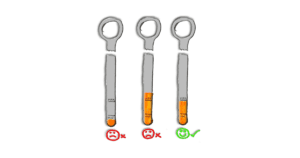 I’ll admit that when I first learned how to check engine oil, I assumed it was as easy as pulling out the dipstick and reading it. After making a few beginner mistakes, checking immediately after shutting off the engine, and wiping the dipstick incorrectly, I realized there’s a proper method that makes all the difference.
The good news? Once you’ve done it a couple of times, the entire process takes less than five minutes. This guide explains everything you need to know about measuring engine oil correctly, understanding the dipstick, avoiding common mistakes, and choosing the right tools for easier maintenance.
Why Checking Engine Oil Matters
Engine oil performs several critical functions:
- Lubricates moving engine parts
- Reduces friction
- Prevents overheating
- Cleans internal engine components
- Protects against corrosion
- Helps maximize engine lifespan
Running an engine with too little oil can cause severe damage within minutes. On the other hand, overfilling the oil can also create problems like increased pressure, leaks, and foaming.
That’s why regularly checking your oil level is one of the smartest habits any vehicle owner can develop.
When Should You Check Engine Oil?
For the most accurate reading:
- Park on a flat surface.
- Turn off the engine.
- Wait 5–10 minutes after driving.
- Allow the oil to drain back into the oil pan.
- Check before long trips.
- Check every month or every 1,000 miles (1,600 km), whichever comes first.
Many newer vehicles consume small amounts of oil between oil changes, so regular inspections help catch issues early.
Step-by-Step: How to Measure Engine Oil Level
Step 1: Park on Level Ground
A sloped driveway can give inaccurate readings because oil pools on one side of the oil pan. Flat pavement is always best.
Step 2: Turn Off the Engine
- Never check the oil while the engine is running.
- Wait several minutes after shutting off the engine.
- This allows the oil to settle.
Step 3: Open the Hood
- Locate the hood release inside your vehicle.
- Lift the hood and secure it with the support rod if necessary.
Step 4: Find the Dipstick
The dipstick usually has:
- Yellow handle
- Orange handle
- Red loop
- Clearly marked “Engine Oil”
Consult your owner’s manual if you cannot locate it.
Step 5: Remove the Dipstick
- Pull it out carefully.
- You’ll notice oil covering the end.
- Don’t read it yet.
Step 6: Wipe It Clean
Use:
- Paper towel
- Microfiber cloth
- Clean rag
Remove all oil from the measuring end.
Step 7: Insert Fully
- Push the dipstick all the way back in.
- Wait one or two seconds.
- Pull it out again.
- Now you’re ready for the real reading.
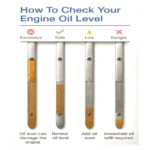
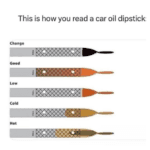
Step 8: Read the Oil Level
Most dipsticks have:
- MIN
- LOW
- ADD
- MAX
- FULL
Some have holes instead of markings. Your oil should sit between the minimum and maximum marks. Ideally, it should be close to the full mark without exceeding it.
Step 9: Inspect Oil Condition
Oil should generally appear:
- Amber
- Light brown
- Smooth
- Clean
Old oil often looks:
- Black
- Thick
- Dirty
Milky oil could indicate coolant contamination. Metal particles may indicate engine wear.
Understanding Dipstick Readings
| Oil Level | Meaning | Recommended Action |
| Above MAX | Overfilled | Drain excess oil |
| At MAX | Perfect | No action needed |
| Midway | Safe | Continue driving |
| Near MIN | Low | Add oil soon |
| Below MIN | Dangerously Low | Add oil immediately before driving |
Common Mistakes People Make
Many inaccurate readings happen because of simple errors.
Checking Immediately After Driving
Oil hasn’t drained into the pan yet.
Result:
False low reading.
Not Parking on Flat Ground
Oil shifts inside the pan.
Reading becomes inaccurate.
Forgetting to Wipe the Dipstick
The first pull isn’t your actual reading.
Always wipe before measuring.
Using the Wrong Oil
Always follow the viscosity recommended by the manufacturer. Examples:
- 0W-20
- 5W-30
- 5W-40
Overfilling
More isn’t better. Too much oil can:
- Foam
- Increase crankshaft resistance
- Damage seals
- Reduce lubrication
Signs Your Engine Oil Is Low
Watch for these warning signs:
- Oil warning light
- Engine knocking
- Increased engine noise
- Burning oil smell
- Poor acceleration
- Higher engine temperature
- Reduced fuel economy
Never ignore the oil warning light.
How Often Should You Check Oil?
For most drivers:
- Once every month
- Before road trips
- After towing
- After long highway journeys
- Before extreme weather seasons
Older vehicles may require more frequent checks.
My Personal Experience
Checking engine oil seemed intimidating the first time I opened the hood. I expected a complicated process, but after learning the correct technique, it became part of my routine.
One thing that surprised me was how much difference timing makes. Checking the oil immediately after switching off the engine gave inconsistent readings, while waiting a few minutes provided a much clearer and more reliable result.
I’ve also found that keeping a microfiber cloth in the glove compartment makes the process cleaner and more convenient. It only takes a few minutes each month, yet it provides peace of mind before long drives.
For anyone new to vehicle maintenance, learning to check the oil level is one of the easiest skills to build confidence under the hood.
Engine Oil Measurement Methods Comparison
| Method | Accuracy | Ease of Use | Best For | Cost |
| Traditional Dipstick | Excellent | Very Easy | Most vehicles | Free |
| Electronic Oil Monitor | Very Good | Excellent | Modern vehicles | Built-in |
| Oil Level Sensor | Excellent | Automatic | Luxury vehicles | Included |
| Diagnostic Scanner Reading | High | Moderate | Professional diagnostics | Medium |
| Service Center Inspection | Excellent | Very Easy | Beginners | Service fee |
Tips for Accurate Oil Measurement
Always:
- Use clean cloths.
- Wait after shutting off the engine.
- Check on level ground.
- Read both sides of the dipstick.
- Reinsert completely before measuring.
- Wear gloves if preferred.
- Keep spare engine oil in your garage.
Buyer’s Guide: Tools That Make Checking Engine Oil Easier
While checking engine oil doesn’t require expensive equipment, a few affordable accessories can make the job cleaner, faster, and more convenient.
1. Microfiber Cloth
A lint-free microfiber cloth is ideal for wiping the dipstick clean without leaving fibers behind. Unlike paper towels, it can be washed and reused multiple times.
Best for: Regular maintenance and clean readings.
2. Disposable Nitrile Gloves
Engine compartments can collect dust, grease, and grime. Disposable gloves help keep your hands clean and provide a better grip on oily components.
Best for: Clean, mess-free inspections.
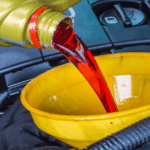
3. Oil Funnel
If your oil level is low, a quality funnel helps you add fresh oil without spilling it onto the engine.
Look for:
- Flexible neck
- Wide opening
- Easy-to-clean material
4. LED Flashlight
Some dipsticks are tucked away in darker engine bays. A compact LED flashlight makes it easier to locate the dipstick and read oil markings accurately.
5. Spare Engine Oil
Always keep at least one bottle of the manufacturer-recommended oil grade in your garage or trunk for emergencies.
6. Vehicle Owner’s Manual
The owner’s manual remains the most reliable source for:
- Correct oil viscosity
- Oil capacity
- Recommended service intervals
- Dipstick location
- Manufacturer-specific procedures
What to Consider Before Buying Maintenance Accessories
When shopping for engine maintenance tools, think about:
- Compatibility with your vehicle
- Build quality and durability
- Ease of storage
- Reusability
- Value for money
Simple, high-quality tools often last for years and make routine maintenance far more convenient.
Read More: What Is The Muffler On A Car
FAQs: How To Measure Engine Oil Level
1. Should I check engine oil when the engine is hot or cold?
The best time is after the engine has been turned off for about 5–10 minutes. This allows the oil to drain back into the oil pan while still being warm enough to flow normally.
2. How often should I measure engine oil?
At least once a month, before long road trips, and whenever the oil warning light appears.
3. Can too much engine oil damage my engine?
Yes. Overfilling can cause oil foaming, increased pressure, seal damage, leaks, and reduced lubrication efficiency.
4. What color should healthy engine oil be?
Fresh engine oil is usually amber or light brown. It naturally darkens over time, but milky, frothy, or metallic-looking oil may indicate a mechanical issue.
5. What if the oil is below the minimum mark?
Add the manufacturer-recommended oil gradually, checking the level after each small addition until it reaches the proper range.
6. Is it normal for engines to consume oil?
Yes. Many engines use a small amount of oil between scheduled oil changes, especially as they age or under heavy driving conditions.
7. Can I check the oil without a dipstick?
Some newer vehicles use electronic oil level monitoring systems instead of traditional dipsticks. Follow the instructions in your owner’s manual to access the oil level through the vehicle’s display.
8. Should I wipe the dipstick every time?
Yes. Wiping the dipstick before reinserting it ensures you get an accurate reading instead of relying on oil splashed during engine operation.
9. Why does my oil level seem different each time I check it?
Differences are often caused by checking on uneven ground, reading the dipstick too soon after driving, or not fully reinserting the dipstick before measuring.
10. Can dirty oil affect the reading?
Dirty oil doesn’t usually affect the oil level reading itself, but it can make the markings harder to see. If the oil appears excessively dirty or gritty, it may be time for an oil change.
Final Verdict
Learning how to measure engine oil level is one of the easiest and most valuable maintenance skills any driver can develop. It takes only a few minutes, requires minimal tools, and can help prevent expensive engine repairs.
By following the correct process, parking on level ground, allowing the engine to cool slightly, wiping the dipstick before taking a reading, and interpreting the markings correctly, you’ll gain a much more accurate understanding of your engine’s condition.
Regular oil checks also help you identify leaks, monitor oil consumption, and stay ahead of maintenance issues before they become major problems. Whether you’re a first-time car owner or an experienced driver, making oil inspection a monthly habit is a small investment of time that can pay off with years of reliable engine performance.