If you’ve ever opened the hood of an older car or motorcycle, chances are you’ve seen a carburetor sitting on top of the engine. Before modern fuel-injection systems took over, carburetors were the heart of the fuel-delivery system in most vehicles.
Even today, many classic cars, motorcycles, lawn equipment, and small engines still rely on them. When I first started learning about engines, the carburetor looked complicated, with tiny screws, valves, springs, and tubes everywhere.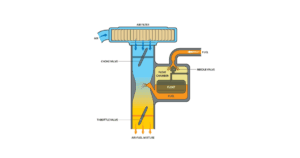 But once you break it down and look at a carburetor parts diagram, everything suddenly makes sense. Each component has a specific job: mixing air and fuel, controlling engine speed, and making sure the engine runs smoothly.
In this guide, we’ll walk through a car carburetor parts diagram, explain what each part does, and help you understand how the whole system works together.
Whether you’re a DIY mechanic, classic car owner, or just curious about engine technology, this guide will make carburetors easy to understand.
Car Carburetor Parts Diagram (Basic Layout)
A carburetor contains several internal and external components that control the fuel-air mixture entering the engine.
Air Filter
│
┌───────────────┐
│ Choke Valve │
├───────────────┤
│ Venturi Tube │
│ │
Fuel → │ Main Jet │
Line │ │
│ Throttle Valve│
└───────────────┘
│
Intake
Manifold
│
Engine
This simple carburetor diagram shows how air enters from the top, mixes with fuel in the middle, and then flows into the engine. But the real carburetor consists of many smaller components that work together.
Main Carburetor Parts Explained
Let’s break down the most important carburetor components and their roles.
1. Float Chamber
The float chamber acts like a small fuel reservoir. It stores fuel before it enters the venturi.
Function
- Maintains a constant fuel level
- Prevents flooding
- Supplies fuel to the main jet
The float inside the chamber works like a toilet tank. When the fuel level drops, it opens the inlet valve to admit more fuel.
2. Float
The float is a small buoyant device inside the float chamber.
Purpose
- Maintains proper fuel level
- Opens or closes the needle valve
- Prevents fuel overflow
Floats are usually made from:
- Brass
- Plastic
- Foam materials
3. Needle Valve
The needle valve controls the flow of fuel into the float chamber.
Key Job
- Regulates fuel flow from the fuel line
- Opens when the float drops
- Closes when the chamber fills
A worn needle valve can cause carburetor flooding.
4. Venturi
The Venturi is the narrow section of the carburetor where air accelerates.
Why it matters
When air moves through the venturi:
- Air velocity increases
- Pressure drops
- Fuel gets pulled into the airflow
This is called the Venturi Effect.
5. Main Jet
The main jet is a small calibrated opening that sprays fuel into the venturi.
Functions
- Controls fuel delivery
- Determinesthe air-fuel mixture
- Affects engine performance
Different engines use different jet sizes.
6. Throttle Valve
The throttle valve controls how much air-fuel mixture enters the engine. When you press the gas pedal:
- The throttle plate opens
- More mixture enters the engine
- Engine speed increases
7. Choke Valve
The choke valve restricts airflow during cold starts. This creates a richer fuel mixture, making it easier for the engine to start. Common choke types include:
- Manual choke
- Automatic choke
- Electric choke
8. Idle Jet
The idle jet supplies fuel when the engine runs at idle. Without this component, the engine would stall when the throttle is closed.
9. Accelerator Pump
The accelerator pump adds extra fuel when you suddenly press the gas pedal. Purpose:
- Prevents hesitation
- Improves acceleration
- Maintains smooth throttle response
Carburetor Components Comparison Table
| Carburetor Part | Main Function | Importance | Common Problems |
| Float Chamber | Stores fuel | Maintains a steady fuel level | Flooding |
| Float | Controls fuel level | Prevents overflow | Sticking |
| Needle Valve | Regulates fuel entry | Controls fuel supply | Leaks |
| Venturi | Mixes air and fuel | Creates suction | Dirt blockage |
| Main Jet | Delivers fuel | Controls mixture | Clogging |
| Throttle Valve | Controls airflow | Engine speed control | Sticky throttle |
| Choke Valve | Helps cold start | Rich fuel mixture | Stuck choke |
| Idle Jet | Supplies fuel at idle | Prevents stalling | Dirty jet |
| Accelerator Pump | Adds extra fuel | Smooth acceleration | Weak pump |
How a Carburetor Works (Simple Explanation)
A carburetor works by mixing fuel and air in the correct ratio before sending it into the engine. The basic steps:
Step 1: Air enters
Air flows through the air filter and into the carburetor.
Step 2: Air speeds through the venturi
The venturi narrows the airflow and creates low pressure.
Step 3: Fuel enters
Fuel is pulled from the float chamber through the main jet.
Step 4: Air and fuel mix
The fuel atomizes and mixes with incoming air.
Step 5: Mixture enters the engine
The throttle valve controls how much mixture enters the engine.
Types of Carburetors
Carburetors come in different designs depending on engine size and performance needs.
Single Barrel Carburetor
Simple carburetors with one venturi. Best for:
- Small engines
- Economy cars
- Lawn equipment
Two-Barrel Carburetor
Uses two venturis. Advantages:
- Better airflow
- Improved performance
Four-Barrel Carburetor
Common in high-performance V8 engines. Benefits:
- Excellent power output
- Better throttle response
Carburetor vs Fuel Injection
| Feature | Carburetor | Fuel Injection |
| Fuel Delivery | Mechanical | Electronic |
| Efficiency | Lower | Higher |
| Maintenance | Higher | Lower |
| Cold Starting | Harder | Easier |
| Performance | Moderate | Better |
Modern vehicles use fuel injection because it’s more efficient and precise.
Buyer’s Guide: Choosing a Carburetor
If you’re restoring a classic car or replacing a carburetor, here’s what to consider.
1. Engine Size
Larger engines require larger carburetors. Example:
- Small engines: 300–400 CFM
- V8 engines: 600–800 CFM
2. Carburetor Type
Choose the right type for your vehicle:
- Single-barrel – small engines
- Two-barrel – daily drivers
- Four-barrel – performance vehicles
3. Automatic vs Manual Choke
Automatic choke is easier for daily driving. Manual choke gives more control.
4. Brand Reputation
Reliable carburetor brands include:
- Holley
- Edelbrock
- Rochester
- Weber
5. Ease of Maintenance
Look for carburetors that are:
- Easy to clean
- Easy to rebuild
- Have available replacement parts
Common Carburetor Problems
Carburetors require occasional maintenance.
1. Carburetor Flooding
Caused by:
- Stuck float
- Faulty needle valve
- Excess fuel pressure
2. Rough Idle
Often caused by:
- Dirty idle jet
- Vacuum leaks
- Incorrect mixture adjustment
3. Engine Hesitation
Common causes include:
- Weak accelerator pump
- Clogged jet
- Dirty carburetor
4. Hard Starting
Possible reasons:
- Faulty choke
- Fuel starvation
- Dirty carburetor
How to Maintain a Carburetor
Carburetor maintenance is essential for proper engine performance.
Regular maintenance tips
- Clean the carburetor annually
- Replace worn gaskets
- Check float level
- Inspect fuel lines
- Adjust idle mixture
Using carburetor cleaner helps remove carbon deposits and varnish.
Rebuilding a Carburetor
Many carburetors can be rebuilt rather than replaced. Typical rebuild includes:
- New gaskets
- New needle valve
- New float (if necessary)
- Jet cleaning
Rebuild kits are affordable and widely available.
Why Carburetors Still Matter
Even though modern vehicles use fuel injection, carburetors remain important for:
- Classic car restorations
- Motorcycles
- Small engines
- Racing applications
They are simple, mechanical, and easy to repair.
Read More: Bad Fuel Pump Symptoms
FAQ: Car Carburetor Parts Diagram
What are the main parts of a carburetor?
The main carburetor parts include:
- Float chamber
- Float
- Needle valve
- Venturi
- Main jet
- Throttle valve
- Choke valve
- Idle jet
- Accelerator pump
What does the venturi do in a carburetor?
The Venturi increases airflow speed and lowers pressure, which pulls fuel from the main jet into the airstream.
Can a carburetor increase horsepower?
Yes. A properly sized carburetor improves airflow and fuel delivery, which can increase engine performance.
How often should a carburetor be cleaned?
Most carburetors should be cleaned every 12–24 months, depending on usage.
What causes carburetor flooding?
Flooding is usually caused by:
- Stuck float
- Faulty needle valve
- Excess fuel pressure
Is carburetor repair expensive?
Not usually. Carburetor rebuild kits often cost $20–$60, making them cheaper than replacement.
Final Thoughts
Understanding a car carburetor parts diagram makes engine mechanics far less intimidating. Once you know how the float chamber, jets, venturi, and throttle valve work together, the carburetor becomes a surprisingly elegant piece of engineering.
Even though modern vehicles rely on fuel injection, carburetors remain an essential part of automotive history, and they’re still widely used in classic cars and small engines today.
For DIY mechanics and car enthusiasts, learning carburetor components isn’t just useful; it’s the first step toward mastering engine tuning and performance.