Your vehicle’s cooling system works hard every time you drive. One of its most important components is the antifreeze, also known as engine coolant. Without enough antifreeze, your engine can overheat in summer, freeze in winter, or suffer costly internal damage.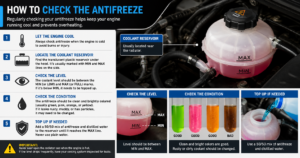 I’ve made checking antifreeze a regular part of my maintenance routine, and it only takes a few minutes. Whether you’re preparing for a road trip or simply performing routine maintenance, knowing how to check the antifreeze can save you from expensive repairs.
In this guide, I’ll walk you through everything you need to know in a simple, beginner-friendly way.
What Is Antifreeze?
Antifreeze is a specially formulated liquid mixed with water that circulates through your engine and radiator. It helps regulate engine temperature by preventing freezing in cold weather and boiling in hot conditions.
Besides temperature control, antifreeze also:
- Prevents rust and corrosion
- Lubricates the water pump
- Protects aluminum engine components
- Extends the cooling system’s life
Why Checking Antifreeze Is Important
Regularly checking antifreeze helps you:
- Prevent engine overheating
- Avoid freezing during winter
- Improve engine performance
- Increase the cooling system’s lifespan
- Detect leaks before they become serious
- Reduce expensive repair bills
Ignoring coolant levels can lead to blown head gaskets, damaged radiators, or even complete engine failure.
How to Check the Antifreeze
Step 1: Park on a Flat Surface
Park your vehicle on level ground and turn off the engine.
Step 2: Let the Engine Cool
Never remove the radiator cap while the engine is hot. Wait at least 30–60 minutes.
Step 3: Locate the Coolant Reservoir
Open the hood and find the translucent plastic coolant reservoir.
Most reservoirs have MIN and MAX markings.
Step 4: Check the Coolant Level
The coolant should sit between the MIN and MAX marks.
If it’s below MIN, add the correct coolant recommended by your vehicle manufacturer.
Step 5: Inspect the Coolant Color
Healthy coolant is usually:
- Green
- Orange
- Pink
- Blue
- Yellow
If it looks rusty, brown, milky, or contains debris, it should be replaced.
Step 6: Check for Leaks
Inspect:
- Radiator hoses
- Hose clamps
- Reservoir
- Water pump
- Radiator
Look for dried coolant residue or wet spots.
Step 7: Replace the Cap
Secure the reservoir cap tightly before closing the hood.
Comparison Table
| Check Item | Healthy Condition | Needs Attention |
| Coolant Level | Between MIN and MAX | Below MIN |
| Coolant Color | Bright and clear | Brown, rusty, cloudy |
| Reservoir | Clean | Cracked or leaking |
| Hoses | Soft and flexible | Cracked or swollen |
| Temperature Gauge | Normal | Running hot |
Signs Your Antifreeze Needs Attention
Watch for:
- Engine overheating
- Sweet smell from the engine bay
- Steam under the hood
- Dashboard temperature warning
- Visible coolant leaks
- Low coolant warning light
- Poor heater performance
Common Mistakes to Avoid
- Opening the radiator cap while hot
- Mixing incompatible coolant types
- Using plain water permanently
- Ignoring small leaks
- Overfilling the reservoir
- Forgetting regular inspections
My Personal Experience
I used to ignore coolant checks until one summer road trip when my temperature gauge suddenly climbed into the red. Fortunately, I stopped before serious damage occurred. The coolant reservoir was nearly empty because of a small hose leak.
Since then, I check my antifreeze about once a month. It takes less than five minutes and gives me peace of mind. That simple habit has helped me avoid overheating problems and costly repairs.
Buyer’s Guide: Choosing the Right Antifreeze
When buying antifreeze, consider the following:
Compatibility
Always use the coolant type specified in your owner’s manual.
Premixed vs Concentrate
Premixed
- Ready to use
- Convenient
- No measuring required
Concentrate
- Mix with distilled water
- More economical
- Better for large cooling system services
Color
Color doesn’t always indicate compatibility. Never rely on color alone.
Long-Life Formula
Modern coolants often last up to 100,000 miles or more, depending on the manufacturer.
Corrosion Protection
Choose products with rust and corrosion inhibitors to extend cooling system life.
Maintenance Tips
- Check coolant monthly.
- Replace coolant according to your vehicle’s maintenance schedule.
- Inspect hoses regularly.
- Flush the cooling system when recommended.
- Keep the radiator clean.
- Fix leaks immediately.
- Use distilled water when mixing concentrate.
Read More: How Much Is A Coil Pack For A Car
FAQs: How To Check The Antifreeze
1. How often should I check my antifreeze?
At least once a month and before long trips.
2. Can I check the coolant when the engine is hot?
No. Always wait until the engine has cooled completely.
3. What should the coolant level be?
Between the MIN and MAX marks on the reservoir.
4. Can I use water instead of antifreeze?
Only in emergencies. Replace it with the proper coolant as soon as possible.
5. Why is my coolant disappearing?
It could indicate a leak, evaporation, or an internal engine issue.
6. What color should antifreeze be?
Depending on the type, it may be green, orange, pink, blue, or yellow.
7. Can I mix different coolant colors?
No. Always use the coolant type recommended for your vehicle.
8. How long does antifreeze last?
Most modern coolants last between 5 and 10 years or up to 100,000–150,000 miles, depending on the formulation.
9. What happens if coolant is too low?
The engine may overheat, leading to serious damage.
10. Does antifreeze expire?
Yes. Over time, its protective additives break down, and it should be replaced according to the manufacturer’s schedule.
11. Is antifreeze the same as coolant?
Antifreeze is the concentrated fluid; when mixed with water, it becomes engine coolant.
12. Should I check the radiator or the reservoir?
For routine checks, inspect the coolant reservoir. Only open the radiator cap when the engine is completely cool, and your vehicle’s manual recommends it.
By following these simple steps and performing regular inspections, you can keep your engine running at the proper temperature, extend the life of your cooling system, and enjoy safer, more reliable driving in every season.
Conclusion
Checking your antifreeze is one of the easiest maintenance tasks you can perform, yet it plays a huge role in protecting your engine. Spending just a few minutes inspecting the coolant level and condition can prevent overheating, improve engine efficiency, and save hundreds or even thousands of dollars in repair costs.
By making antifreeze checks part of your regular maintenance routine, you’ll keep your cooling system operating efficiently throughout every season.