There’s nothing quite as frustrating as turning on your car’s AC on a hot day and getting nothing but warm air. I’ve been there, stuck in traffic, sweating, wondering what went wrong.
In many cases, the culprit turns out to be a car AC condenser leak. After dealing with this issue firsthand and talking to mechanics, I realized it’s one of the most common (and misunderstood) air conditioning problems in vehicles.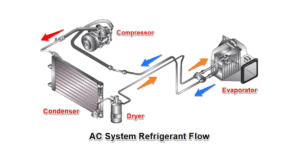 The condenser sits right at the front of your car, quietly doing its job until it doesn’t. And when it fails, the entire AC system suffers. In this guide, I’ll break everything down in a casual, easy-to-understand way, while still giving you deep, practical insights.
Whether you’re diagnosing the issue, comparing repair options, or deciding whether to replace the condenser, this article will help you make the right call.
What Is a Car AC Condenser?
Think of the condenser as the cooling hub of your AC system.
- It sits in front of the radiator
- Converts hot refrigerant gas into liquid
- Releases heat outside the vehicle
When it leaks, refrigerant escapes, and without refrigerant, your AC simply can’t cool.
Signs of a Car AC Condenser Leak
From personal experience, these signs show up gradually:
- ❄️ Weak or warm airflow
- 🧊 AC works briefly, then stops cooling
- 💧 Visible oily residue near the front grille
- 🛠️ Hissing sound when the AC is on
- ⚠️ Low refrigerant levels repeatedly
If you’re topping up refrigerant more than once, that’s a red flag.
Common Causes of Condenser Leaks
1. Road Debris Damage
Small stones or debris can hit the condenser fins and cause tiny punctures.
2. Corrosion
Over time, moisture and salt (especially in humid climates) corrode the metal.
3. Wear and Tear
Like any component, condensers degrade with age.
4. Faulty Seals or Connections
Sometimes it’s not the condenser itself but the joints.
Repair vs Replacement: What’s Better?
Here’s where things get interesting. I’ve tried temporary fixes before, but they rarely last.
Comparison Table: Repair vs Replacement
| Feature | Repair (Sealant / Patch) | Full Replacement |
| Cost | Low | Medium to High |
| Durability | Temporary | Long-term |
| Effectiveness | Limited | High |
| Risk of Recurrence | High | Low |
| Recommended For | Minor leaks | Moderate to severe leaks |
👉 My takeaway: If the leak is small, a sealant might buy you time. But for anything serious, replacement is the smarter investment.
Real-World Experience: What I Learned
When my car’s AC started failing, I initially thought it was just low refrigerant. After a refill, it worked… for about a week. Turns out, the condenser had a tiny leak.
- First attempt: AC sealant → lasted 10 days
- Second attempt: Professional diagnosis → confirmed leak
- Final fix: Condenser replacement → problem solved permanently
💡 Lesson: Quick fixes often lead to repeated costs.
Cost Breakdown (Typical Range)
Prices vary depending on your car type and location, but here’s a general idea:
- Sealant fix: $20 – $80
- Labor cost: $50 – $150
- Condenser replacement: $150 – $500+
- Total replacement cost: $250 – $800
Luxury or imported vehicles can cost significantly more.
Buyer’s Guide: Choosing the Right AC Condenser
If you’re replacing your condenser, don’t just grab the cheapest option. Here’s what to consider:
1. Compatibility
Always match your car’s make, model, and year.
2. Material Quality
- Aluminum condensers are common
- Look for corrosion-resistant coatings
3. Brand Reputation
Trusted aftermarket brands often perform just as well as OEM.
4. Warranty
A good condenser should come with at least a 1-year warranty.
5. Cooling Efficiency
Better-designed condensers improve overall AC performance.
OEM vs Aftermarket Condensers
| Feature | OEM | Aftermarket |
| Fit | Perfect | Usually good |
| Price | Expensive | Affordable |
| Availability | Limited | Wide |
| Performance | Reliable | Varies by brand |
👉 My advice: Go aftermarket if you’re on a budget, but avoid unknown brands.
How to Prevent Future Condenser Leaks
After fixing mine, I made a few changes:
- 🚗 Installed a grille guard
- 🧼 Cleaned debris regularly
- 🔧 Scheduled yearly AC checks
- 🌧️ Avoided deep water exposure
These simple habits can extend the condenser’s life significantly.
Can You Drive With a Leaking Condenser?
Technically, yes, but it’s not a great idea.
- AC won’t cool effectively
- The compressor may overwork and fail
- Repairs become more expensive over time
👉 Short drives are okay, but don’t delay fixing it.
Environmental Impact
Refrigerant leaks aren’t just a mechanical issue; they affect the environment.
- Modern cars use more eco-friendly refrigerants
- Still, leaks contribute to the greenhouse effects
Fixing leaks promptly is both smart and responsible.
Step-by-Step: Basic Diagnosis (DIY)
If you want to check things yourself:
- Turn on the AC
- Inspect the front grille area
- Look for oily residue
- Listen for hissing
- Check cooling performance
⚠️ Avoid handling refrigerant unless trained, as it can be hazardous.
Long-Term Performance After Replacement
After replacing my condenser:
- Cooling improved instantly
- AC became more consistent
- No refrigerant loss for over a year
It felt like getting a brand-new AC system.
When to Replace vs Wait
Replace if:
- The leak is visible
- AC stops cooling completely
- Refrigerant drains quickly
Wait (temporarily) if:
- The leak is very minor
- Budget is tight
- You need a short-term solution
Read More: How Much Is A Car Gasket
FAQs: Car AC Condenser Leak: A Real World Review
1. How do I know if my condenser is leaking?
Look for weak cooling, oily residue, and frequent refrigerant loss.
2. Can a condenser leak be repaired?
Minor leaks can be patched, but it’s usually temporary.
3. How long does a condenser last?
Typically 8–12 years, depending on usage and environment.
4. Is it expensive to fix?
Costs range from $250 to $800, depending on severity.
5. Will AC stop working completely?
Yes, if refrigerant leaks out entirely.
6. Can I refill refrigerant instead?
Only as a short-term fix,x it won’t solve the leak.
7. Does insurance cover condenser damage?
Sometimes, if caused by accidents or debris.
8. Can I replace it myself?
Possible, but not recommended without proper tools and knowledge.
Final Thoughts
A car AC condenser leak might seem like a minor inconvenience at first, but it can quickly turn into a costly problem if ignored.
From my own experience, trying to “patch it up” only delayed the inevitable. Replacing the condenser was the real solution, and honestly, it made a huge difference.
If your AC isn’t performing like it used to, don’t ignore it. Diagnose early, fix smart, and you’ll save both money and frustration in the long run.