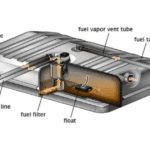
When shopping for a vehicle, most buyers focus on horsepower, fuel economy, comfort, or technology. Yet one often-overlooked specification can dramatically affect your driving experience: fuel tank capacity.
If you’ve ever driven across remote highways, taken long road trips, or hated stopping at gas stations every few days, a larger fuel tank can be a game-changer. Vehicles with massive fuel tanks allow drivers to travel hundreds or even thousands of miles before refueling.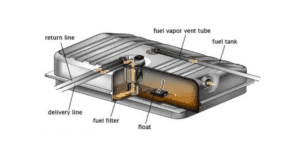 So, which car actually has the largest fuel tank? The answer depends on whether we’re discussing passenger cars, luxury SUVs, heavy-duty pickup trucks, or specialty vehicles.
Some modern trucks and SUVs come equipped with fuel tanks exceeding 48 gallons (182 liters), while certain expedition-ready vehicles can carry even more.
In this comprehensive guide, we’ll explore the vehicles with the largest fuel tanks, compare their capacities, discuss their real-world benefits, and help you determine whether a large fuel tank is worth prioritizing.
Quick Answer: Which Vehicle Has the Largest Fuel Tank?
Among widely available production vehicles, the Ford Super Duty F-450/F-350 equipped with the optional 48-gallon fuel tank ranks among the largest factory-installed fuel tanks available today.
However, in the passenger-car segment, luxury SUVs such as the Toyota Land Cruiser, Nissan Patrol, and certain diesel-powered European models are known for exceptionally large fuel capacities and long driving ranges.
Largest Fuel Tank Vehicles Comparison Table
| Vehicle | Fuel Tank Capacity | Vehicle Type | Estimated Range |
| Ford F-450 Super Duty | 48 gallons (182 L) | Heavy-Duty Truck | 700–1,000+ miles |
| Ford F-350 Super Duty | 48 gallons (182 L) | Heavy-Duty Truck | 700–1,000+ miles |
| Ram 3500 Heavy Duty | 50 gallons (189 L) | Pickup Truck | 800–1,100+ miles |
| Chevrolet Silverado HD | 36 gallons (136 L) | Pickup Truck | 600–900 miles |
| Toyota Land Cruiser | 24.6 gallons (93 L) | SUV | 500–700 miles |
| Nissan Patrol | 36 gallons (140 L) | SUV | 500–800 miles |
| Mercedes-Benz GLS Diesel | 23.8 gallons (90 L) | Luxury SUV | 700+ miles |
| Range Rover D350 | 23.8 gallons (90 L) | Luxury SUV | 700+ miles |
| GMC Sierra HD | 36 gallons (136 L) | Pickup Truck | 600–900 miles |
| Toyota Tundra | 32.2 gallons (122 L) | Full-Size Truck | 500–700 miles |
Why Fuel Tank Size Matters
Many buyers underestimate the value of a larger fuel tank because they focus solely on fuel economy figures.
In reality, fuel capacity directly influences how often you’ll need to stop for fuel. Consider two vehicles:
Vehicle A:
- 15-gallon tank
- 30 MPG
Vehicle B:
- 30-gallon tank
- 20 MPG
Both can travel approximately 600 miles. This demonstrates an important point: driving range depends on both fuel economy and tank size.
A larger tank can compensate for lower efficiency, while a smaller tank may require frequent fuel stops despite excellent MPG ratings.
My Personal Take on Large Fuel Tank Vehicles
Having spent countless hours on road trips, I have developed a strong appreciation for vehicles with large fuel tanks. There is something incredibly convenient about driving all day without constantly watching the fuel gauge.
I remember traveling through remote regions where gas stations were separated by dozens of miles. Drivers in compact cars were carefully planning refueling stops, while owners of large trucks and SUVs could simply continue driving without concern.
That peace of mind is difficult to quantify but becomes extremely valuable during long-distance travel. Of course, larger tanks aren’t perfect. Filling a 48-gallon tank can be expensive, especially when fuel prices rise.
The initial sticker shock at the pump can surprise even experienced drivers. Still, for road warriors, campers, tow-vehicle owners, and rural residents, the convenience often outweighs the drawbacks.
Vehicles with the Biggest Fuel Tanks
Ford Super Duty F-450
The Ford F-450 stands near the top of the list. With an available 48-gallon fuel tank, it is designed for serious towing and long-haul work. Key highlights:
- Massive towing capability
- Excellent diesel range
- Long-distance hauling performance
- Popular among RV owners
When paired with Ford’s diesel engine, the truck can exceed 1,000 miles between fill-ups under favorable conditions. For people towing large trailers across states, this is a major advantage.
Ford F-350 Super Duty
The F-350 shares many advantages with the F-450.
Its optional 48-gallon tank transforms it into a long-range machine capable of handling extended highway journeys without frequent fuel stops.
Owners often praise:
- Reduced downtime
- Better towing convenience
- Long-distance comfort
- Excellent range
For commercial operators, fewer fuel stops translate into increased productivity.
Ram 3500 Heavy Duty
The Ram 3500 deserves recognition for offering one of the largest fuel capacities available in a production truck.
Its available 50-gallon tank makes it a range champion. Benefits include:
- Exceptional highway range
- Excellent towing capability
- Strong diesel efficiency
- Ideal for commercial applications
Drivers frequently report traveling enormous distances before needing to refuel.
Nissan Patrol
Outside North America, the Nissan Patrol is famous for combining luxury and rugged off-road capability.
Its generous fuel tank makes it particularly attractive for desert travel and long-distance expeditions. Reasons people love it:
- Outstanding off-road capability
- Long-distance touring comfort
- Reliable V8 performance
- Large fuel reserves
In regions such as the Middle East and Australia, large fuel capacity is a critical advantage.
Toyota Land Cruiser
The Toyota Land Cruiser has earned legendary status among adventurers. While its fuel tank isn’t as large as heavy-duty trucks’, it offers substantial range due to Toyota’s engineering efficiency.
Land Cruiser strengths include:
- Extreme durability
- Global reliability
- Excellent resale value
- Long-range travel capability
Many overland travelers consider it the gold standard for remote expeditions.
Range Rover Diesel Models
Luxury buyers seeking maximum range often gravitate toward diesel-powered Range Rover models. Their combination of:
- Large fuel tanks
- Efficient diesel engines
- Premium comfort
Creates an ideal long-distance touring vehicle. Few vehicles can cross continents with such refinement.
Fuel Tank Capacity vs Driving Range
One of the biggest misconceptions among car shoppers is that assuming a larger fuel tank automatically means greater range.
The truth is more nuanced.
Driving range depends on:
Driving Range = Fuel Tank Capacity × Fuel Economy
For example:
| Fuel Tank | MPG | Driving Range |
| 15 Gallons | 40 MPG | 600 Miles |
| 20 Gallons | 30 MPG | 600 Miles |
| 30 Gallons | 20 MPG | 600 Miles |
| 48 Gallons | 20 MPG | 960 Miles |
This explains why some diesel SUVs with moderate tank sizes can outperform larger gasoline-powered vehicles.
Advantages of Large Fuel Tanks
Fewer Fuel Stops
The most obvious benefit is convenience. Less time spent refueling means more time driving.
Better for Road Trips
Long-distance travelers appreciate extended driving range. Cross-country journeys become simpler and less stressful.
Improved Towing Experience
Towing significantly increases fuel consumption. A larger tank helps compensate for reduced fuel economy.
Remote Travel Capability
Off-road enthusiasts often travel far from fuel stations. Extra fuel capacity provides additional security.
Commercial Productivity
Businesses benefit when vehicles spend less time refueling and more time working.
Drawbacks of Large Fuel Tanks
While appealing, larger tanks have disadvantages.
Higher Refueling Costs
A full tank may cost significantly more. Even if total fuel consumption remains unchanged, the upfront expense increases.
Additional Weight
Fuel is heavy. A larger tank can add substantial weight when filled.
Increased Vehicle Cost
Larger tanks sometimes raise manufacturing and purchase costs.
Space Requirements
Bigger tanks occupy more vehicle space. Manufacturers must balance capacity with packaging constraints.
Who Needs a Large Fuel Tank?
Not every driver benefits equally. Large fuel tanks are ideal for:
- RV owners
- Long-distance commuters
- Truck operators
- Rural residents
- Adventure travelers
- Off-road enthusiasts
- Commercial fleets
For urban drivers who rarely travel far, fuel tank size is often less important.
Buyer’s Guide: Choosing a Vehicle with a Large Fuel Tank
Consider Your Driving Habits
Ask yourself:
- How often do you take long trips?
- Do you tow regularly?
- Do you drive in remote regions?
If the answer is yes, a larger tank may be worthwhile.
Focus on Range, Not Just Capacity
A 25-gallon tank with excellent fuel economy can outperform a 40-gallon tank with poor efficiency.
Always evaluate the total range.
Think About Fuel Type
Diesel engines typically offer greater range than gasoline engines.
Many long-range champions combine diesel power with large fuel tanks.
Evaluate Refueling Costs
Can your budget comfortably handle large fill-ups?
A 50-gallon tank can become expensive to fill.
Consider Resale Value
Vehicles known for long-distance capability often retain strong resale values. Examples include:
- Toyota Land Cruiser
- Ford Super Duty
- Ram Heavy Duty
- Nissan Patrol
Assess Maintenance Requirements
Heavy-duty trucks may offer an enormous range but can cost more to maintain. Balance fuel capacity against ownership costs.
Future Trends in Fuel Tank Design
As automotive technology evolves, manufacturers continue searching for ways to maximize range. Emerging trends include:
- Lightweight fuel tanks
- Improved diesel efficiency
- Hybrid powertrains
- Extended-range electric vehicles
- Alternative fuel systems
While EVs don’t use traditional fuel tanks, the same principle applies: drivers still value longer distances between recharging or refueling.
Read More: How Do You Check The Oil On A Car
FAQs: Which Car Has The Largest Fuel Tank
Which car has the biggest fuel tank in the world?
Among widely available production vehicles, heavy-duty trucks such as the Ram 3500 and Ford Super Duty models offer some of the largest factory-installed fuel tanks, reaching approximately 48–50 gallons.
What SUV has the largest fuel tank?
The Nissan Patrol and certain full-size SUVs are among the leaders in fuel tank capacity.
Does a larger fuel tank improve fuel economy?
No. A larger tank increases range but does not directly improve fuel efficiency.
Which vehicle has the longest driving range?
Diesel-powered trucks and SUVs often achieve the longest ranges due to a combination of fuel efficiency and large tank capacity.
Is a larger fuel tank worth it?
For road trips, towing, commercial work, and remote travel, absolutely. For city-only driving, the benefit may be less significant.
Why don’t all vehicles have huge fuel tanks?
Large tanks increase weight, cost, and space requirements. Manufacturers must balance capacity with efficiency and practicality.
Can fuel tanks be upgraded?
Some aftermarket solutions exist, especially for trucks, but modifications should comply with local regulations and manufacturer recommendations.
What is more important: MPG or fuel tank size?
Both matter. The best indicator is total driving range, which combines fuel economy and tank capacity.
Are diesel vehicles better for long-range?
Generally yes. Diesel engines often provide better fuel economy, increasing overall driving range.
Which truck is best for maximum range?
Heavy-duty diesel trucks such as the Ford Super Duty and Ram 3500 are among the best options for achieving exceptional driving range.
Final Verdict
If your goal is maximum fuel capacity, heavy-duty pickup trucks currently dominate the market. The Ford Super Duty and Ram Heavy Duty models offer some of the largest factory-installed fuel tanks available, with capacities approaching or exceeding 50 gallons.
For SUV buyers, the Toyota Land Cruiser, Nissan Patrol, and premium diesel luxury SUVs provide excellent combinations of fuel capacity, comfort, and long-distance capability.
Ultimately, the best vehicle isn’t necessarily the one with the largest tank; it’s the one that delivers the range, efficiency, reliability, and practicality that match your lifestyle.
For frequent travelers, adventurers, and towing enthusiasts, a large fuel tank remains one of the most valuable features a vehicle can offer.