Let’s be honest, most drivers don’t think twice about their rear-view mirror until it cracks, falls off, or blocks their view. I’ve personally driven cars where the center mirror wasn’t even usable (hello, fully loaded trunk days), and it got me wondering: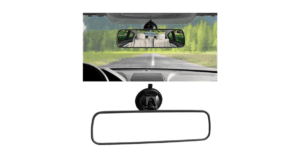 Is it actually illegal to drive without a rear-view mirror? The answer isn’t a simple yes or no; it depends on where you live, what mirrors your car still has, and how safely you can see behind you.
In this guide, I’ll break it all down, compare mirror setups, and help you decide what’s legal, safe, and worth buying.
The Short Answer: Is It Illegal?
In most places (including the U.S., UK, and many countries), it’s not illegal to drive without a rear-view mirror as long as you have at least two functioning mirrors that provide a clear view behind you.
👉 That usually means:
- Both side mirrors (left + right) are intact and usable
- You still have adequate rear visibility
However:
- If your side mirrors are missing or damaged, then yes, it becomes illegal
- Some regions require at least one mirror plus rear visibility
Real-World Example
I once drove a van where the rear window was completely blocked by cargo. The center mirror became useless,s but since both side mirrors were properly adjusted, it was still legal and safe to drive.
That’s actually a common scenario:
- Vans
- Trucks
- SUVs loaded with luggage
Manufacturers design these vehicles knowing the center mirror won’t always be useful.
Rear View Mirror vs Side Mirrors: What Matters Most?
Here’s a quick comparison to understand their roles:
| Feature | Rear View Mirror (Center) | Side Mirrors (Left & Right) |
| Primary function | Direct rear visibility | Angled rear + blind spots |
| Required by law | Not always | Usually required |
| Works if the rear is blocked | ❌ No | ✅ Yes |
| Helps with parking | ✅ Yes | ✅ Yes |
| Safety importance | Medium | High |
👉 Bottom line: Side mirrors are legally more critical than the center rear view mirror.
Why Laws Allow Driving Without a Rear View Mirror
From a practical standpoint, laws focus on visibility, not specific parts.
As long as you can:
- See the traffic behind you
- Change lanes safely
- Avoid blind spots
…you’re typically compliant.
That’s why:
- Commercial vehicles rely heavily on side mirrors
- Modern cars include blind spot monitoring systems
When It Becomes Illegal
Even if your rear-view mirror is optional, you can still break the law if:
- Both side mirrors are missing or broken
- Your mirrors are improperly adjusted
- Your view is obstructed (stickers, dirt, cracks)
- You cannot clearly see behind your vehicle
In those cases, you risk:
- Traffic fines
- Failing inspection
- Increased accident liability
Buyer’s Guide: Choosing the Right Rear View Mirror
Even if it’s not always legally required, a good rear-view mirror makes driving easier and safer.
Here’s what to look for:
Types of Rear View Mirrors
- Standard Mirror
- Basic reflection
- Affordable
- Good for everyday driving
- Auto-Dimming Mirror
- Reduces glare from headlights
- Ideal for night driving
- Digital Rear View Mirror
- Uses a camera feed
- Works even if the rear view is blocked
- Common in modern vehicles
- Wide-Angle Mirror
- Expands the field of view
- Helps reduce blind spots
🧾 What to Consider Before Buying
- Vehicle type: SUV, sedan, truck
- Driving habits: Night vs daytime
- Visibility issues: Tinted windows, cargo use
- Budget: Basic vs high-tech
My Personal Recommendation
If you’re asking whether you need a rear-view mirror, here’s my honest take:
- For daily city driving → Yes, keep it
- For cargo-heavy or van driving → Side mirrors matter more
- For modern upgrades → Digital mirrors are worth it
Even when it’s not required, I find it incredibly useful for:
- Parking
- Monitoring tailgaters
- Quick situational awareness
Long Practical Breakdown: Driving Without a Rear View Mirror
Driving without a center mirror forces you to rely more on:
Side Mirror Awareness
You’ll need to:
- Check both mirrors more frequently
- Adjust them properly (slightly outward)
- Minimize blind spots
Shoulder Checks
Without a center mirror:
- Shoulder checks become more important
- Especially during lane changes
Parking Adjustments
- Reverse parking becomes trickier
- Backup cameras help a lot
Legal Differences by Region
While laws vary slightly, the general rule holds:
- United States: 2 mirrors required if the rear view is blocked
- United Kingdom: Must have 2 mirrors offering rear visibility
- Australia & Canada: Similar rules
👉 Always check your local vehicle regulations for exact requirements.
Read More: How To Read an Engine Oil Dipstick
FAQs: Is It illegal To Not Have A Rear View Mirror
1. Can I pass inspection without a rear-view mirror?
Yes, in many places, side mirrors provide full rear visibility.
2. Is it safe to drive without a rear-view mirror?
It can be, but it’s less convenient and slightly riskier, especially in traffic.
3. Can I replace my mirror with a camera?
Yes! Digital mirrors are legal in many regions if they meet safety standards.
4. What if my rear window is blocked?
Then your side mirrors must compensate for this is common and legal.
5. Do trucks and vans need rear-view mirrors?
Not always. Many rely entirely on large side mirrors.
Final Verdict
So, is it illegal not to have a rear-view mirror?
👉 No, not necessarily.
👉 But you must have proper rear visibility, usually through side mirrors.
From my experience, while you can drive without it, you probably shouldn’t unless you have a solid alternative setup.