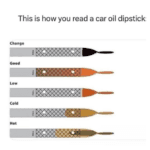
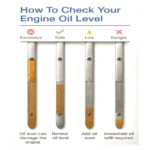
Reading an engine oil dipstick sounds simple: pull it out, look at it, done… right? Not quite. The first time I checked my oil, I remember staring at the dipstick thinking, “Is this full… or dangerously low?” 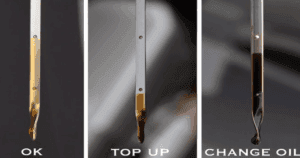 The markings weren’t as obvious as I expected, and the oil smear made things even more confusing. But here’s the truth: learning how to properly read a dipstick is one of the easiest ways to protect your engine and avoid costly repairs.
Once you understand what you’re looking at, it becomes second nature. In this guide, I’ll walk you through:
- How to read a dipstick correctly (step-by-step)
- What the markings mean
- Real-world mistakes to avoid
- A comparison table of dipstick readings
- A buyer’s guide for maintaining proper oil levels
- Deep insights into engine oil health
- FAQs and expert tips
Let’s break it down.
Quick Comparison: Engine Oil Dipstick Readings
| Oil Level Mark | What It Means | Action Required | Risk Level | My Verdict |
| Above Max Line | Overfilled oil | Drain excess oil | Medium | Fix immediately |
| Full (Max Line) | Ideal level | No action needed | None | Perfect |
| Between Min & Max | Safe range | Monitor | Low | Acceptable |
| At Min Line | Low oil | Add oil soon | Medium | Don’t delay |
| Below Min Line | Critically low | Add oil immediately | High | Dangerous |
What Is an Engine Oil Dipstick?
The dipstick is a simple metal rod used to measure the amount of engine oil in your car. It usually has:
- A handle (often yellow or orange)
- A long metal strip
- Markings indicating oil levels
Despite its simplicity, it plays a huge role in keeping your engine healthy.
Step-by-Step: How To Read an Engine Oil Dipstick
1. Park on a Level Surface
Always check your oil on flat ground. Uneven surfaces can give false readings.
👉 Real-world tip: I once checked oil on a slope and thought I was low ended up overfilling.
2. Turn Off the Engine and Let It Cool
Wait at least 5–10 minutes after turning off the engine.
Why?
- Oil needs time to settle in the oil pan
- Hot oil can give inaccurate readings
3. Locate the Dipstick
Open the hood and find the dipstick. It usually has a bright handle.
4. Pull It Out and Wipe It Clean
Use a clean cloth or tissue to wipe off all oil.
👉 It is critical that your first pull is not the actual reading.
5. Reinsert Fully
Push the dipstick all the way back in.
6. Pull It Out Again and Read
Now check the oil level carefully. You’ll see:
- Oil coating part of the dipstick
- Clear markings (lines, dots, or letters like “MIN” and “MAX”)
Understanding Dipstick Markings
Most dipsticks use one of these systems:
1. Line Markings
- Bottom line = Minimum
- Top line = Maximum
2. Dots or Holes
- Lower dot = Min
- Upper dot = Max
3. Crosshatched Area
- Oil should fall within this textured section
What the Oil Level Tells You
Full or Near Max
Perfect. No action needed.
⚠️ Slightly Below Max
Still safe,e but keep an eye on it.
⚠️ Near Minimum
Add oil soon.
❌ Below Minimum
This is serious, we add oil immediately.
Checking Oil Condition (Not Just Level)
The dipstick also reveals oil quality.
Healthy Oil:
- Light brown or amber
- Smooth texture
Dirty Oil:
- Dark brown or black
- Thick or gritty
Bad Signs:
- Milky color → possible coolant leak
- Burnt smell → overheating
👉 Personal tip: Color alone isn’t everything. Modern oils darken quickly.
Common Mistakes People Make
1. Not Wiping the Dipstick First
This gives a false reading.
2. Checking While the Engine Is Running
Dangerous and inaccurate.
3. Overfilling Oil
Too much oil can damage seals and cause foaming.
4. Ignoring Oil Condition
Level is important,tant but quality matters too.
Real-Life Scenario: What I Learned the Hard Way
I once ignored a slightly low oil reading, thinking it wasn’t urgent. A few weeks later:
- The engine started running rough
- The oil level dropped further
- Had to top up urgently
Lesson: Don’t wait for small issues to become big problems fast.
Buyer’s Guide: Oil & Maintenance Essentials
Keeping your oil at the right level isn’t just about checking it; it’s about using the right products.
1. Choosing the Right Engine Oil
Check your owner’s manual for:
- Viscosity (e.g., 5W-30, 10W-40)
- Synthetic vs conventional
Types:
- Synthetic Oil → Best performance, longer life
- Conventional Oil → Cheaper, shorter lifespan
2. Oil Change Intervals
- Synthetic: Every 7,000–10,000 km
- Conventional: Every 3,000–5,000 km
3. Keep a Funnel and Rag Handy
Simple tools make checking and topping up easier and cleaner.
4. Watch for Oil Consumption
If your oil level drops frequently:
- Possible leaks
- Engine burning oil
5. Invest in Quality Oil Filters
A good filter keeps oil clean longer.
Deep Dive: Why Proper Oil Level Matters
Engine oil does more than just lubricate.
1. Reduces Friction
Prevents metal parts from grinding.
2. Cools Engine Components
Carries heat away from moving parts.
3. Cleans the Engine
Removes sludge and contaminants.
4. Prevents Wear
Extends engine life significantly.
What Happens If Oil Is Too Low?
- Increased engine wear
- Overheating
- Possible engine seizure
What Happens If Oil Is Too High?
- Oil foaming
- Reduced lubrication
- Damage to seals
Pro Tips for Accurate Readings
- Check oil once a week
- Always use the same checking method
- Inspect under the car for leaks
- Check before long trips
Read More: Car Expansion Valve Stuck Open Symptoms
FAQs: How To Read Engine Oil Dipstick
1. How often should I check my oil?
At least once a week or before long drives.
2. Can I check oil when the engine is hot?
You can, but it’s less accurate. Let it cool first.
3. What if the oil level keeps dropping?
You may have a leak or burning oil; get it checked.
4. Is dark oil always bad?
Not necessarily modern oil darkens quickly.
5. Can I mix different oils?
It’s not ideal, but safe in emergencies.
6. What happens if I overfill the oil?
It can damage your engine if you don’t drain the excess immediately.
7. Why is my dipstick hard to read?
Oil smearing is common; wipe and recheck.
8. Should oil be exactly at max?
Close to max is ideal, but anywhere within range is safe.
Final Thoughts
Reading an engine oil dipstick is one of those small skills that makes a huge difference. It takes less than a minute but can save you thousands in repairs. From my experience, the key is consistency:
- Check regularly
- Read carefully
- Act early
Once you get the hang of it, you’ll wonder why it ever felt confusing.