When I bought my first car, I had no idea what an AC belt was. Like most drivers, I only cared whether the air conditioner blew cold air. But one hot summer afternoon, my AC suddenly stopped working.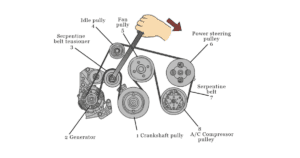 A mechanic popped the hood, pointed to a worn rubber belt, and said, “Your AC belt is shot.” That was my introduction to one of the simplest yet most important components in a vehicle’s air conditioning system.
In this complete guide, I’ll break down:
- What an AC belt is
- How it works
- Symptoms of a failing AC belt
- Replacement costs
- AC belt vs serpentine belt comparison
- A practical buyer’s guide
- FAQs every car owner asks
Let’s get started.
What Is an AC Belt in a Car?
An AC belt (Air Conditioning belt) is a rubber drive belt that powers your car’s air conditioning compressor by transferring energy from the engine’s crankshaft.
In many modern vehicles, the AC belt is integrated into the serpentine belt system, meaning one belt drives multiple components, such as:
- AC compressor
- Alternator
- Power steering pump
- Water pump
In older cars, however, the AC compressor may have its own dedicated belt. Simply put: No AC belt = No spinning compressor = No cold air.
How the AC Belt Works?
Here’s what happens when you turn on your car’s AC:
- The engine crankshaft rotates.
- The AC belt moves along pulleys connected to the engine.
- The belt spins the AC compressor.
- The compressor pressurizesthe refrigerant.
- Cold air flows into your cabin.
If the belt snaps or slips, the compressor can’t spin, and your AC stops cooling immediately.
My Personal Experience With AC Belt Failure
When mine failed, I noticed:
- A loud squealing noise when starting the car
- Weak or warm air from vents
- A slight burning rubber smell
I ignored the noise for weeks (big mistake). Eventually, the belt cracked and lost tension. Replacement cost?
Around $120, including labor, which was cheaper than I expected. Lesson learned: A small belt can cause big discomfort.
AC Belt vs Serpentine Belt: What’s the Difference?
Here’s where many people get confused.
| Feature | AC Belt (Dedicated) | Serpentine Belt |
| Drives | Only Athe C compressor | Multiple components |
| Found In | Older vehicles | Most modern cars |
| Replacement Cost | Lower | Moderate |
| Failure Impact | Only AC stops | Multiple systems affected |
| Maintenance | Easier | Slightly more complex |
Most vehicles today use a serpentine belt that includes AC operation as part of a larger system.
Signs Your AC Belt Is Going Bad
Here are common warning signs:
1. Squealing Noise
High-pitched squeal when starting the engine or turning on the AC.
2. Cracks or Fraying
Visible damage when you inspect the belt.
3. AC Not Blowing Cold
The compressor isn’t spinning properly.
4. Burning Rubber Smell
Friction from a slipping belt.
5. Belt Slipping
The air gets cold intermittently.
If you notice two or more of these symptoms, inspect immediately.
How Long Does an AC Belt Last?
Typical lifespan:
- 50,000 to 100,000 miles
- 4 to 6 years (average driving conditions)
However, factors that reduce lifespan include:
- Extreme heat
- Oil leaks
- Improper belt tension
- Frequent stop-and-go driving
AC Belt Replacement Cost
Average U.S. cost:
- Belt only: $25 – $80
- Labor: $50 – $150
- Total: $75 – $250
Luxury vehicles may cost more due to tighter engine bays.
Can You Drive With a Broken AC Belt?
If your car uses a dedicated AC belt: Yes, but you won’t have AC. If it’s part of the serpentine belt: No, because other systems may fail, including athe lternator and water pump.
Driving without a functioning serpentine belt can cause engine overheating.
Step-by-Step: How Mechanics Replace an AC Belt
- Locate the belt routing diagram.
- Release the belt tensioner.
- Remove worn belt.
- Install a new belt.
- Adjust tension.
- Test AC operation.
Time required: 30–60 minutes.
Buyer’s Guide: Choosing the Right AC Belt
If you’re replacing the belt yourself or ordering online, here’s what to consider:
1. Compatibility
Always match:
- Make
- Model
- Year
- Engine size
2. Material Quality
Look for:
- EPDM rubber (longer lifespan)
- Heat-resistant construction
- Reinforced fiber cords
3. Brand Reputation
Well-known belt manufacturers often provide better durability.
4. Warranty
Some belts offer limited lifetime warranties.
5. Price vs Longevity
Cheap belts wear out faster. Spending a bit more saves labor costs later.
Best Belt Materials Explained
Modern belts use EPDM rubber, which:
- Lasts longer than older neoprene belts
- Resists cracking
- Handles high engine heat
Older belts were prone to glazing and cracking faster.
Maintenance Tips to Extend AC Belt Life
Here’s what I personally follow:
- Inspect the belt at every oil change
- Replace the tensioner if worn
- Fix oil leaks immediately
- Don’t ignore squealing sounds
- Replace before 100,000 miles
Preventive maintenance costs less than emergency repair.
What Happens If You Ignore a Bad AC Belt?
Worst-case scenarios include:
- AC compressor damage
- Belt snapping while driving
- Engine overheating (serpentine belt systems)
- Stranded vehicle
It’s a small part with big consequences.
Deep Dive: How the AC Compressor Depends on the Belt
The AC compressor requires rotational power to:
- Compress refrigerant gas
- Maintain pressure difference
- Enable heat exchange
Without the belt, the compressor clutch cannot engage properly. In belt-driven systems, mechanical power is essential. Electric compressors (found in hybrid vehicles) operate differently.
AC Belt in Hybrid and Electric Vehicles
Many hybrid and electric cars use electric compressors rather than belt-driven systems. That means:
- No traditional AC belt
- Reduced mechanical load
- Improved efficiency
However, gasoline-only vehicles still rely heavily on belts.
DIY vs Professional Replacement
DIY Pros:
- Save labor costs
- Simple in older cars
DIY Cons:
- Tight engine space
- Risk of incorrect tension
- Special tools required
If you’re inexperienced, professional installation is safer.
Is an AC Belt the Same as a Drive Belt?
Sometimes yes, sometimes no.
- “Drive belt” is a general term.
- AC belt may be part of the drive belt system.
- A serpentine belt is a type of drive belt.
Always confirm with your vehicle manual.
How to Inspect Your AC Belt at Home
- Turn the engine off.
- Open the hood.
- Locate belt path.
- Check for:
- Cracks
- Glazing
- Missing ribs
- Fraying edges
If unsure, take a photo and compare with an online reference.
Read More: Car Expansion Valve Symptoms
FAQs: What Is AC Belt In Car
1. What does an AC belt do in a car?
It powers the AC compressor by transferring energy from the engine.
2. Can a bad AC belt affect fuel economy?
Yes. A slipping belt can reduce system efficiency and increase engine load.
3. How do I know if my AC belt is loose?
You may hear squealing noises or notice weak cooling performance.
4. Is replacing an AC belt expensive?
Not usually. Most replacements cost under $250.
5. Can I replace it myself?
Yes, if you have basic mechanical knowledge and tools.
6. What happens if the serpentine belt breaks?
Multiple systems may stop functioning, potentially causing engine overheating.
7. How often should the AC belt be replaced?
Every 50,000–100,000 miles or when signs of wear appear.
8. Does turning off the AC save belt life?
Slightly, but the belt still rotates if part of the serpentine system.
Final Thoughts: Is the AC Belt Important?
Absolutely.
It’s inexpensive.
It’s simple.
But it’s critical.
Ignoring it can turn a comfortable drive into a sweaty disaster, especially in summer. From personal experience, I now treat belt inspections seriously. A quick check during oil changes gives peace of mind and saves money.
If your car’s AC isn’t cooling properly, don’t immediately assume it’s a major compressor issue. Sometimes, it’s just a small rubber belt quietly asking for attention.