I’ll be honest, for years I ignored my car’s dipstick. I thought oil checks were something only mechanics worried about. As long as the car started and didn’t make weird noises, I figured everything was fine.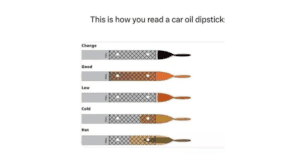 Then one day, my engine started ticking loudly. Turns out? Low oil. That tiny metal strip called a dipstick could have saved me a lot of stress.
Whether you drive a sedan, SUV, truck, or hybrid, knowing how to readthe oil level on a dipstick is one of the simplest yet most important maintenance skills you can learn. And today, I’ll walk you through:
- What the dipstick markings mean
- How to check the oil the correct way
- What’s considered “low” or “overfilled”
- Common mistakes to avoid
- A buyer’s guide for tools you may need
- Detailed FAQs
Let’s make engine oil checks easy.
What Is a Dipstick and What Does It Do?
An oil dipstick is a long metal or plastic rod that measures the level of engine oil inside your oil pan. It’s directly connected to your engine’s lubrication system.
When you pull it out, the oil leaves a visible mark on the stick, showing you how much oil is in the engine. It works in vehicles from brands like:
- Toyota
- Ford
- Honda
- Chevrolet
Almost every gasoline vehicle uses one, except some newer models that rely solely on electronic oil monitoring systems.
Understanding Dipstick Markings
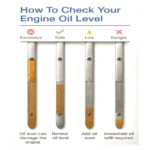
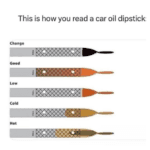
Before we dive into the steps, let’s decode what you’re actually looking at. Most dipsticks have:
- Two holes
- Two lines
- Or a cross-hatched area
These markings indicate:
- MIN (Low)
- MAX (Full)
The oil level should sit between these two markers.
Oil Level Comparison Table
| Oil Level Position | What It Means | Action Needed | Risk Level |
| Below the MIN line | Oil is dangerously low | Add oil immediately | High |
| Just above MIN | Slightly low | Add a small amount | Moderate |
| Middle between MIN & MAX | Perfect level | No action | Safe |
| Near MAX | Full | No action | Safe |
| Above MAX | Overfilled | Drain excess oil | Moderate–High |
Step-by-Step: How To Read Oil Level On Dipstick
Let’s keep this simple.
Step 1: Park on Level Ground
This is critical. If your car is tilted, the oil reading will be inaccurate.
Step 2: Turn Off the Engine
Wait at least 5–10 minutes after shutting off the engine. This allows oil to drain back into the oil pan.
Checking immediately after shutting the engine off can give a false low reading.
Step 3: Locate the Dipstick
Open the hood and look for:
- A yellow, orange, or red handle
- Often labeled “Engine Oil.”
Step 4: Pull It Out and Wipe It Clean
Use a clean rag or paper towel. The first pull is usually messy and inaccurate.
Step 5: Reinsert Fully
Push the dipstick all the way back in.
Step 6: Pull It Out Again and Read It
Now check:
- Where the oil line sits
- Whether it’s between MIN and MAX
- The oil color and thickness
That’s it. Simple but powerful.
What the Oil Color Tells You
Reading the oil level is only half the story. Oil condition matters too.
| Oil Color | What It Means |
| Honey/amber | Fresh oil |
| Light brown | Normal used oil |
| Dark brown/black | Needs change soon |
| Milky/creamy | Possible coolant contamination |
| Gritty | Dirt or engine wear |
If oil looks milky, that could indicate head gasket issues, and that’s serious.
Common Mistakes When Reading Oil Dipstick
After helping friends and family with their cars, I’ve seen these mistakes repeatedly:
1. Checking on a slope
Gives false readings.
2. Not wiping before the second check
Leads to smudged readings.
3. Checking immediately after driving
Oil hasn’t settled yet.
4. Overfilling oil
Many think “more oil = better.” Wrong. Too much oil can cause:
- Foaming
- Seal damage
- Catalytic converter issues
How Often Should You Check Oil?
For most vehicles:
- Every 1,000 miles
- Or once a month
- Before long road trips
Even newer cars from brands like BMW or Hyundai still benefit from manual checks if they have dipsticks.
Buyer’s Guide: Tools That Make Oil Checking Easier
You don’t need much, but a few simple items help.
1. Microfiber Cloth
Best for wiping clean without leaving fibers.
2. Funnel
Prevents spills when adding oil.
3. Proper Engine Oil
Check your owner’s manual for recommended viscosity (e.g., 5W-30).
4. Flashlight
Helps see the oil line clearly.
Oil Type Comparison Table
| Oil Type | Best For | Pros | Cons |
| Conventional | Older engines | Cheap | Breaks down faster |
| Synthetic Blend | Daily drivers | Balanced cost/performance | Moderate price |
| Full Synthetic | Modern engines | Long-lasting, better protection | Higher cost |
My Personal Take
After years of owning multiple vehicles, I now check oil regularly. It takes less than 5 minutes. And honestly? It gives peace of mind.
Engines cost thousands to replace. Checking oil costs nothing. It’s the easiest way to:
- Extend engine life
- Prevent overheating
- Avoid breakdowns
- Save repair money
What Happens If Oil Is Too Low?
Low oil can cause:
- Engine knocking
- Overheating
- Increased friction
- Severe engine damage
Worst case? Engine seizure. That’s when metal parts grind without lubrication. And repairs? Extremely expensive.
What Happens If Oil Is Too High?
Too much oil can:
- Create foam
- Increase crankshaft pressure
- Damage seals
- Leak into exhaust system
Overfilling is more common than people think. Always add oil gradually,y half a quart at a time.
Special Situations
Cold Engine vs Warm Engine
Most manufacturers recommend checking oil when:
- The engine is warm
- But turned off for several minutes
Always follow your owner’s manual.
Cars Without Dipsticks
Some modern vehicles (like certain newer models from Mercedes-Benz) use electronic oil monitoring systems instead of physical dipsticks. In those cases, the oil level is displayed on the dashboard screen.
Signs Your Oil Level Might Be Low
- Oil warning light
- Burning smell
- Loud engine ticking
- Smoke from exhaust
- Rough idle
If you notice these, check immediately.
How Much Oil to Add If Low?
If oil is just below MIN:
Add about half a quart.
If it’s far below:
Add 1 quart, then recheck.
Never guess. Always recheck after adding.
Long Detailed Expansion: Why Oil Level Is Critical (Deep Dive)
Engine oil does five major jobs:
- Lubricates moving parts
- Reduces friction
- Removes heat
- Cleans internal debris
- Protects against corrosion
Without a proper oil level, these functions fail. Modern engines operate at extremely high temperatures and tight tolerances.
Even being one quart low can increase wear significantly. Over time, consistently low oil leads to:
- Premature bearing wear
- Timing chain damage
- Turbocharger failure (if equipped)
- Piston scoring
This is especially true for turbocharged engines. If you drive aggressively, tow heavy loads, or commute in hot climates, checking oil becomes even more important.
Read More: How To Test BMW Oil Level Sensor
FAQs: How To Read Oil Level On Dipstick
1. Should I check the oil hot or cold?
Best practice: Warm engine, then wait 5–10 minutes after shutting off.
2. What if oil is exactly at the MIN line?
Safe, but add a small amount soon.
3. Can I drive with oil below MIN?
Short distance only. Add oil ASAP.
4. Why does oil look black?
Normal after use. It means it’s cleaning the engine.
5. Why is my oil level dropping?
Possible causes:
- Oil leaks
- Burning oil
- Worn piston rings
- PCV valve issues
6. How tight should the dipstick fit?
Fully seated. Don’t force it.
7. Can I overfill slightly?
Even slightly above MAX is not recommended.
8. How long should oil last?
Typically 5,000–10,000 miles depending on oil type and vehicle.
9. Is electronic oil monitoring accurate?
Generally, yes, but manual checks are still reliable when available.
10. What happens if I forget to wipe before checking?
You’ll get an inaccurate reading.
Final Thoughts
Learning how to read oil level on a dipstick is one of those “adult skills” that pays off forever. It’s quick. It’s free.
And it protects one of the most expensive parts of your vehicle,e the engine. Take five minutes this week. Open the hood. Check your oil. Your engine will thank you.