Let me be honest, most drivers don’t think about the gearbox until something goes wrong. You press the accelerator, the car moves, speeds change smoothly,y and everything feels natural.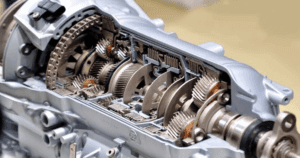 But behind that effortless experience is a hardworking component: the gearbox. I remember the first time I drove a manual car, and shifting gears felt confusing at first. But once I understood what the gearbox actually does, everything clicked.
In this guide, I’ll walk you through:
- What a gearbox really is
- How it works
- Types of gearboxes (and which one is best)
- Real-world pros, cons, and costs
- A buyer’s guide to help you choose
Let’s break it down.
What Is a Gearbox in a Car?
A gearbox (also called a transmission) is the part of your car that:
👉 Transfers power from the engine to the wheels
👉 Adjusts speed and torque using different gear ratios
In Simple Terms:
Think of the gearbox like a bicycle gear system.
- Low gear → More power, less speed
- High gear → Less power, more speed
Your car uses the same principle, but in a much more advanced way.
Why Is a Gearbox Important?
Without a gearbox:
- Your engine would struggle to move the car
- You couldn’t control speed efficiently
- Fuel consumption would skyrocket
What It Actually Does:
- Helps the car start moving smoothly
- Allows acceleration without damaging the engine
- Keeps engine RPM in an efficient range
- Improves fuel economy
How Does a Gearbox Work? (Easy Explanation)
Inside a gearbox are multiple gears of different sizes. When you shift gears:
- Different gear combinations engage
- This changes how engine power is delivered
Example:
- 1st Gear → High torque for starting
- 5th Gear → Low torque, high speed cruising
Types of Gearboxes (Explained Simply)
1. Manual Gearbox
You shift gears yourself using a clutch.
✔ More control
✔ Better fuel economy
❌ Requires skill
2. Automatic Gearbox
The car shifts gears for you.
✔ Easy to drive
✔ Great for traffic
❌ Slightly higher fuel consumption
3. CVT (Continuously Variable Transmission)
No fixed ge, ars smooth transitions.
✔ Super smooth driving
✔ Good efficiency
❌ Can feel “rubbery.”
4. Dual-Clutch Transmission (DCT)
Fast, sporty gear changes.
✔ Quick shifts
✔ Performance-oriented
❌ More expensive
Comparison Table: Gearbox Types
| Feature | Manual | Automatic | CVT | DCT |
| Driving Ease | Moderate | Very Easy | Very Easy | Easy |
| Fuel Efficiency | High | Medium | High | Medium-High |
| Maintenance Cost | Low | Medium | Medium | High |
| Performance | Good | Smooth | Moderate | Excellent |
| Best For | Enthusiasts | Daily commuters | City driving | Sports driving |
Real-World Driving Experience
From my experience:
- Manual gearbox feels engaging; you’re in control.
- Automatic is stress-free, especially in traffic jams.
- CVT feels smooth but sometimes lacks excitement.
- DCT feels fast and sporty, perfect for performance lovers.
👉 If you drive daily in heavy traffic, automatic wins.
👉 If you love driving, a manual or DCT is more fun.
Signs Your Gearbox Might Be Failing
Watch out for these symptoms:
- Difficulty shifting gears
- Grinding or strange noises
- Slipping gears
- Delayed acceleration
- Burning smell
Ignoring these can lead to very expensive repairs.
Maintenance Tips (From Experience)
- Change transmission fluid regularly
- Avoid aggressive shifting
- Don’t rest your hand on the gear lever (manual)
- Service your car on schedule
Cost of Gearbox Repair or Replacement
| Repair Type | Estimated Cost |
| Fluid Change | $50 – $150 |
| Minor Repair | $200 – $600 |
| Major Repair | $1,000 – $3,000 |
| Full Replacement | $2,000 – $5,000+ |
💡 Gearboxes are expensive. Maintenance is key.
Buyer’s Guide: Choosing the Right Gearbox
If you’re buying a car or replacing a transmission, here’s what to consider:
1. Driving Style
- City driving → Automatic or CVT
- Highway driving → Manual or DCT
- Performance driving → DCT
2. Budget
- Manual → Cheapest
- Automatic → Mid-range
- DCT → Expensive
3. Traffic Conditions
If you’re often stuck in traffic:
👉 Go automatic, it saves your legs and patience.
4. Maintenance Costs
Manuals are cheaper long-term.
DCTs and automatics cost more to repair.
5. Fuel Efficiency
- Best → Manual / CVT
- Moderate → Automatic
- Performance-focused → DCT
Deep Dive: How Gear Ratios Work
Gear ratios determine how power is transferred.
- Low ratio (1st gear): More torque, less speed
- High ratio (5th gear): Less torque, more speed
This balance is what makes your car:
✔ Efficient
✔ Powerful
✔ Smooth
Why Modern Gearboxes Are So Advanced
Today’s cars use:
- Electronic sensors
- AI-based shifting logic
- Adaptive driving modes
This means:
👉 Smoother rides
👉 Better fuel economy
👉 Improved performance
Manual vs Automatic: Which Is Better?
Manual:
✔ Cheaper
✔ More control
✔ Better mileage
Automatic:
✔ Easier
✔ Comfortable
✔ Ideal for beginners
👉 There’s no “best”; it depends on your needs.
Common Gearbox Problems Explained
1. Gear Slipping
The car changes gears unexpectedly.
2. Hard Shifting
Feels rough when changing gears.
3. Transmission Overheating
Usually due to low fluid.
4. Fluid Leaks
Can cause major damage if ignored.
Long-Term Ownership Insights
From long-term use:
- Manual gearboxes last longer with proper care
- Automatics require more maintenance
- DCTs offer great performance but higher repair costs
When Should You Service Your Gearbox?
- Every 40,000–100,000 km (depending on type)
- Immediately, if you notice unusual behavior
Read More: How To Take Fuel Out Of A Car Tank
FAQs: What Is A Gearbox In A Car
What is the main function of a gearbox?
To transfer engine power to the wheels efficiently.
Is a gearbox the same as a transmission?
Yes, both terms are often used interchangeably.
Which gearbox is best for beginners?
Automatically, it’s easiest to drive.
Can a gearbox last the lifetime of a car?
Yes, with proper maintenance.
What happens if the gearbox fails?
The car may stop moving or become unsafe to drive.
Is manual better than automatic?
Depends on preference:e manual for control, automatic for comfort.
Final Thoughts: Why the Gearbox Matters More Than You Think
The gearbox isn’t just another car part; it’s what makes driving smooth, efficient, and enjoyable. Whether you prefer:
- The control of a manual
- The ease of an automatic
- The smoothness of a CVT
- Or the performance of a DCT
Understanding your gearbox helps you:
Drive better
Maintain your car
Avoid costly repairs