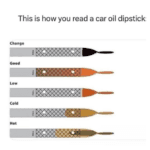
The first time I checked my car’s oil, I had no idea what I was looking at. There was a metal stick, some oil on the end, two little marks, and a lot of confusion. Was it full? Low? Too much? Why did it look darker than I expected?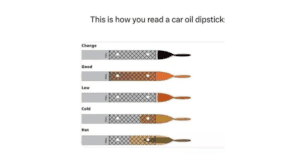 Learning how to read a dipstick properly is one of the simplest and most powerful car maintenance skills you can have. It takes less than five minutes and can literally save you thousands of dollars in engine repairs.
Whether you drive a reliable daily like a Toyota Corolla or something sportier like a Honda Civic, checking engine oil is a universal skill every car owner should know.
In this complete guide, I’ll walk you through:
- What a dipstick actually does
- When and how to check your oil
- How to read the oil level correctly
- What does oil color means
- Signs of engine trouble
- A comparison table for quick reference
- A buyer’s guide for oil-related tools
- And detailed FAQs
Let’s make this simple and stress-free.
What Is an Oil Dipstick?
An oil dipstick is a long metal or plastic rod that sits inside your engine’s oil pan. Its purpose is simple:
👉 Measure your engine oil level.
At the end of the dipstick, you’ll see markings such as:
- MIN and MAX
- LOW and FULL
- Two dots or a cross-hatched area
Those markings tell you whether your engine has enough oil. Oil is the lifeblood of your engine. Without proper oil levels:
- Engine parts overheat
- Metal components grind together
- Severe engine damage can occur
When Should You Check Engine Oil?
From personal experience, I recommend checking your oil:
- Once every 2–4 weeks
- Before long road trips
- After engine repairs
- If the dashboard oil light appears
- If the engine sounds louder than usual
Even modern vehicles like a Ford F-150 or BMW 3 Series still benefit from manual oil checks, even if they have electronic monitoring systems.
Step-by-Step: How To Read a Dipstick Oil Properly
Let’s go step by step.
Step 1: Park on Level Ground
Always check the oil on flat ground. A slope can give a false reading.
Step 2: Turn Off the Engine
Wait at least 5–10 minutes after shutting off the engine.
This allows oil to settle back into the oil pan.
Step 3: Locate the Dipstick
Open the hood and look for a yellow or orange handle. It usually has an oil can symbol.
Step 4: Pull It Out and Wipe It Clean
Use a paper towel or a clean cloth. The first reading is never accurate.
Step 5: Reinsert Fully
Push the dipstick all the way back in.
Step 6: Pull It Out Again and Check the Level
Now look at where the oil reaches between the markings.
How To Read the Oil Level Markings
Most dipsticks have:
- Two holes
- Two lines
- A crosshatched area
Here’s what they mean:
| Oil Position | What It Means | Action Needed |
| At or near MAX | Full | No action |
| Between MIN & MAX | Safe | Monitor |
| Near MIN | Low | Add oil soon |
| Below MIN | Very Low | Add oil immediately |
If oil is above MAX, that can also be a problem. Too much oil can cause:
- Foaming
- Increased pressure
- Seal damage
How To Read Oil Color
Color matters too.
Golden or Amber
Fresh oil. Perfect.
Light Brown
Normal used oil.
Dark Brown/Black
Old oil. Consider a change.
Milky or Creamy
Possible coolant contamination. Serious issue.
Gritty or Metallic
Internal engine wear. If you see milky oil in something like a Chevrolet Malibu, that could indicate a blown head gasket.
Engine Oil Condition Comparison Table
| Oil Appearance | Meaning | Recommended Action |
| Clear Amber | Fresh oil | None |
| Light Brown | Normal wear | Monitor |
| Dark Black | Dirty | Schedule an oil change |
| Milky | Coolant mixing | Immediate inspection |
| Metallic Shine | Engine wear | Mechanic visit |
Common Mistakes When Reading a Dipstick
I’ve made some of these myself:
❌ Checking oil while the engine is running
❌ Not wiping before the second reading
❌ Checking on uneven ground
❌ Reading oil smear incorrectly
❌ Ignoring low-level warning signs
Take your time. Accuracy matters.
Why Proper Oil Level Is So Important
Engine oil does more than lubricate.
It:
- Reduces friction
- Prevents overheating
- Cleans internal components
- Protects against corrosion
- Improves fuel efficiency
Running low on oil can destroy an engine faster than almost anything else.
How Much Oil Should You Add?
If oil is at MIN, usually:
- Add about half a quart (0.5L), then recheck.
- Never pour the entire bottle without checking.
- Overfilling can be just as harmful as underfilling.
Synthetic vs Conventional Oil: Does It Affect Dipstick Reading?
Not in terms of level, but color and longevity differ. Synthetic oil:
- Lasts longer
- Handles heat better
- Stays cleaner longer
Vehicles like the Audi A4 often require synthetic oil.
Always follow manufacturer recommendations.
Buyer’s Guide: Tools & Products for Checking and Maintaining Oil
Here’s what I personally keep in my trunk:
1. Quality Engine Oil
Match viscosity (5W-30, 0W-20, etc.)
2. Funnel
Prevents spills.
3. Clean Microfiber Cloth
Reusable and lint-free.
4. OBD-II Scanner
Helps check engine codes.
5. Gloves
Optional but useful.
How Often Should You Change Engine Oil?
Depends on:
- Driving habits
- Oil type
- Manufacturer recommendation
Typical ranges:
- Conventional: 3,000–5,000 miles
- Synthetic: 7,500–10,000 miles
Modern cars often have oil life monitoring systems, but manual checks still matter.
Signs You’re Burning Oil
If your dipstick shows consistent drops between checks, you might have:
- Valve seal wear
- Piston ring issues
- Oil leaks
Blue smoke from exhaust is a major warning sign.
Long Technical Expansion: Understanding Oil Level Measurement
The dipstick works by physically measuring the oil depth in the oil pan. Oil expands slightly when warm, so checking after the engine has cooled slightly gives accurate readings.
Crosshatched zones represent the safe operating range. The distance between MIN and MAX typically equals about one quart (or one liter).
Maintaining oil within this range ensures:
- Proper oil pressure
- Adequate lubrication
- Thermal stability
Electronic oil sensors in modern vehicles supplement — but do not fully replace — manual checks.
FAQs: How To Read a Dipstick Oil
Should I check the oil hot or cold?
Warm but engine off for 5–10 minutes is ideal.
What if oil is overfilled?
Drain excess immediately.
Can dark oil still be good?
Yes, color alone isn’t everything — but dark, thick oil often signals change time.
How often should I check?
Every 2–4 weeks.
What happens ifthe oil is too low?
Severe engine damage can occur.
Why is my dipstick hard to read?
Oil smear can confuse readings — wipe and reinsert carefully.
Do new cars need oil checks?
Yes. Even modern engines consume oil.
Final Thoughts: Why This Small Habit Matters
Reading your dipstick oil is simple.
It’s quick.
It’s free.
And it protects one of the most expensive parts of your vehicle.
After making it a monthly habit, I’ve avoided leaks, caught low levels early, and gained peace of mind.
Whether you drive a basic commuter or a performance machine, this five-minute check is worth it.
Your engine will thank you.