Checking your engine oil is one of those things everyone knows they should do… but almost nobody actually does until a dashboard light starts yelling at them. I’ll be honest: I ignored engine oil checks for years.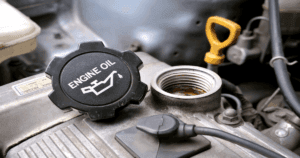 I assumed oil changes every few thousand miles were enough. Spoiler alert: they’re not. Learning how to properly check your engine oil saved me from a blown engine, a massive repair bill, and a whole lot of stress.
This guide isn’t written like a mechanic’s manual. It’s written like a friend walking you through it in your driveway, coffee in one hand, dipstick in the other. Let’s get into it.
Why Checking Engine Oil Actually Matters (More Than You Think)
Engine oil does five critical jobs:
- Lubricates moving engine parts
- Reduces heat and friction
- Cleans sludge and debris
- Prevents corrosion
- Helps your engine last longer
When oil is low, dirty, or degraded, your engine suffers silently until it doesn’t. Most catastrophic engine failures don’t happen suddenly; they build slowly due to neglected oil.
I learned this the hard way when my old sedan started ticking at startup. That ticking sound? Oil starvation. One dipstick check earlier could’ve saved me thousands.
My Personal Wake-Up Call With Engine Oil
Years ago, I bought a used car that “ran great.” Two months later, it didn’t. No warning lights. No dramatic breakdown. Just sluggish performance and that awful ticking noise.
When I finally checked the oil, the dipstick barely had anything on it, and what was there looked like burnt coffee. That moment changed how I treat engine oil forever.
What You Need Before Checking Your Engine Oil
Good news: you don’t need fancy tools.
Basic Checklist
- Your car (obviously)
- Clean rag or paper towel
- Flat parking surface
- 5 minutes of patience
That’s it.
When Is the Best Time to Check Engine Oil?
This is where people mess up the most.
The Best Time
- Engine off
- Car on level ground
- After the engine has cooled for 5–10 minutes
Why? Because hot oil hasn’t fully settled back into the oil pan yet. Checking too soon gives a false low reading.
Can You Check Oil When the Engine Is Cold?
Yes, and many manufacturers actually recommend it. Cold checks are consistent and safe.
Step-by-Step: How To Properly Check Your Engine Oil
Let’s do this the right way.
Step 1: Park on Level Ground
Even a slight slope can throw off your reading.
Step 2: Turn Off the Engine
Let it sit for at least 5 minutes.
Step 3: Pop the Hood
Locate the hood release inside the car, then secure the hood with the prop rod.
Step 4: Find the Dipstick
Usually has a bright yellow or orange handle.
Step 5: Pull It Out and Wipe It Clean
Use a rag or paper towel.
Step 6: Reinsert the Dipstick Fully
Push it all the way in.
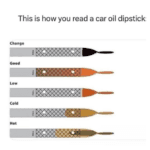
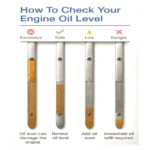
Step 7: Pull It Out Again and Check the Level
Look for:
- Min/Max marks
- Crosshatch area
- Oil color and texture
How to Read the Oil Level Correctly
Ideal Level
Oil should be between the minimum and maximum marks, preferably closer to max.
Too Low
- Risk of engine damage
- Needs immediate topping off
Too High
- Can cause foaming
- May damage seals and gaskets
What Engine Oil Color Tells You
Oil color is like a health report.
Oil Color Guide
| Oil Color | What It Means | Action |
| Light amber | Healthy oil | No action |
| Dark brown | Normal wear | Monitor |
| Black | Dirty oil | Change soon |
| Milky | Coolant contamination | Stop driving |
| Gritty | Engine debris | Immediate service |
Fresh oil darkens quickly; that’s normal. Texture matters more than color.
Oil Smell: An Overlooked Clue
Yes, smell it.
- Burnt smell → Overheating
- Gasoline smell → Fuel dilution
- Sweet smell → Coolant leak
Your nose can catch problems before sensors do.
Dashboard Oil Light vs Dipstick (Big Difference)
This is crucial:
- Oil pressure light ≠ , oil level
- By the time the light turns on, damage may already be happening
The dipstick is proactive. The warning light is reactive.
How Often Should You Check Engine Oil?
My rule of thumb:
- Once a month
- Before long road trips
- Every other fuel fill-up for older cars
High-mileage engines consume oil faster, especially turbocharged ones.
Common Mistakes People Make (I’ve Made All of These)
- Checking the oil right after driving
- Not wiping the dipstick first
- Overfilling the engine
- Ignoring the oil color and smell
- Assuming oil changes replace oil checks
Oil checks take 2 minutes. Engine replacements take weeks.
Synthetic vs Conventional Oil: Does It Change How You Check?
Short answer: No. Long answer:
- Synthetic oil stays cleaner longer
- Conventional oil darkens faster
- Both still need regular checks
Comparison Table: Engine Oil Check Methods
| Method | Accuracy | Ease | Recommended |
| Dipstick | High | Easy | ✅ Yes |
| Dashboard sensor | Low | Easy | ❌ No |
| Service reminder | None | Easy | ❌ No |
| Oil analysis | Very High | Hard | Optional |
Dipstick wins every time.
Buyer’s Guide: Tools & Products That Make Oil Checks Easier
You can do this bare-bones, but a few cheap tools help.
1. Funnel
Prevents spills when topping off oil.
2. Disposable Gloves
Keeps your hands clean.
3. Flashlight
Great for low-light garages.
4. Oil Catch Rag
Reusable microfiber beats paper towels.
5. Correct Oil Type
Always match:
- Viscosity (5W-30, 0W-20, etc.)
- Manufacturer spec
Your owner’s manual is gospel here.
How Much Oil Should You Add If It’s Low?
Rule of thumb:
- Add half a quart at a time
- Recheck after each addition
Never dump a full quart blindly.
Can Checking Oil Improve Fuel Economy?
Indirectly yes. Proper oil level:
- Reduces friction
- Improves efficiency
- Keeps the engine operating smoothly
It won’t double MPG, but it helps.
High-Mileage Cars: Extra Oil Tips
If your car has over 100,000 miles:
- Expect some oil consumption
- Check more frequently
- Consider high-mileage oil formulas
Older engines talk through oil loss.
Seasonal Oil Check Tips
Summer
- Oil thins faster
- Heat accelerates breakdown
Winter
- Cold starts are harder on oil
- Low oil shows up faster
Seasonal checks matter.
Read More: How Do You Know If Your Car Needs Oil | My Honest Experience
FAQs: How To Properly Check Your Engine Oil
How long after driving should I wait?
5–10 minutes minimum.
Can I check the oil while the engine is running?
No. Dangerous and inaccurate.
Why does my oil disappear?
Normal consumption, leaks, or burning oil.
Is dark oil always bad?
No. Texture matters more.
Can I mix oil brands?
Yes same viscosity and spec.
How low is too low?
Below minimum mark = add oil immediately.
Should I wipe the dipstick every time?
Always. No exceptions.
Final Thoughts: Why This Simple Habit Matters
Checking your engine oil is one of the highest-impact, lowest-effort things you can do for your car. It costs nothing, takes minutes, and can literally extend your engine’s life by years.
Once you build the habit, it becomes second nature, like checking your phone battery. Trust me: future you (and your wallet) will be grateful.