Parallel parking is one of those driving skills that feels way harder than it should be. You either nail it and feel like a pro… or you end up sweaty, embarrassed, and blocking traffic while strangers judge you silently. I’ve been on both sides of that moment. And one of the most misunderstood rules in parallel parking is this sentence that shows up on driving tests and road manuals everywhere:
When parking parallel, it is best to leave the curbside wheels… So what comes next? Straight? Turned? How far from the curb? Let’s clear it all up without the stiff textbook tone.
The Correct Answer
When parking parallel, it is best to leave the curbside wheels:
👉 No more than 12 inches (1 foot) from the curb and straight (or turned toward the curb when required)
In most everyday situations:
- Your curbside wheels should be straight
- Your car should sit within 6–12 inches of the curb
On hills, the rules change slightly, and we’ll cover that too.
Why This Rule Exists (It’s Not Just to Be Annoying)
This rule isn’t about perfection. It’s about safety, traffic flow, and preventing rollaways. Leaving your curbside wheels positioned correctly:
- Prevents your car from rolling into traffic
- Keeps emergency lanes clear
- Protects cyclists
- Reduces curb damage
- Helps street sweepers and snowplows do their jobs
In other words, it’s boring but important.
My First Parallel Parking Fail (True Story)
During my first driving test, I parked what I thought was perfectly.
The examiner looked at my wheels.
Looked at the curb.
Then calmly said:
“You’re too far.”
I was 18 inches from the curb.
Fail.
That’s when I learned: close counts until it doesn’t.
How Close Should Curbside Wheels Be?
The Golden Range
- 6 to 12 inches from the curb
- Tires parallel to the curb
- No part of the car is sticking into traffic
Anything more than a foot?
❌ Technically incorrect
❌ Ticket-worthy in many cities
❌ Driving-test failure territory
Straight Wheels vs Turned Wheels (This Is Where People Get Confused)
On Flat Roads
- Leave wheels straight
- No turning needed
On Hills (Very Important)
| Parking Situation | Wheel Direction |
| Downhill, with a curb | Turn wheels toward the curb |
| Uphill, with curb | Turn wheels away from the curb |
| Uphill, no curb | Turn the wheels toward the roadside |
This ensures that if your car rolls, it rolls into the curb,b not traffic.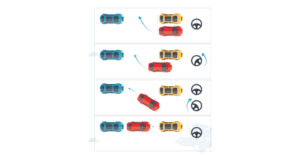
Why “Curbside Wheels” Matter More Than the Car Body
You might think:
“As long as the car looks straight, I’m fine.”
Not true.
Law enforcement and driving instructors check:
- Tire position
- Wheel angle
- Distance from the curb to the tires
Your mirrors and bumpers don’t matter as much as the rubber touching the road.
Common Parallel Parking Myths (Let’s Kill These)
❌ “Close enough is fine.”
Nope. Cities ticket aggressively.
❌ “Only the bumper matters.”
Wrong. Wheels matter most.
❌ “Turning wheels is optional.”
Not on hills. Ever.
❌ “I can fix it later.”
If your car rolls, later never comes.
Step-by-Step: How I Parallel Park Every Time
This is my personal method tested in tight city streets.
Step 1: Signal Early
Let traffic know what’s happening.
Step 2: Line Up With the Front Car
Your rear bumper aligned with theirs.
Step 3: Turn Wheel Fully Toward the Curb (While Reversing)
Back slowly.
Step 4: Straighten the Wheels
Once your car is angled into the space.
Step 5: Turn Away From the Curb to Finish
Ease into place.
Step 6: Check Curbside Wheels
Hop out if needed. If it’s over 12 inches, adjust.
Comparison Table: Good vs Bad Curbside Wheel Positioning
| Situation | Result | Risk |
| 6–12 inches, straight | ✅ Ideal | None |
| Touching curb | ⚠️ Acceptable | Tire wear |
| 12–18 inches away | ❌ Incorrect | Ticket risk |
| Over 18 inches | ❌ Illegal | Traffic hazard |
| Wheels turned the wrong way on the hill | ❌ Dangerous | Rollaway |
What Happens If You Park Too Far From the Curb?
Real consequences:
- Parking tickets
- Failed road tests
- Scraped mirrors by passing cars
- Cyclist accidents
- Two warnings in cities
In some U.S. cities, anything over 12 inches is a citable offense.
Buyer’s Guide: Tools That Help With Parallel Parking
You don’t need the set,se but they help.
1. Blind Spot Mirrors
Small investment, huge visibility gain.
2. Backup Camera
Especially useful for curb distance.
3. Parking Sensors
Audible cues = less guessing.
4. Tire Sidewall Protectors
Prevents curb rash during learning.
5. Dash Cam
Not for parking, but great for ticket disputes.
Parallel Parking in Tight Urban Areas
Cities like:
- New York
- Chicago
- San Francisco
- Boston
…have narrower curbs and stricter enforcement.
Rule of thumb:
If you think you’re close enough, go 2 inches closer.
Parallel Parking and Driving Tests
Examiners look for:
- Proper signaling
- Smooth movement
- Correct curbside wheel placement
- Wheel direction on hills
You can park beautifully and still fail just because of wheel position.
Weather Matters More Than You Think
Rain
Slippery curbs → easier to misjudge distance
Snow
Curbs may be burying landmarks
Ice
Wheel direction becomes critical on hills
Read More: What Is The Most Expensive Car In The World
FAQs: Parallel Parking & Curbside Wheels
How far should curbside wheels be from the curb?
Ideally, 6–12 inches.
Should wheels be straight when parked?
Yes, unless you’re on a hill.
Can my tires touch the curb?
Light contact is okay, but not ideal.
Why do I keep getting tickets?
Most likely too far from the curb.
Does this rule apply everywhere?
Yes, with minor local variations.
What if the curb is damaged or uneven?
The judge based the tire, not the body.
Is this tested on driving exams?
Absolutely.
Final Thoughts: Why This One Detail Matters So Much
Parallel parking isn’t about showing off; it’s about control, awareness, and responsibility. Getting your curbside wheels right:
- Keeps everyone safe
- Saves you money
- Makes you a better driver
Once you master this, parallel parking stops being stressful and starts feeling routine.
And that’s when you know you’ve leveled up 🚗