Simple habits save engines. Period. I learned that the hard way. Years ago, I ignored checking my engine oil because “the car sounded fine.” No warning lights. No strange noises. Just normal driving.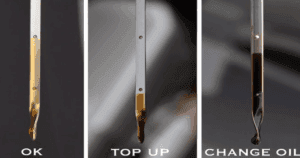 Then one day, boo,m engine knocking, overheating, and a repair bill that felt like a punch in the wallet. That’s when I realized something important: Checking your dipstick and engine oil is one of the easiest, cheapest, and most powerful car maintenance habits you can build.
This isn’t some mechanic-only skill. Anyone can do it, no tools, no lifts, no garage, no experience needed. This guide is based on real-world experience, everyday driving, and practical advice, not textbook theory. I’ll show you:
- How to check oil properly
- How to read a dipstick correctly
- Whatdoes the oil color means
- Common mistakes people make
- When oil is low vs bad
- How often to check oil
- What oil type actually matters
- What tools are worth buying
- A buyer’s guide
- Comparison tables
- FAQs
- Plus simple habits that save your engine long-term
Let’s get into it.
Why Checking Engine Oil Actually Matters (More Than You Think)
Engine oil isn’t just “liquid in the engine.” It does 5 critical jobs:
- Lubrication – prevents metal-on-metal grinding
- Cooling – absorbs engine heat
- Cleaning – carries dirt and debris to the filter
- Sealing – helps piston rings seal properly
- Protection – prevents corrosion and wear
No oil = engine death.
Dirty oil = engine damage.
Low oil = engine stress.
Modern engines are powerful, but they are not forgiving.
What Is a Dipstick?
A dipstick is a long metal or plastic rod that goes into your engine oil pan and measures the oil level.
It usually has:
- A yellow, orange, or red handle
- Markings:
- MIN / MAX
- LOW / FULL
- Crosshatch area
- Two dots or lines
Simple tool. Massive importance.
How To Check Engine Oil With a Dipstick (Step-by-Step, Real World Method)
This is the method I personally use, simple, safe, and accurate.
Step 1: Park on Level Ground
Flat surface matters. Slopes give false readings.
Step 2: Turn the engine off
Let it sit 5–10 minutes if warm.
This lets oil settle into the pan.
Step 3: Open the Hood
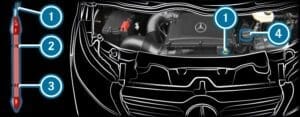
Locate the dipstick handle (bright color usually).
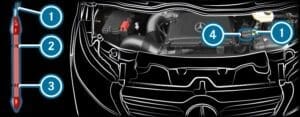
Step 4: Pull the dipstick out
Wipe it clean with:
- Paper towel
- Tissue
- Rag
Step 5: Reinsert Fully
Push it all the way back in.
Step 6: Pull It Out Again
Now read the oil level.
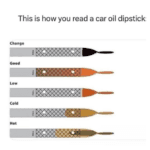
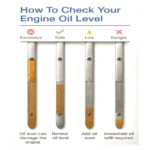
How To Read the Dipstick Properly
Markings Meaning:
| Mark | Meaning |
| MIN / LOW | Minimum safe level |
| MAX / FULL | Maximum safe level |
| Between | Safe operating zone |
Correct Oil Level:
👉 Oil should be between MIN and MAX
👉 Best level = near MAX but not above
Bad Readings:
- Below MIN → Low oil (danger)
- No oil on stick → Critical danger
- Above MAX → Overfilled (can damage engine)
Oil Color Guide (What It Really Means)
| Oil Color | Meaning |
| Golden/Amber | Clean, healthy |
| Dark brown | Normal used oil |
| Black | Old/dirty oil |
| Milky | Coolant leak (serious issue) |
| Foamy | Air or contamination |
| Thick sludge | Neglected oil changes |
Color + thickness matter, not just level.
Common Mistakes People Make (That Kill Engines)
- Checking oil on a slope
- Not wiping the dipstick before reading
- Checking right after driving
- Ignoring oil color
- Overfilling
- Only relying on dashboard lights
- Never checking between oil changes
- Using the wrong oil type
- Thinking “new car doesn’t need checks.”
- Trusting sound instead of measurement
How Often Should You Check Engine Oil?
Realistic rule:
- Old cars → weekly
- Daily drivers → every 2 weeks
- New cars → monthly
- Long trips → before trips
- High mileage engines → weekly
I personally check mine every Sunday. Takes 2 minutes.
Engine Oil vs Dipstick: What Each Tells You
| Dipstick | Oil Condition |
| Level | Quantity |
| Color | Cleanliness |
| Thickness | Viscosity |
| Smell | Burning/contamination |
| Foam | Air/coolant issues |
Dipstick = measurement
Oil = diagnosis
Personal Experience: Why This Habit Changed Everything
Once I started checking oil regularly:
- My engine ran smoother
- Fuel economy improved
- No overheating issues
- No engine warning lights
- Oil changes became predictable
- Repairs dropped
- Engine noise reduced
- Confidence while driving increased
It’s one of those tiny habits that creates huge long-term benefits.
Comparison Table: Checking Oil Methods
| Method | Accuracy | Cost | Ease | Risk |
| Dipstick | High | Free | Very easy | None |
| Dashboard sensor | Medium | Built-in | Easy | Sensor failure |
| Mechanic check | High | Paid | Medium | Time delay |
| Oil change shop | High | Paid | Medium | Trust-based |
Dipstick = fastest + safest + cheapest
Buyer’s Guide: Best Tools for Checking Engine Oil
You don’t need much, but a few tools make life easier:
Must-Have:
- Microfiber rag
- Paper towels
- Flashlight
- Funnel
- Gloves
Optional Tools:
- Oil tester strip
- LED inspection light
- Magnetic drain plug
- OBD scanner
- Oil viscosity tester
Best Budget Tools
| Tool | Price Range | Value |
| Microfiber cloth | $2–5 | Excellent |
| Funnel | $3–7 | Essential |
| Flashlight | $5–10 | Very helpful |
| Gloves | $5–10 | Clean work |
| Oil tester strip | $5–15 | Advanced |
Engine Oil Types Explained Simply
| Type | Best For |
| Conventional | Old cars |
| Synthetic blend | Daily drivers |
| Full synthetic | Modern engines |
| High mileage oil | 75k+ miles cars |
| Diesel oil | Diesel engines |
Always match:
- Owner’s manual
- Engine spec
- Climate
- Driving style
Signs Your Engine Oil Needs Attention
- Engine knocking
- Burning smell
- Oil light flicker
- Dark smoke
- Poor mileage
- Overheating
- Rough idle
- Ticking noise
- Oil leaks
- Sludge buildup
Pro Tips From Real Experience
✔ Check oil in daylight
✔ Keep spare oil in trunk
✔ Log oil checks
✔ Watch oil consumption
✔ Use correct viscosity
✔ Change oil filter always
✔ Don’t overfill
✔ Warm engine readings matter
✔ Cold engine readings differ
✔ Trust dipstick over sensors
Beginner-Friendly Oil Check Routine
- Park
- Cool down
- Pull dipstick
- Wipe
- Insert
- Pull
- Read
- Inspect color
- Smell oil
- Log result
Takes under 2 minutes.
Why This Skill Makes You a Smarter Car Owner
Because:
- You catch problems early
- You avoid breakdowns
- You save repair money
- You extend engine life
- You don’t rely blindly on mechanics
- You build real car knowledge
- You prevent catastrophic failure
Read More: How To Check Engine Oil Color
FAQs: How To Check Dipstick And Engine Oil
Q1: Can I check oil when the engine is hot?
Yes, but wait 5–10 minutes for an accurate reading.
Q2: Is black oil bad?
Not always, but very black, thick oil means it’s time to change.
Q3: How low is too low?
Below MIN is dangerous. No oil on dipstick = emergency.
Q4: Can overfilling damage the engine?
Yes, causes pressure buildup, seal damage, and foaming.
Q5: How much oil to add if low?
Usually 0.5–1 quart at a time.
Q6: Do new cars need oil checks?
Yes, sensors can fail.
Q7: Why is my oil milky?
Coolant leak serious engine issue.
Q8: Can I mix oil types?
In emergencies only, same viscosity preferred.
Q9: Is synthetic oil better?
Yes, for modern engines.
Q10: How long can I drive with low oil?
Not long-term damage happens fast.
Final Thoughts (Real Talk)
Checking your dipstick and engine oil is not “car nerd stuff.” It’s basic survival knowledge for your vehicle.
It’s free.
It’s fast.
It’s easy.
It saves money.
It saves engines.
It prevents breakdowns.
It gives confidence.
A 2-minute habit can protect a $5,000–$10,000 engine. That’s one of the best time-to-value ratios in car ownership.