The first time I heard the words “cracked cylinder head,” my stomach dropped. My car had overheating issues, white smoke, coolant loss, and oil contamination. I assumed it was a head gasket.
The mechanic shook his head and said, “We need to pressure test the head.” I had no idea what that meant. A few hours later, I learned a hard lesson: not every engine problem is a gasket; sometimes the metal itself is damaged.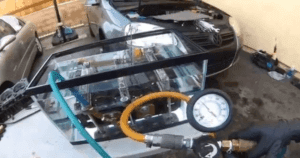 That experience pushed me to learn how cylinder heads actually fail, how cracks form, and how pressure testing works. Over time, I learned how to do basic checks myself and how to understand professional test results instead of being in the dark.
This guide is written for real drivers, DIY mechanics, and car owners, not engineers. No complicated jargon. No textbook language. Just real explanations, real experience, and clear steps. If you’re dealing with:
- Overheating
- Coolant loss
- White exhaust smoke
- Oil contamination
- Misfires
- Compression loss
This guide will help you understand if your cylinder head might be cracked and how pressure testing confirms it.
What Is a Cylinder Head (Simple Explanation)
The cylinder head sits on top of your engine block. It seals the combustion chambers and controls:
- Air intake
- Fuel delivery
- Exhaust flow
- Coolant circulation
- Oil flow
It’s the control center of your engine. If it cracks, fluids mix, pressure escapes, and combustion becomes unstable. That’s when serious damage begins.
What Does “Pressure Testing a Cylinder Head” Mean?
Pressure testing means sealing the cylinder head and forcing air or liquid pressure through internal coolant passages to see if any leaks appear. If there’s a crack, pressure will escape, usually visible as:
- Air bubbles
- Fluid leaks
- Pressure loss
This is the most reliable way to detect:
- Hairline cracks
- Internal fractures
- Porosity defects
- Casting flaws
Signs Your Cylinder Head Might Be Cracked
Visual Signs
- White smoke from the exhaust
- Milky oil
- Coolant in oil
- Oil in the coolant reservoir
Performance Signs
- Rough idle
- Misfires
- Loss of power
- Overheating
Mechanical Signs
- Low compression
- Coolant pressure buildup
- Repeated head gasket failure
Why Pressure Testing Is Better Than Guessing
Many problems look the same:
- Blown head gasket
- Warped head
- Cracked head
- Block damage
Pressure testing removes guesswork. It gives proof, not assumptions.
Step-by-Step: How To Pressure Test A Cylinder Head
⚠️ Important: True pressure testing requires removing the cylinder head. External engine pressure tests only show cooling system leaks, not internal cracks.
Method 1: Professional Shop Pressure Test (Most Accurate)
Tools Used:
- Sealing plates
- Rubber gaskets
- Compressed air system
- Water tank
- Pressure gauges
Process:
- The cylinder head is removed
- All ports are sealed
- Air pressure is applied internally
- The head is submerged in water
- Bubbles indicate cracks
This is the gold standard.
Method 2: DIY Pressure Test (Limited but Helpful)
Tools Needed:
- Coolant pressure tester
- Rubber plugs
- Air compressor
- Soap water
DIY Process:
- Remove the cylinder head
- Seal coolant passages
- Apply air pressure
- Spray soapy water
- Watch for bubbles
⚠️ Not as accurate as professional testing, but useful for visible cracks.
Method 3: Cooling System Pressure Test (Engine Installed)
This tests the cooling system, not the head directly.
What It Shows:
- External leaks
- Internal coolant leaks
- Pressure loss
What It Cannot Confirm:
- Hairline head cracks
- Internal casting fractures
Comparison Table: Testing Methods
| Method | Accuracy | Cost | Requires Head Removal | Best Use |
| Professional pressure test | ⭐⭐⭐⭐⭐ | Medium | Yes | Definitive diagnosis |
| DIY air test | ⭐⭐⭐ | Low | Yes | Visible cracks |
| Cooling system test | ⭐⭐ | Low | No | Preliminary check |
Common Crack Locations in Cylinder Heads
- Valve seats
- Spark plug holes
- Exhaust ports
- Coolant passages
- Between valves
- Combustion chambers
These areas experience extreme heat stress.
Why Cylinder Heads Crack
- Overheating
- Coolant loss
- Detonation
- Poor casting quality
- Rapid temperature changes
- Old age
- High mileage
Heat stress is the #1 cause.
Buyer’s Guide: Tools for Pressure Testing
Must-Have Tools
1. Cooling System Pressure Tester
- Detects leaks
- Pressurizes system
- Budget-friendly
2. Air Compressor
- Required for DIY testing
3. Rubber Expansion Plugs
- Seal coolant passages
4. Soap Solution Spray
- Leak detection
Best Tool Types by User Level
| User Type | Recommended Tools |
| Beginner | Cooling system tester |
| DIY mechanic | Air compressor + plugs |
| Advanced DIY | Test plates + regulator |
| Professional | Submersion pressure rig |
Repair Options If a Crack Is Found
Small Crack Options
- Cold welding
- Metal stitching
- Epoxy repair
Serious Damage
- Head replacement
- Engine replacement
- Remanufactured head
Reality Check
Most cracked heads are cheaper to replace than repair.
Cost Breakdown
| Service | Average Cost |
| Pressure test | $40–$120 |
| Crack repair | $200–$800 |
| Head replacement | $500–$2,500 |
| Engine replacement | $2,500–$7,000 |
My Personal Diagnostic Routine
- Check coolant loss
- Check oil contamination
- Cooling pressure test
- Compression test
- Leak-down test
- Head removal
- Pressure test
Step-by-step logic saves money.
Read More: What Car Is Lightning Mcqueen
FAQs: How To Pressure Test A Cylinder Head For Cracks
Can a cracked head look like a blown head gasket?
Yes symptoms are almost identical.
Can you drive with a cracked cylinder head?
Yes briefly. But damage escalates fast.
Is pressure testing 100% accurate?
Professional testing is extremely reliable.
Can cracks be invisible?
Yes, hairline cracks often are.
Does overheating always crack heads?
Not always, but it’s the main cause.
Can aluminum heads be welded?
Sometimes, but reliability varies.
Should I repair or replace?
Replacement is usually safer long-term.
Can sealants fix cracks?
Temporary, not permanent repairs.
Final Thoughts
Learning how to pressure test a cylinder head changes how you diagnose engine problems.
It removes guessing.
It saves money.
It prevents wrong repairs.
It protects your engine.
Most people replace parts blindly. Smart owners test first. Because engines don’t lie, pressure reveals the truth. If there’s one diagnostic skill that separates guessing from knowing, it’s pressure testing.
And once you understand it, you’ll never look at overheating problems the same way again.