If you’ve ever popped the hood of an older car and stared at the engine, wondering how fuel actually gets mixed with air before combustion, you’re not alone. The carburetor is one of those fascinating components that feels almost mechanical-artistic in how it works.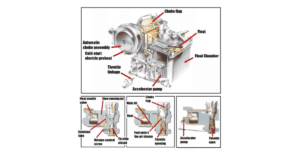 Before modern fuel injection systems took over, carburetors were the heart of fuel delivery, and honestly, they still hold a special place for car enthusiasts. In this guide, I’ll walk you through a car carburetor diagram, explain each part, and share real-world insights from a practical perspective.
Whether you’re restoring a classic car, troubleshooting performance issues, or just curious, this guide keeps things simple, useful, and engaging.
What Is a Car Carburetor?
A carburetor is a device that mixes air and fuel in the correct ratio for combustion in an internal combustion engine. It works based on a principle called the Venturi effect, which pulls fuel into the airstream as air flows through a narrowed section.
Think of it like a controlled spray system balancing air and fuel perfectly so your engine runs smoothly.
Basic Car Carburetor Diagram Explained
Here’s a simplified breakdown of a typical carburetor diagram and its major components:
Key Parts of a Carburetor
- Air Intake
- Entry point for air into the carburetor.
- Usually connected to an air filter.
- Venturi
- A narrow section that increases airflow speed.
- Creates low pressure to draw fuel into the air stream.
- Throttle Valve
- Controls how much air-fuel mixture enters the engine.
- Connected to the accelerator pedal.
- Choke Valve
- Restricts airflow to create a richer mixture during cold starts.
- Float Chamber (Fuel Bowl)
- Stores fuel at a constant level.
- Works like a mini fuel reservoir.
- Float
- Regulates fuel level inside the chamber.
- Similar to how a toilet tank works.
- Main Jet
- Controls the amount of fuel entering the venturi.
- Idle Jet
- Supplies fuel when the engine is idling.
- Needle Valve
- Opens and closes to maintain the fuel level.
How a Carburetor Works (Step-by-Step)
Let’s break it down into a simple process:
- Air enters through the intake.
- It passes through the venturi, speeding up and lowering pressure.
- This pressure difference pulls fuel from the float chamber.
- Fuel mixes with air into a fine mist.
- The throttle controls how much mixture goes into the engine.
- The engine burns the mixture to produce power.
Simple in theory but beautifully mechanical in execution.
Carburetor Types Comparison Table
| Carburetor Type | Best For | Pros | Cons | Common Usage |
| Single-Barrel | Small engines | Simple, affordable | Limited power | Old compact cars |
| Double-Barrel | Mid-range performance | Better airflow, more power | Slightly complex | Sedans, older SUVs |
| Four-Barrel | High-performance engines | Maximum power output | Higher fuel consumption | Muscle cars |
| CV (Constant Velocity) | Motorcycles & small cars | Smooth acceleration | Slower response | Bikes, scooters |
| Side-Draft | Racing applications | Better airflow at high speeds | Complex tuning | Sports cars |
My Honest Take: Are Carburetors Still Relevant?
From experience, carburetors are fantastic for simplicity and DIY repairs. You don’t need advanced diagnostics tools, just some patience and mechanical understanding. However, they do come with trade-offs:
- Less fuel-efficient than fuel injection
- More sensitive to temperature changes
- Require periodic tuning
Still, if you enjoy working on cars or own a classic vehicle, carburetors are incredibly rewarding.
Signs Your Carburetor Needs Attention
Here are some real-world symptoms to watch for:
- Engine stalling frequently
- Hard starting, especially in cold weather
- Black smoke from the exhaust
- Poor fuel efficiency
- Rough idling
If you notice these, your carburetor might need cleaning, adjustment, or rebuilding.
Carburetor vs Fuel Injection (Quick Comparison)
| Feature | Carburetor | Fuel Injection |
| Technology | Mechanical | Electronic |
| Fuel Efficiency | Lower | Higher |
| Maintenance | Easier DIY | Requires tools |
| Performance | Moderate | High |
| Cost | Cheaper | Expensive |
Buyer’s Guide: Choosing the Right Carburetor
If you’re planning to buy or replace a carburetor, here’s what actually matters:
1. Engine Size Compatibility
Always match the carburetor to your engine displacement. A mismatch can cause poor performance.
2. Number of Barrels
- 1-barrel: Economy and simplicity
- 2-barrel: Balanced performance
- 4-barrel: Maximum power
3. Usage Purpose
- Daily driving → go simple
- Racing → high-performance carb
- Restoration → OEM-style carburetor
4. Build Quality
Look for durable materials like aluminum or high-grade alloys.
5. Ease of Maintenance
Some carburetors are easier to clean and adjust than others, which is important if you’re a DIY person.
6. Brand Reputation
Stick to trusted brands like Holley, Edelbrock, or Weber for reliability.
Maintenance Tips for Longevity
Keeping a carburetor in good shape isn’t hard:
- Clean it regularly (every 6–12 months)
- Use quality fuel
- Replace gaskets when worn
- Check the float level periodically
- Avoid letting fuel sit too long
Read More: Car AC Evaporator Cleaning Cost
Common Carburetor Problems & Fixes
| Problem | Cause | Solution |
| Engine flooding | Stuck float | Adjust or replace the float |
| Poor acceleration | Clogged jet | Clean jets |
| Rough idle | Dirty idle circuit | Clean carburetor |
| Fuel leakage | Worn gasket | Replace gasket |
| Hard starting | Faulty choke | Adjust the choke mechanism |
FAQs: Car Carburetor Diagram
1. What does the diagram of a carburetor show?
It shows the internal parts and airflow path, helping you understand how fuel and air mix inside the engine.
2. Can I clean a carburetor myself?
Yes. With basic tools and a carb cleaner spray, most people can do it at home.
3. Why are carburetors no longer used in modern cars?
Because fuel injection systems are more efficient, reliable, and environmentally friendly.
4. How often should a carburetor be serviced?
Typically, every 12 months, or sooner if you notice performance issues.
5. What happens if a carburetor fails?
The engine may stall, run poorly, or not start at all.
6. Is carburetor tuning difficult?
Not really, once you understand the basics, it becomes quite manageable.
7. Are carburetors better for performance cars?
Older performance cars used them, but modern engines use fuel injection for better results.
Final Thoughts
Carburetors might seem outdated in today’s tech-driven automotive world, but they remain one of the most elegant mechanical systems ever designed. Understanding a car carburetor diagram not only helps you maintain your vehicle, but it also deepens your appreciation for how engines really work.
If you enjoy hands-on car maintenance or own a classic ride, learning carburetors is absolutely worth your time.