Let me be blunt: the head gasket is one of those tiny, boring-sounding parts that can absolutely wreck your entire engine and your wallet if it fails.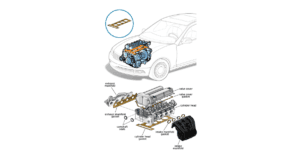 I didn’t think much about it either… until I dealt with a blown head gasket myself. One day everything seemed fine, and the next? White smoke, overheating, and a repair quote that made me question my life choices.
So what exactly is a head gasket? Why does it matter so much? And how do you avoid the nightmare scenario?
What Is a Head Gasket?
The head gasket is a thin but extremely important seal that sits between two major engine components:
- Engine block (bottom section with cylinders)
- Cylinder head (top section with valves and combustion chambers)
Its job?
To seal three critical things at once:
- Combustion pressure (so your engine can generate power)
- Coolant flow (to prevent overheating)
- Engine oil (to keep parts lubricated)
Think of it as a traffic controller keeping everything flowing in the right channels without mixing.
Why Is the Head Gasket So Important?
Without a properly working head gasket:
- Combustion loses pressure → loss of power
- Coolant leaks into cylinders → white smoke + overheating
- Oil mixes with coolant → engine damage
In short:
👉 A failed head gasket can destroy your engine if ignored.
How a Head Gasket Works (Simple Explanation)
When your engine runs:
- Fuel and air ignite inside the cylinders
- Explosion pushes pistons down → creates power
- Coolant flows around the engine to keep the temperature stable
- Oil lubricates moving parts
The head gasket keeps all of these systems separate while allowing them to function together.
Head Gasket vs Other Engine Seals (Comparison Table)
| Feature | Head Gasket | Valve Cover Gasket | Intake Manifold Gasket |
| Location | Between the engine block & cylinder head | Top of the engine | Between intake & engine |
| Function | Seals combustion, oil & coolant | Seals oil | Seals the air/fuel mixture |
| Importance | ⭐⭐⭐⭐⭐ Critical | ⭐⭐ Moderate | ⭐⭐⭐ Important |
| Failure Impact | Engine damage | Oil leaks | Rough running |
| Repair Cost | High 💸 | Low | Medium |
⚠️ Signs of a Blown Head Gasket
From personal experience, these signs don’t always show up all at once, but even one should make you pay attention.
Common Symptoms:
- 🚨 Engine overheating frequently
- 💨 White smoke from exhaust
- 🧴 Milky oil (looks like chocolate milk)
- 💧 Coolant loss with no visible leak
- 🔥 Loss of power
- 🫧 Bubbles in radiator or coolant reservoir
Real Talk: How Expensive Is It?
Let’s not sugarcoat it.
Typical Costs:
- Minor vehicles: $500 – $1,000 (rare)
- Average cars: $1,000 – $2,500
- High-end or complex engines: $3,000+
Why so expensive?
Because:
- It’s labor-intensive
- The engine must be partially dismantled
- Precision reassembly is required
👉 The gasket itself is cheap. The labor is not.
My Honest Experience
When I dealt with a head gasket issue, I made one big mistake:
I ignored early overheating signs.
At first, I thought:
“It’s just hot weather… maybe low coolant.”
Big mistake.
A small issue turned into:
- Warped cylinder head
- Full gasket replacement
- Expensive repair bill
👉 Lesson: Act early, save thousands.
What Causes a Head Gasket to Fail?
Head gaskets don’t just randomly fail; something usually triggers it.
Main Causes:
- 🔥 Overheating (most common)
- 🧊 Coolant neglect
- 🛢️ Poor engine maintenance
- ⚙️ Engine design flaws (some models)
- 💥 High pressure (performance tuning)
Buyer’s Guide: What to Know Before Repair or Replacement
If you’re facing a head gasket issue, don’t rush blindly.
1. Confirm the Diagnosis
Not every overheating issue = blown head gasket. Ask for:
- Compression test
- Leak-down test
- Chemical block test
2. Decide: Repair or Replace Engine?
Sometimes fixing isn’t worth it.
| Situation | Best Choice |
| Older car, low value | Consider selling or an engine swap |
| Newer car, good condition | Repair is worth it |
| Severe engine damage | Replace engine |
3. Choose the Right Gasket Type
- Multi-layer steel (MLS): Durable, modern engines
- Composite: Older cars, cheaper
- Copper: High-performance engines
👉 Always match your engine’s requirement.
4. Pick a Reliable Mechanic
This job requires precision.
Look for:
- Good reviews
- Warranty on work
- Experience with your car type
5. Prevent Future Failure
After replacement:
- Maintain coolant regularly
- Fix overheating issues immediately
- Use quality oil and parts
Can You Drive With a Bad Head Gasket?
Short answer: You shouldn’t. Long answer:
- It might run temporarily
- But you risk complete engine failure
👉 Driving with a blown head gasket is like ignoring a leaking roof during a storm.
Temporary Fixes: Do They Work?
You might see products like “head gasket sealers.”
Reality check:
✔️ Can work for:
- Small leaks
- Temporary relief
❌ Won’t fix:
- Major damage
- Warped heads
👉 Think of it as a band-aid, not surgery.
Long-Term Impact of Ignoring the Problem
If you delay repair:
- Engine overheating worsens
- Internal parts corrode
- Compression drops
- The engine eventually fails
👉 What could’ve been a $1,000 repair becomes a $5,000 problem.
Read More: What Does An O2 Sensor Do In A Car
FAQs: What Is A Head Gasket On A Car
1. What exactly does a head gasket do?
It seals combustion gases, coolant, and oil so they don’t mix or leak.
2. How long does a head gasket last?
Typically 100,000–200,000 km, depending on maintenance.
3. Can a blown head gasket fix itself?
No. It will only get worse over time.
4. Is it worth fixing a blown head gasket?
Depends on the car’s value and condition. For newer cars, yes.
5. What happens if coolant mixes with oil?
It creates sludge that can destroy engine components.
6. Why does a blown head gasket cause white smoke?
Coolant enters the combustion chamber and burns, producing white vapor.
7. Can overheating alone damage the head gasket?
Yes, it’s the #1 cause of failure.
8. How long can you drive after a head gasket blows?
Sometimes minutes… sometimes days, but damage is guaranteed.
9. Is head gasket failure common?
Not very, but it happens especially in poorly maintained cars.
10. Can regular maintenance prevent it?
Yes. Proper cooling system care is key.
Final Thoughts
The head gasket might be small, but it’s one of the most critical parts of your engine. Ignore it, and you’re gambling with your entire car.
Understand it, and you’ll save yourself stress, money, and headaches. If there’s one takeaway from my experience, it’s this:
👉 Never ignore overheating. Ever.