If you’ve ever heard a pinging or knocking sound coming from your engine, there’s a good chance the issue is related to a small but extremely important component called the knock sensor.
Modern engines are designed to run efficiently and safely, and the knock sensor plays a key role in protecting your engine from damage caused by improper combustion.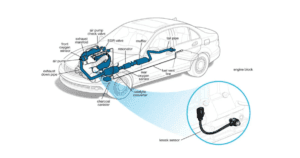 In simple terms, a knock sensor detects abnormal engine vibrations caused by engine knock (also known as detonation or pinging). When this happens, the sensor sends a signal to your car’s computer (ECU), which immediately adjusts ignition timing to prevent damage.
From my own experience working around cars and researching automotive systems, the knock sensor is one of those hidden heroes you rarely think about until something goes wrong.
A failing knock sensor can cause poor performance, reduced fuel economy, and sometimes even engine damage. In this detailed guide, we’ll cover:
- What a knock sensor does
- How it works
- Symptoms of a bad knock sensor
- Replacement costs
- Buyer’s guide
- Frequently asked questions
Let’s start with the basics.
What Is a Knock Sensor?
A knock sensor is an electronic sensor installed on the engine block that detects vibrations caused by abnormal combustion inside the engine cylinders.
Normal combustion happens smoothly when the air-fuel mixture ignites at the correct time. But when the mixture ignites too early or unevenly, it causes engine knock, which produces a sharp metallic sound.
The knock sensor detects these vibrations and sends signals to the Engine Control Unit (ECU). The ECU then adjusts ignition timing to eliminate the knock.
Key Points
- Detects engine knocking or pinging
- Sends signals to the ECU
- Helps adjust ignition timing
- Protects the engine from damage
- Improves performance and fuel efficiency
Knock Sensor vs Other Engine Sensors
Many people confuse the knock sensor with other engine sensors like the oxygen sensor or crankshaft sensor. Here’s a simple comparison.
| Feature | Knock Sensor | Oxygen Sensor | Crankshaft Sensor |
| Main Function | Detects engine knock | Measures oxygen in exhaust | Tracks crankshaft position |
| Location | Engine block | Exhaust system | Near crankshaft |
| Purpose | Prevent engine damage | Control fuel mixture | Manage ignition timing |
| Connected To | ECU | ECU | ECU |
| Effect on Performance | Prevents detonation | Improves fuel economy | Ensures engine timing |
How Does a Knock Sensor Work?
The knock sensor works using piezoelectric technology. Inside the sensor is a piezoelectric crystal that produces an electrical voltage when it experiences vibration.
Step-by-step process
- Engine combustion occurs
- If abnormal combustion happens, vibrations are produced
- The knock sensor detects the vibration
- It converts vibration into a voltage signal
- The ECU receives the signal
- ECU retards ignition timing
- Engine knock disappears
This process happens within milliseconds, preventing serious engine damage.
Where Is the Knock Sensor Located?
The knock sensor is typically mounted:
- On the engine block
- Between the cylinders
- Sometimes, under the intake manifold
The exact location depends on the engine design.
Many modern engines even have two knock sensors for better accuracy.
Signs of a Bad Knock Sensor
A failing knock sensor can cause several noticeable symptoms.
1. Check Engine Light
The most common sign is the check engine light turning on. Common diagnostic trouble codes include:
- P0325
- P0330
- P0327
2. Engine Knocking Sound
If the sensor fails to detect knock, you may hear a pinging or knocking noise from the engine.
3. Reduced Engine Power
The ECU may switch to safe mode, reducing performance.
4. Poor Fuel Economy
Incorrect ignition timing can cause the engine to burn more fuel.
5. Rough Acceleration
The engine may hesitate or feel sluggish during acceleration.
Causes of Knock Sensor Failure
Knock sensors are durable but can fail over time due to:
- Heat from the engine
- Electrical wiring damage
- Corrosion
- Oil leaks
- Engine vibrations
Sometimes the sensor itself is fine, but the wiring harness is damaged.
Knock Sensor Replacement Cost
The cost of replacing a knock sensor varies depending on vehicle type and labor.
| Vehicle Type | Sensor Price | Labor Cost | Total Cost |
| Economy Cars | $40 – $120 | $100 – $200 | $140 – $320 |
| Mid-size Cars | $60 – $150 | $120 – $250 | $180 – $400 |
| SUVs & Trucks | $80 – $200 | $150 – $350 | $230 – $550 |
Luxury vehicles may cost even more if the sensor is difficult to access.
Can You Drive With a Bad Knock Sensor?
Technically, yes, but it’s not recommended. Driving with a bad knock sensor can lead to:
- Engine knocking
- Poor performance
- Reduced fuel economy
- Possible engine damage
Your car’s computer might also run in limp mode, limiting power.
How to Test a Knock Sensor
Testing a knock sensor requires basic diagnostic tools.
Method 1: OBD2 Scanner
- Plug the scanner into the OBD port
- Check for knock sensor codes
- Clear codes and test drive
Method 2: Multimeter Test
- Disconnect the sensor
- Measure resistance
- Tap the engine block lightly
- Voltage should change
Method 3: Professional Diagnostic
A mechanic can test the sensor using specialized tools.
Can You Replace a Knock Sensor Yourself?
Yes, if the sensor is accessible.
Basic Steps
- Disconnect battery
- Locate the knock sensor
- Remove the electrical connector
- Unscrew the sensor
- Install a new sensor
- Reconnect wiring
- Clear ECU codes
However, some engines require removing the intake manifold, which makes the job harder.
Buyer’s Guide: Choosing the Best Knock Sensor
If you need to replace your knock sensor, choosing the right one is important.
1. OEM vs Aftermarket
OEM sensors are made by the vehicle manufacturer and usually provide the best reliability. Aftermarket sensors can be cheaper but vary in quality.
2. Vehicle Compatibility
Always check:
- Make
- Model
- Year
- Engine type
3. Build Quality
Look for sensors with:
- Heat-resistant materials
- Durable wiring connectors
- High-quality piezo crystals
4. Brand Reputation
Reliable automotive parts brands include:
- Bosch
- Denso
- Delphi
- Standard Motor Products
5. Warranty
Choose sensors with at least a 1-year warranty.
Benefits of a Properly Working Knock Sensor
A healthy knock sensor offers many benefits.
Engine Protection
Prevents detonation damage.
Better Fuel Efficiency
Ensures optimal ignition timing.
Improved Performance
Maintains smooth engine operation.
Lower Emissions
Helps engines burn fuel efficiently.
What Happens Without a Knock Sensor?
Without a functioning knock sensor:
- The ECU cannot detect detonation
- Ignition timing may remain incorrect
- Engine damage becomes possible
Older cars without knock sensors relied on fixed ignition timing, but modern engines depend heavily on this sensor.
Read More: What Does A Car Expansion Valve Do
FAQs: What Is A Knock Sensor On A Car
1. What does a knock sensor do in a car?
A knock sensor detects engine knocking caused by abnormal combustion and signals the ECU to adjust ignition timing.
2. Is a knock sensor important?
Yes. It protects the engine from detonation damage and ensures efficient performance.
3. How long do knock sensors last?
Most knock sensors last 150,000 to 200,000 miles, though they can fail earlier due to heat or electrical problems.
4. Can a bad knock sensor cause poor acceleration?
Yes. The ECU may reduce engine power to protect the engine.
5. How many knock sensors does a car have?
Many engines have one knock sensor, but V6 or V8 engines may have two sensors.
6. Does a knock sensor affect fuel economy?
Yes. Incorrect ignition timing caused by a bad sensor can reduce fuel efficiency.
7. Can low-quality fuel cause engine knock?
Yes. Low-octane fuel can cause detonation, which the knock sensor detects.
8. Is replacing a knock sensor expensive?
The average replacement cost is $150 to $400, depending on the vehicle.
Final Thoughts
The knock sensor may be a small component, but it plays a massive role in protecting your engine and maintaining performance. By detecting engine knock and allowing the ECU to adjust ignition timing instantly, it prevents costly engine damage and ensures smooth operation.
If you notice symptoms like engine knocking, poor acceleration, or a check engine light, it’s worth diagnosing the knock sensor before the issue gets worse.
Keeping this small sensor working properly can extend engine life, improve fuel economy, and save you from expensive repairs down the road.