If you’ve ever wondered why your car’s air conditioning keeps blowing cold air even on hot days, there’s a good chance a small but important component called the car accumulator is doing its job quietly behind the scenes.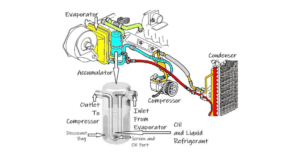 Most drivers never hear about the accumulator until something goes wrong with the AC system. But once you start learning about it, you’ll realize how important it is for keeping your car’s air conditioning system efficient and protected.
In simple terms, a car accumulator is a component in the vehicle’s air conditioning system that stores excess refrigerant and removes moisture before the refrigerant reaches the compressor.
In this detailed guide, we’ll explore:
- The definition of a car accumulator
- How it works in the AC system
- Signs of a failing accumulator
- Cost of replacement
- Differences between the accumulator and the receiver dryer
- A buyer’s guide
- Frequently asked questions
Car Accumulator Definition
A car accumulator is a cylindrical container located in the air conditioning system of vehicles that use an orifice tube system. Its main functions are:
- Store excess refrigerant
- Filter debris
- Remove moisture from refrigerant
- Protect the AC compressor from liquid refrigerant
The accumulator sits between the evaporator and compressor in the AC system. Without it, liquid refrigerant could enter the compressor and cause serious damage, since compressors are designed to handle gas, not liquid.
Quick Comparison of AC System Components
Many people confuse the accumulator with other AC parts. Here’s a helpful comparison.
| Component | Main Function | Location | Used In |
| Accumulator | Stores refrigerant and removes moisture | Between the evaporator and the compressor | Orifice tube systems |
| Receiver Dryer | Filters refrigerant and removes moisture | Between the condenser and the expansion valve | Expansion valve systems |
| Condenser | Releases heat from refrigerant | Front of radiator | All AC systems |
| Evaporator | Produces cold air | Inside dashboard | All AC systems |
Understanding this difference helps when diagnosing AC system problems.
Where Is the Car Accumulator Located?
The accumulator is typically found:
- Near the firewall
- Between the evaporator outlet and the compressor
- Inside the AC refrigerant line
It usually looks like a metal cylinder about the size of a soda can. Because of its location, it’s sometimes mistaken for a filter or small tank.
How a Car Accumulator Works
To understand the accumulator, it helps to understand the air conditioning cycle. Here’s a simplified version.
- The compressor compresses refrigerant gas.
- The refrigerant moves to the condenser, where heat is released.
- The refrigerant flows through the orifice tube.
- It enters the evaporator, where it absorbs heat and cools the air.
- The refrigerant then goes to the accumulator.
Inside the accumulator:
- Liquid refrigerant separates from gas.
- Moisture is removed using a desiccant material.
- Only refrigerant vapor moves to the compressor.
This protects the compressor from liquid slugging, which can destroy it.
My Personal Experience With a Bad Accumulator
A few summers ago, my car’s air conditioner started blowing warm air during hot weather. At first, I assumed it just needed a refrigerant recharge.
But after checking with a mechanic, the real problem turned out to be a failing accumulator. Here’s what happened:
- Moisture had entered the AC system
- The desiccant inside the accumulator became saturated
- Refrigerant flow became inconsistent
The repair cost around $320, including labor, but once it was replaced, the AC worked perfectly again. It was a good reminder that even small AC components can cause big problems.
Symptoms of a Bad Car Accumulator
A failing accumulator can cause several noticeable issues.
1. Weak or Warm AC Air
If the accumulator fails to store refrigerant properly, the cooling cycle becomes inefficient. Symptoms include:
- Warm air from vents
- AC is taking longer to cool
2. Moisture in the AC System
The accumulator contains a desiccant bag that absorbs moisture. If it fails:
- Water enters the refrigerant
- Ice may form in the system
This can block refrigerant flow.
3. Strange AC Noises
A failing accumulator can cause:
- Rattling sounds
- Hissing noises
These noises may occur near the firewall area.
4. Refrigerant Leaks
The accumulator has several seals and fittings. Over time, they may leak refrigerant, causing:
- Low AC pressure
- Reduced cooling performance
Car Accumulator Replacement Cost
Here’s a general breakdown of the typical costs.
| Item | Average Price |
| Accumulator Part | $40 – $150 |
| Labor | $100 – $250 |
| AC Recharge | $80 – $150 |
| Total Replacement Cost | $220 – $550 |
Luxury vehicles or complex AC systems may cost more.
Accumulator vs Receiver Dryer
Many people confuse these two components. Both remove moisture but are used in different systems.
| Feature | Accumulator | Receiver Dryer |
| System Type | Orifice Tube | Expansion Valve |
| Location | After evaporator | After condenser |
| Function | Prevent liquid from entering the compressor | Store liquid refrigerant |
| Moisture Removal | Yes | Yes |
Both components perform similar jobs but in different AC system designs.
Why Moisture Is Dangerous in AC Systems
Moisture is the biggest enemy of air conditioning systems. If water enters the system, it can:
- Freeze inside the expansion tube
- Corrode internal components
- Reduce cooling efficiency
The accumulator prevents this by using desiccant material, which absorbs moisture like a sponge.
Buyer’s Guide: Choosing the Right Car Accumulator
If you need to replace your accumulator, here are some important things to consider.
1. Compatibility
Always confirm the accumulator fits your vehicle’s:
- Make
- Model
- Engine size
- AC system type
Using the wrong accumulator can cause installation issues.
2. OEM vs Aftermarket
You usually have two options.
OEM Accumulator
Made by the vehicle manufacturer.
Pros:
- Perfect fit
- Reliable quality
Cons:
- Higher price
Average cost: $100 – $200
Aftermarket Accumulator
Produced by third-party manufacturers.
Pros:
- Affordable
- Widely available
Cons:
- Quality may vary
Average cost: $40 – $120
3. Build Quality
Look for accumulators with:
- Corrosion-resistant aluminum
- High-quality desiccant bags
- Strong welds
Cheap accumulators may fail prematurely.
4. Warranty
Good brands offer 1–2 year warranties. This ensures protection if the component fails early.
5. Complete Kits
Some accumulators come in kits, including:
- O-rings
- Seals
- Mounting hardware
These kits make installation easier and prevent leaks.
How Long Does a Car Accumulator Last?
Most accumulators last 8–12 years under normal conditions. However, they should always be replaced when:
- The compressor fails
- The AC system is opened for repair
- Moisture contamination occurs
Replacing it prevents future damage.
Can You Drive With a Bad Accumulator?
Yes, but it’s not recommended. A bad accumulator can lead to:
- AC compressor damage
- Reduced cooling performance
- Refrigerant contamination
Ignoring the problem can turn a $300 repair into a $1,200 compressor replacement.
Tips to Extend the Life of Your Car’s AC System
Here are some practical maintenance tips.
Run the AC regularly.
Even in winter, run the AC for 10 minutes weekly. This keeps seals lubricated.
Replace the cabin air filter
A clogged filter reduces airflow and forces the AC system to work harder.
Fix refrigerant leaks quickly
Low refrigerant can damage multiple AC components.
Replace the accumulator during major AC repairs
This prevents moisture contamination in the system.
Read More: Car AC Evaporator Cleaning Cost
FAQs: Car Accumulator Definition
What does a car accumulator do?
A car accumulator stores excess refrigerant and removes moisture before the refrigerant enters the compressor. It protects the compressor from liquid refrigerant damage.
Is the accumulator part of the AC system?
Yes. The accumulator is a key component of the vehicle’s air conditioning system.
How much does a car accumulator cost?
The part usually costs $40 to $150, while total replacement, including labor, ranges from $220 to $550.
What happens if the accumulator fails?
A failed accumulator can cause:
- Poor cooling performance
- Moisture contamination
- Compressor damage
Should the accumulator be replaced with the compressor?
Yes. Most mechanics recommend replacing the accumulator whenever the AC compressor is replaced. This helps prevent contamination.
Can you clean a car accumulator?
No. The desiccant inside cannot be cleaned or reused. A faulty accumulator must be replaced.
Final Thoughts
The car accumulator might be a small component, but it plays a big role in protecting your vehicle’s air conditioning system. By storing refrigerant, removing moisture, and preventing liquid from entering the compressor, the accumulator helps ensure that your AC system runs smoothly and efficiently.
If your car’s air conditioner isn’t performing the way it should, the accumulator could be part of the problem. Fortunately, it’s usually an affordable repair, especially compared to replacing major components like the compressor.
Understanding how this part works can help you make smarter decisions about AC maintenance and repairs.