If you’ve ever dug into your car’s air conditioning or transmission system, you’ve probably come across the term “accumulator.” At first glance, it sounds like one of those overly technical parts that most drivers ignore until something stops working properly.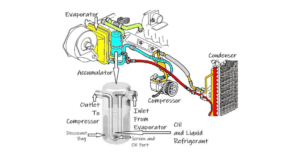 I used to be in that exact situation. My car’s AC started blowing warm air, and after a bit of troubleshooting, the culprit turned out to be a failing accumulator. That experience pushed me to really understand what this small but crucial component actually does.
So, what does an accumulator do in a car? In simple terms, it stores, filters, and protects critical fluids (like refrigerant or hydraulic fluid) to keep your system running smoothly and efficiently.
But there’s a lot more to it than that. Whether you’re a DIY car enthusiast or just trying to avoid costly repairs, understanding the accumulator can save you time, money, and headaches.
Let’s break it down.
What Is an Accumulator in a Car?
An accumulator is a storage component used in certain automotive systems to:
- Store excess fluid (like refrigerant or hydraulic fluid)
- Filter out contaminants
- Prevent damage to sensitive components
- Maintain pressure balance
Depending on the system, accumulators are commonly found in:
- Air Conditioning (AC) systems
- Automatic transmissions
- Hydraulic braking systems (in some vehicles)
What Does an Accumulator Do?
1. Stores Excess Refrigerant or Fluid
In your car’s AC system, the accumulator acts like a temporary storage tank. It holds excess refrigerant, so the system doesn’t get overloaded.
2. Removes Moisture
Moisture is the enemy of AC systems. The accumulator contains a desiccant that absorbs water, preventing corrosion and freezing issues.
3. Filters Debris
It catches dirt, metal particles, and contaminants before they reach critical components like the compressor.
4. Protects the Compressor
One of its most important roles is preventing liquid refrigerant from entering the compressor, which could cause serious damage.
5. Maintains System Efficiency
Regulating flow and pressure helps your AC or transmission operate smoothly.
Where Is the Accumulator Located?
- AC System: Between the evaporator and compressor
- Transmission System: Inside or near the valve body (varies by model)
In most cars, the AC accumulator looks like a metal cylinder mounted near the firewall.
Accumulator vs Receiver-Drier (Important Difference)
Many people confuse these two parts, and I did too at first.
| Feature | Accumulator | Receiver-Drier |
| Used in | Orifice tube systems | Expansion valve systems |
| Location | After evaporator | After condenser |
| Function | Prevents liquid refrigerant from entering the compressor | Stores and filters liquid refrigerant |
| Moisture removal | Yes | Yes |
| Common in | Most modern cars | Some older or specific systems |
👉 Quick takeaway:
- If your system uses an orifice tube, it has an accumulator
- If it uses an expansion valve, it uses a receiver-drier
How an Accumulator Works (Step-by-Step)
Here’s a simplified flow:
- Refrigerant leaves the evaporator as a gas/liquid mix
- It enters the accumulator
- The accumulator:
- Separates liquid from gas
- Stores excess liquid
- Filters contaminants
- Removes moisture
- Only clean refrigerant vapor goes to the compressor
Think of it like a safety checkpoint for your AC system.
My Honest Experience with a Failing Accumulator
When my AC started acting up, I noticed:
- Weak cooling
- Strange hissing noises
- Compressor cycling on and off frequently
At first, I thought it was just low refrigerant. But after refilling, the problem came back. The real issue? 👉 A saturated desiccant inside the accumulator.
Replacing it made a huge difference:
- Cooling improved instantly
- Compressor ran smoother
- No more weird noises
Lesson learned: Ignoring the accumulator can lead to bigger (and more expensive) problems.
Signs of a Bad Accumulator
Here’s what to watch for:
Common Symptoms
- AC is blowing warm air
- Moisture or frost on AC lines
- Unusual noises from the AC system
- Compressor failure
- Bad smell from vents
⚠️ Serious Warning Signs
- Metal debris in the system
- Complete AC failure
- Frequent refrigerant leaks
Why the Accumulator Is So Important
You might be thinking: “It’s just a filter, right?” Not quite. Without a functioning accumulator:
- Moisture damages internal components
- Debris clogs the system
- Liquid refrigerant can destroy the compressor
- Efficiency drops dramatically
👉 In short: It protects your entire AC system.
Buyer’s Guide: Choosing the Right Accumulator
If you’re replacing your accumulator, here’s what you need to consider.
1. Compatibility
Always match your vehicle’s:
- Make
- Model
- Year
- Engine type
2. Build Quality
Look for:
- Corrosion-resistant materials
- High-quality desiccant
- Strong welds
3. Brand Reputation
Reliable brands often last longer and perform better.
4. Included Components
Some accumulators come with:
- Pressure switches
- O-rings
- Mounting brackets
5. Price vs Value
| Price Range | What You Get |
| Budget | Basic function, shorter lifespan |
| Mid-range | Good durability, reliable performance |
| Premium | Long-lasting, high efficiency, better filtration |
👉 My advice:
Go mid-range or high; cheap accumulators can fail quickly.
When Should You Replace the Accumulator?
You should replace it when:
- Replacing the AC compressor
- Opening the AC system
- Moisture contamination is suspected
- AC performance drops significantly
👉 Most mechanics recommend replacing it every 2–4 years or during major AC repairs.
Can You Drive Without an Accumulator?
Technically? No. Your AC system:
- Won’t function properly
- May damage the compressor
- Will likely fail quickly
👉 Skipping it is not worth the risk.
Installation Tips (DIY Perspective)
If you’re planning to replace it yourself:
Tools Needed
- Wrenches
- Refrigerant recovery system
- Safety gloves
Key Tips
- Always evacuate the AC system first
- Replace O-rings
- Add the correct amount of oil
- Vacuum the system before recharging
⚠️ Important: AC systems are pressurized. Improper handling can be dangerous.
Pros and Cons of an Accumulator
👍 Pros
- Protects compressor
- Removes moisture
- Improves AC efficiency
- Filters contaminants
👎 Cons
- Needs periodic replacement
- Can fail silently
- Adds repair cost
Long-Term Value: Is It Worth It?
Absolutely. Replacing an accumulator might cost a bit upfront, but it can:
- Prevent compressor failure (very expensive)
- Extend system life
- Improve cooling performance
👉 Think of it as cheap insurance for your AC system.
Read More: How Do You Check Transmission
FAQs: What Does An Accumulator Do In A Car
1. What happens if an accumulator fails?
Your AC system may lose cooling efficiency, and moisture or debris can damage the compressor.
2. Is an accumulator the same as a dryer?
Not exactly. An accumulator is used in orifice tube systems, while a receiver-drier is used in expansion valve systems.
3. Can I clean and reuse an accumulator?
No. Once the desiccant is saturated, it must be replaced.
4. How much does it cost to replace an accumulator?
- Parts: $30–$150
- Labor: $100–$300
Total: Around $150–$450, depending on your car.
5. Does every car have an accumulator?
No. Some use a receiver-drier instead, depending on the AC system design.
6. How long does an accumulator last?
Typically 2–5 years, but it depends on usage and system condition.
7. Should I replace the accumulator with the compressor?
Yes. It’s strongly recommended to replace both together.
Final Thoughts
The accumulator might not be the most glamorous part of your car, but it plays a critical role behind the scenes. From protecting your compressor to ensuring clean, dry refrigerant flow, it’s essential for a healthy AC system.
From my own experience, ignoring it can lead to frustrating and costly repairs. But replacing it at the right time? That’s a simple upgrade that keeps your car running cool and reliable.
👉 If your AC isn’t performing like it used to, don’t overlook the accumulator; it might be the hidden hero (or the hidden problem).