I’ll be honest, the first time my check engine light came on for an oxygen sensor, I ignored it. The car still drove. It started fine. It didn’t feel broken. But over the next few weeks, my fuel mileage dropped noticeably.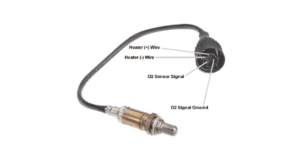 The idle became rough. Acceleration felt inconsistent. Eventually, the car began hesitating at stoplights. That tiny oxygen sensor, a relatively inexpensive part, was quietly throwing off the entire air-fuel mixture of my engine.
If you’re wondering “What does a car do when the oxygen sensor is bad?”, you’re in the right place. In this complete guide, we’ll cover:
- What an oxygen (O2) sensor actually does
- Clear signs your oxygen sensor is failing
- How it affects performance and fuel economy
- Whether it’s safe to keep driving
- Repair costs
- A comparison table of symptoms
- A buyer’s guide for replacement sensors
- Frequently asked questions
Let’s break it down in plain, real-world terms.
What Is An Oxygen Sensor (O2 Sensor)?
Your oxygen sensor monitors the amount of oxygen in your exhaust gases.
It sends that data to your vehicle’s engine control module (ECM). The ECM then adjusts the air-fuel mixture to maintain optimal combustion.
Too much fuel = rich mixture.
Too much air = lean mixture.
Modern cars usually have:
- One upstream sensor (before the catalytic converter)
- One downstream sensor (after the catalytic converter)
- Some vehicles have 4 or more total
It’s a critical part of emissions control and engine efficiency.
What Does A Car Do When The Oxygen Sensor Is Bad?
Here are the most common symptoms I’ve personally experienced and seen repeatedly:
1. Check Engine Light Comes On
This is the most common sign. Typical codes include:
- P0130
- P0133
- P0141
- P0161
The check engine light often appears before you feel performance issues.
2. Poor Fuel Economy
This is usually the first noticeable symptom. When the O2 sensor fails, the engine may run too rich. That means more fuel is injected than needed. In my case, I lost nearly 4–5 MPG.
3. Rough Idle or Engine Hesitation
A bad oxygen sensor can cause:
- Shaking at stoplights
- Jerky acceleration
- Delayed throttle response
Because the air-fuel mixture isn’t balanced properly.
4. Strong Fuel Smell
If the engine runs rich, unburned fuel exits through the exhaust. You may notice:
- Gasoline smell
- Black smoke
- Soot near the exhaust tip
5. Failed Emissions Test
A failing O2 sensor almost guarantees emissions issues. It can cause:
- High carbon monoxide (CO)
- High hydrocarbons (HC)
- Catalytic converter damage
6. Engine Misfires
Less common but possible. An incorrect mixture can lead to incomplete combustion.
7. Reduced Engine Power
If the engine runs too lean, power can drop significantly.
Oxygen Sensor Failure Symptoms Comparison
| Symptom | Why It Happens | Severity Level | Can You Keep Driving? | Repair Urgency |
| Check Engine Light | Sensor signal out of range | Low | Yes (short term) | Medium |
| Poor Fuel Economy | Rich fuel mixture | Medium | Yes | High |
| Rough Idle | Incorrect fuel adjustment | Medium | Yes (temporary) | High |
| Fuel Smell | Unburned fuel | High | Not recommended | Immediate |
| Failed Emissions | Incorrect combustion | Medium | Yes | High |
| Engine Hesitation | Lean or rich mixture imbalance | Medium | Yes (limited) | High |
What Causes An Oxygen Sensor To Go Bad?
O2 sensors typically fail due to:
- Age (80,000–100,000 miles)
- Oil contamination
- Coolant leaks
- Fuel additives
- Carbon buildup
- Exhaust leaks
Like spark plugs, they are wear items.
Can You Drive With A Bad Oxygen Sensor?
Short answer: Yes, but you shouldn’t for long. Driving too long with a bad sensor can:
- Damage the catalytic converter (expensive repair)
- Increase fuel costs
- Cause long-term engine wear
Replacing a $50–$150 sensor is much cheaper than replacing a $1,500 catalytic converter.
How Much Does It Cost To Replace An Oxygen Sensor?
Here’s a realistic breakdown:
- Sensor cost: $40–$200
- Labor: $100–$300
- Total: $150–$500
Luxury vehicles may cost more. DIY replacement can save significant money if accessible.
Upstream vs Downstream Oxygen Sensor
Upstream Sensor
- Controls fuel mixture
- Affects performance
- Most important for engine operation
Downstream Sensor
- Monitors catalytic converter efficiency
- Mainly affects emissions
Upstream failures usually cause noticeable driving problems.
How To Confirm It’s The Oxygen Sensor
Don’t just guess. Steps:
- Scan for trouble codes
- Check live O2 sensor data
- Inspect wiring
- Look for exhaust leaks
Sometimes wiring damage mimics sensor failure.
Should You Replace All Oxygen Sensors At Once?
If one fails and others are old (over 100k miles), it may be smart to replace them together. But it’s not always necessary.
Buyer’s Guide: Choosing The Right Oxygen Sensor
If you’re replacing your O2 sensor, choosing the right one matters.
1. OEM vs Aftermarket
OEM (Original Equipment Manufacturer)
- Exact factory fit
- Reliable
- More expensive
Aftermarket
- Affordable
- Wide availability
- Quality varies
If the budget allows, OEM is safest.
2. Direct Fit vs Universal Sensors
Direct Fit:
- Plug-and-play
- No wiring required
- Recommended
Universal:
- Requires splicing wires
- Risk of connection issues
- Cheaper
I strongly recommend direct-fit sensors.
3. Heated Oxygen Sensors
Most modern cars use heated sensors for faster warm-up. Always confirm compatibility with your vehicle.
4. Check Warranty
Look for:
- 1-year minimum warranty
- Brand reputation
- Positive reviews
Signs It’s Not The Oxygen Sensor
Sometimes symptoms overlap with:
- Bad mass airflow sensor
- Vacuum leak
- Faulty spark plugs
- Clogged fuel injectors
- Exhaust leaks
Proper diagnosis is key.
Does A Bad Oxygen Sensor Affect Acceleration?
Yes. If the mixture becomes too lean:
- Sluggish response
- Hesitation
- Reduced torque
If too rich:
- Bogging
- Poor throttle response
Long-Term Damage If Ignored
If left untreated:
- Catalytic converter failure
- Spark plug fouling
- Engine carbon buildup
- Reduced engine lifespan
The catalytic converter is the biggest financial risk.
How Often Should Oxygen Sensors Be Replaced?
General guideline:
- 60,000–100,000 miles
Check your owner’s manual. Preventive replacement can maintain fuel efficiency.
Read More: How To Check Engine Oil Color
FAQs: What Does A Car Do When The Oxygen Sensor Is Bad?
1. What are the first signs of a bad oxygen sensor?
Usually, a check engine light and reduced fuel economy.
2. Will a bad O2 sensor cause stalling?
It can, especially if the mixture becomes severely imbalanced.
3. Can a bad oxygen sensor damage the engine?
Yes, over time, especially the catalytic converter.
4. How long can you drive with a bad oxygen sensor?
Short term (weeks) is usually okay. Long-term use can cause expensive damage.
5. Is it expensive to fix?
Not compared to other engine components. It’s a relatively affordable repair.
6. Can I replace it myself?
Yes, if accessible, and you have an O2 sensor socket. Some sensors are difficult to reach.
7. Does a bad O2 sensor make noise?
No, it doesn’t typically cause noise. Noise usually indicates exhaust leaks.
8. Can a bad O2 sensor causea rough idle only when warm?
Yes. Sensors operate differently once the engine reaches operating temperature.
9. Will replacing the O2 sensor improve gas mileage?
If it was faulty, absolutely.
10. Should I clear the code after replacement?
Yes. Use a scanner to reset the check engine light.
Final Thoughts: Don’t Ignore It
An oxygen sensor might be small, but it has a big job. When it goes bad, your car may:
- Burn more fuel
- Hesitate
- Idle roughly
- Smells like gas
- Fail emissions
In my experience, replacing a faulty O2 sensor immediately restored smoother performance and better fuel economy. It’s one of those repairs that’s affordable, manageable, and worth doing sooner rather than later.
If your check engine light is on and fuel mileage has dropped, the oxygen sensor is definitely worth checking first.